

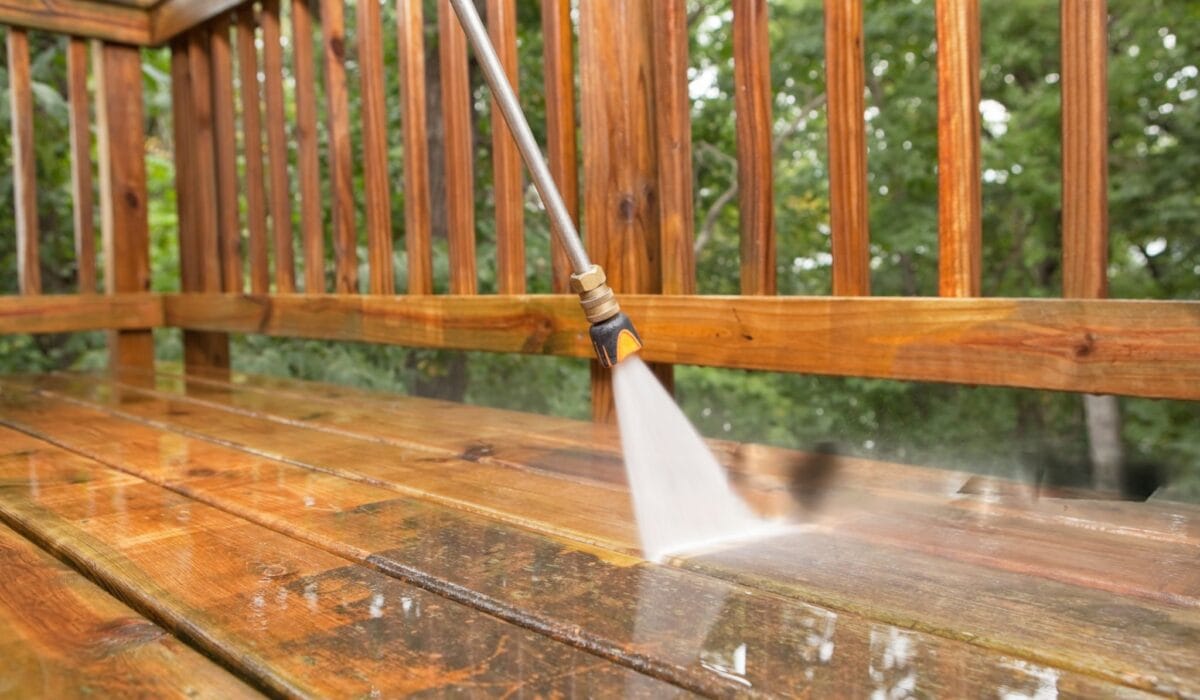
Deck power washing in New Suffolk should leave your outdoor space cleaner without damaging the surface beneath the dirt. The right cleaning method depends on whether your deck is wood, composite, or another material, as well as the condition of its boards and finish. Before cleaning, look for loose fasteners, soft boards, peeling stain, and slippery buildup. Those details help determine whether the deck needs washing, repairs, or both.
When does a deck need cleaning?
A deck may be ready for cleaning when dirt remains after sweeping, shaded areas develop green buildup, or the boards look unevenly discolored. Furniture, planters, and railings can also hide debris that holds moisture against the surface. Cleaning these areas makes the deck more pleasant to use and gives you a clearer view of its condition.
Washing will not fix rotted boards, unstable railings, or a failing coating. If you notice soft spots, raised fasteners, or movement underfoot, address those concerns before treating cleaning as the solution. Golden Hands Construction also offers deck repair when the deck needs work beyond washing.
Why the deck material matters
Power washing is not one setting that works for every deck. A strong stream can roughen wood, lift a loose finish, or mark a surface if the equipment is used incorrectly. Some composite products permit pressure washing under specific conditions; others have different care instructions. Check the manufacturer’s guidance for your particular boards before choosing a method. Trex’s care guide, for example, gives instructions that vary by product.
For a wood deck, the condition of the boards and coating matters as much as the type of wood. Older or splintering boards may need a gentler approach. Painted or stained surfaces also need an inspection so cleaning does not loosen a finish that is already failing. If you are unsure what material you have, say so when requesting an estimate.
What to discuss before the work begins
A useful estimate starts with the size and condition of the deck. Ask what will be cleaned, including steps, railings, and areas beneath movable furniture. Point out stains, peeling coating, loose boards, and nearby plants that may need protection. If you plan to stain the deck afterward, mention that at the start: cleaning and surface preparation should be planned around the coating you intend to use.
It is also reasonable to ask how wash water and cleaning products will be managed around the property. Runoff can carry dirt and other pollutants toward storm drains and waterways; the EPA explains how stormwater runoff affects water quality. The cleaning approach should suit the site as well as the deck.
Cleaning before staining
A clean surface is part of preparing a deck for a new finish, but washing alone does not make every deck ready to stain. Existing coatings, damaged boards, and the deck’s drying time all affect the next step. Follow the stain manufacturer’s preparation instructions, and wait until the surface meets its requirements before applying a coating. If your goal is a new finish, see Golden Hands Construction’s deck staining service.
Keeping your deck in good shape
Between deeper cleanings, sweep away leaves and debris, move planters occasionally to check the boards beneath them, and inspect railings and steps for movement. Clean spills according to the deck manufacturer’s instructions. There is no single washing schedule for every deck; shade, use, surface material, and the condition of the finish all matter.
If your New Suffolk deck needs attention, contact Golden Hands Construction to discuss its material, condition, and the cleaning you want done. The team can assess whether washing is appropriate or whether repairs should come first.


