

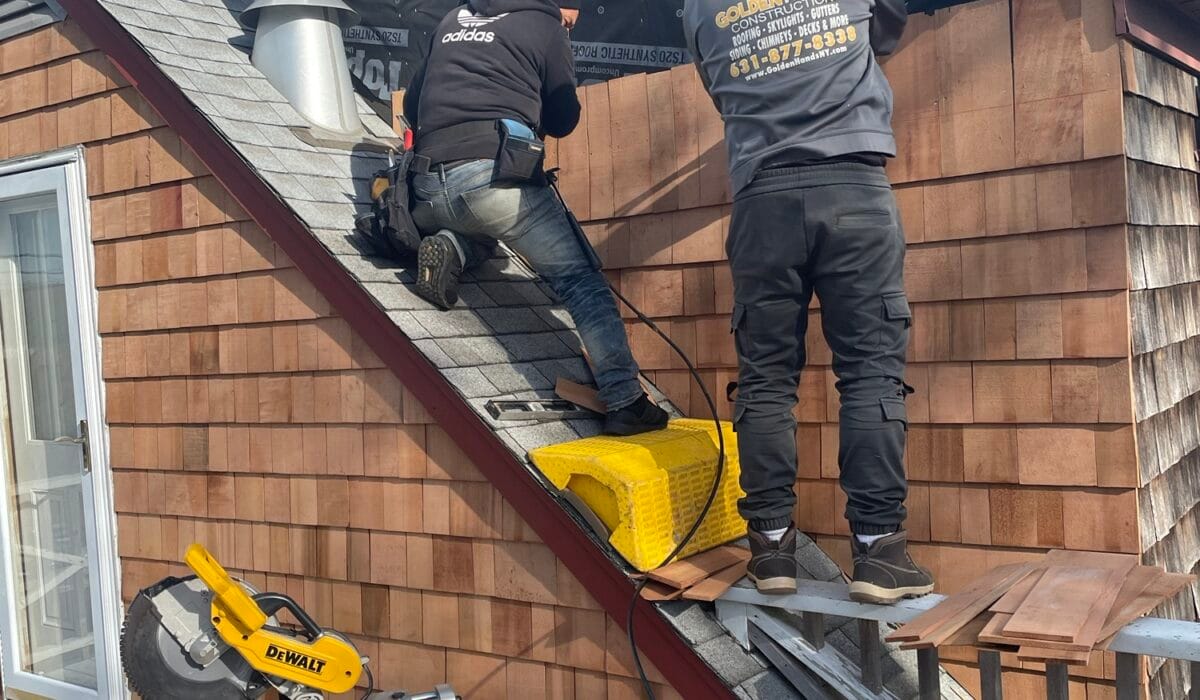
Roof flashing plays a critical role in protecting a home from water damage. Many homeowners focus on shingles or roofing materials, but flashing is what protects the most vulnerable areas of the roof. Without it, water can easily enter joints, seams, and transitions where different roof sections meet.
In coastal areas like Long Island, including East Marion, Cutchogue, and surrounding communities, heavy rain, wind, and salt air increase the risk of roof leaks. That makes proper flashing even more important for long-term roof protection.
Golden Hands Construction provides professional roof repair services that include flashing installation and repair to help prevent leaks and structural damage https://goldenhandsny.com/services/roof-repair/
What Roof Flashing Actually Does
Roof flashing is a thin material, usually made of metal, that roofers install in areas where the roof surface changes direction or meets another structure. These areas include chimneys, skylights, vents, valleys, and roof edges.
Its main purpose is simple. It directs water away from joints and prevents it from slipping underneath roofing materials. Without flashing, water would naturally find openings and slowly enter the roof structure.
Flashing acts like a protective barrier that controls water flow and keeps it moving safely off the roof.
How Roof Flashing Prevents Leaks
Roof leaks usually start at weak points, not in the middle of shingles. Flashing protects these weak points by sealing gaps and guiding water away from vulnerable areas.
When flashing is installed correctly, water flows over it and down the roof instead of entering seams. This prevents moisture from reaching the roof deck and interior structure.
Without flashing, even small amounts of rainwater can enter gaps and cause long-term leaks.
How Flashing Protects Roof Structures from Damage
Flashing does more than prevent leaks. It also protects the structural components beneath the roof surface.
When water enters unprotected areas, it damages wood framing, insulation, and ceiling materials. Over time, this leads to rot, mold growth, and weakened structural integrity.
Proper flashing keeps these areas dry by blocking water entry at critical points. This protection helps maintain the strength and safety of the entire roofing system.
Common Areas Where Flashing Is Installed
Roofers install flashing in specific areas where water is most likely to enter:
- Around chimneys
- Around skylights
- Along roof valleys
- Near vents and pipes
- At roof edges and wall intersections
Each of these areas naturally collects water, so flashing ensures that it moves away safely instead of entering the roof.
What Happens When Flashing Fails
When flashing becomes loose, rusted, or improperly installed, it stops performing its job. Water then begins to seep into gaps and travel beneath roofing materials.
This often leads to hidden leaks that appear inside the home long after the damage has started. Homeowners may notice stains on ceilings, damp walls, or mold growth before realizing flashing is the cause.
If left unaddressed, flashing failure can lead to major structural repairs.
Golden Hands Construction repairs and replaces damaged flashing to restore proper protection and prevent further damage https://goldenhandsny.com/services/roof-repair/
How Weather Affects Roof Flashing
Weather plays a major role in flashing performance. In coastal regions, flashing faces constant exposure to moisture, salt air, wind, and temperature changes.
Salt air can speed up corrosion, especially on older metal flashing. Strong winds can also loosen improperly secured flashing, creating small openings for water to enter.
Over time, these conditions weaken flashing if it is not inspected and maintained regularly.
Signs That Roof Flashing Needs Repair
Homeowners can often identify flashing issues early by watching for common warning signs:
- Water stains near chimneys or ceilings
- Rust or corrosion around roof joints
- Loose or lifted metal sections
- Small leaks during heavy rain
- Damp areas in the attic
These signs usually indicate that flashing is no longer directing water properly.
How Professionals Repair Roof Flashing
Roof flashing repair starts with identifying damaged or weakened sections. Roofers remove old flashing, clean the surrounding area, and install new material that fits securely.
They also seal all edges to ensure water cannot enter beneath the flashing. In some cases, surrounding shingles or roofing materials must be adjusted to create a proper waterproof barrier.
This process restores correct water flow and prevents future leaks.
Golden Hands Construction provides expert flashing repair services designed to improve roof drainage and prevent long-term damage https://goldenhandsny.com/services/roof-repair/
Why Flashing Is Essential for Long-Term Roof Protection
Flashing is one of the most important components of a roofing system because it protects areas where water naturally collects. Without it, even a strong roof will eventually develop leaks.
When flashing works correctly, it extends the lifespan of the entire roof by keeping water away from vulnerable structures. It also reduces maintenance costs by preventing hidden damage.
A roof without proper flashing protection is always at higher risk of failure.
Conclusion
Roof flashing prevents leaks and structural damage by controlling water flow and protecting vulnerable areas of the roof. It plays a key role in keeping water out of joints, seams, and transitions where leaks are most likely to form.
Regular inspection and timely repair ensure that flashing continues to function properly, especially in coastal environments where weather conditions are more severe.
Golden Hands Construction provides professional flashing repair and roof maintenance services that help homeowners protect their roofs and prevent costly water damage for the long term https://goldenhandsny.com/services/roof-repair/


