

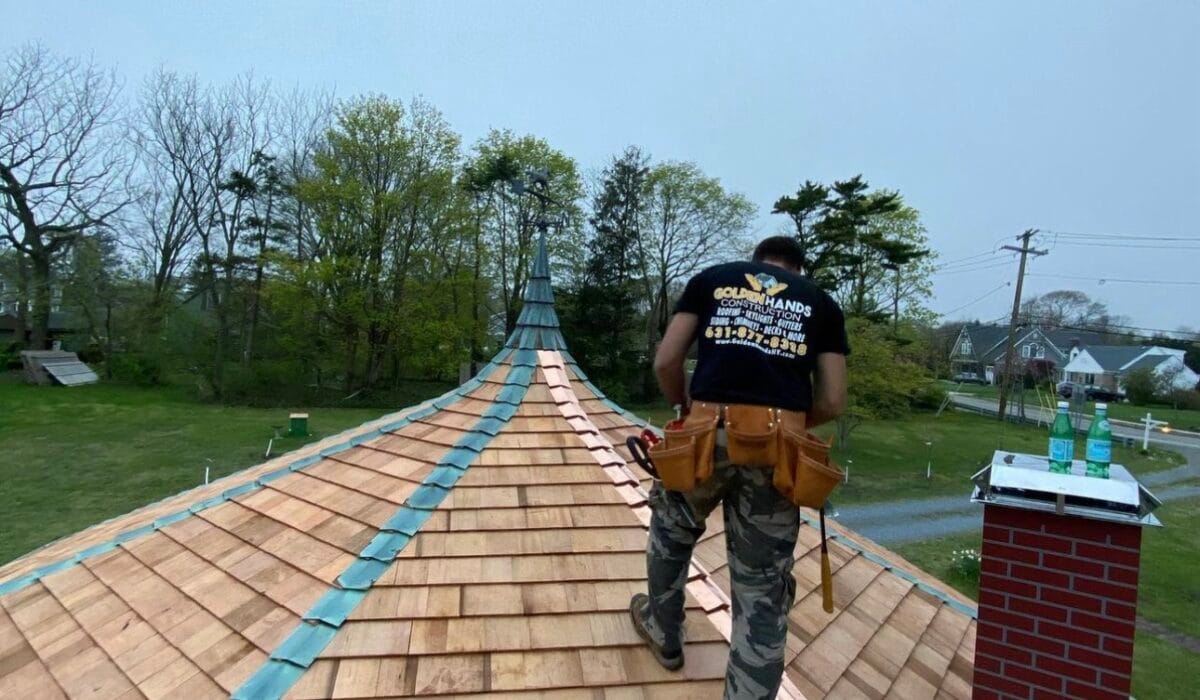
Your roof does more than cover your home. It actively protects your structure from rain, wind, and snow. However, protection does not come from shingles alone. Roof flashing plays a major role in keeping water out. Understanding How Roof Flashing Protects Your Home from Water Damage helps you prevent leaks, rot, and expensive repairs.
At Golden Hands Construction, we often find that roof leaks start at flashing points, not the shingles. When flashing works properly, it redirects water safely. However, when it fails, water enters your home quickly.
What Roof Flashing Does
Roof flashing is thin metal material installed in weak points of the roof. These weak points include joints, edges, chimneys, skylights, and vents.
Its main job is to block water from entering gaps. In addition, it guides water away from areas where leaks usually start.
Without flashing, water easily slips under roofing materials. As a result, even a small opening can lead to major damage over time.
Therefore, flashing acts as a critical barrier in your roofing system.
Where Roof Flashing Is Installed
Roofers install flashing in areas where water naturally collects or flows.
For example, flashing surrounds chimneys, skylights, and plumbing vents. In addition, it runs through roof valleys where two slopes meet. It also protects roof edges and wall connections.
Because these areas face heavy water flow, they require extra protection. Otherwise, leaks can develop very quickly.
How Flashing Stops Water Leaks
Water always follows the easiest path. Therefore, even a tiny gap can allow it inside your home.
However, flashing changes that path. It overlaps roofing materials and pushes water downward. In this way, it prevents moisture from entering weak points.
As a result, flashing works with gravity rather than against it. Moreover, it creates a sealed barrier that protects the roof structure underneath.
This is one of the main reasons How Roof Flashing Protects Your Home from Water Damage so effectively.
Types of Roof Flashing and Their Purpose
Different areas of the roof require different flashing types.
Step flashing protects roof-to-wall connections. It is installed in layers so water flows safely downward.
Meanwhile, valley flashing handles heavy water flow where two roof slopes meet. Because of this, it prevents pooling and overflow.
Drip edge flashing directs water away from fascia boards. In addition, it helps gutters collect water more efficiently.
Chimney flashing seals the space between brick and roofing materials. As a result, it prevents leaks in one of the most common failure points.
Each type works together to protect the entire roofing system.
What Happens When Flashing Fails
When flashing breaks or loosens, water enters the roof system quickly. First, it may cause small leaks. Then, it spreads into insulation, wood, and drywall.
For example, you may notice water stains on ceilings or walls. In addition, mold growth may begin in hidden areas. Over time, wood rot can develop inside the roof structure.
Unfortunately, many homeowners do not notice the issue until damage becomes severe.
Therefore, flashing failure often leads to costly repairs if ignored.
Weather Damage and Flashing Wear
Flashing faces constant exposure to harsh weather. For instance, rain pushes water into seams, while wind loosens edges over time.
In addition, temperature changes cause metal to expand and contract. As a result, seals weaken slowly over time.
During winter, ice buildup adds extra pressure. Meanwhile, summer heat speeds up material wear.
Therefore, regular inspection becomes essential for long-term roof protection.
Why Proper Installation Matters
Even high-quality flashing fails when installed incorrectly. For example, gaps or poor sealing allow water to enter immediately.
In contrast, proper installation ensures tight overlaps and secure sealing. As a result, water flows away from vulnerable areas instead of entering them.
At Golden Hands Construction, we install flashing carefully to match roof design and drainage flow.
If you need roof inspection or repair services, you can learn more here:
https://goldenhandsny.com/services/roof-repair/
In addition, we ensure every flashing point integrates correctly with shingles and underlayment for maximum protection.
Warning Signs of Flashing Problems
Flashing issues often start small. However, they quickly become visible if ignored.
For example, you may see water stains near chimneys or ceilings. In addition, rusted metal edges often indicate aging flashing. Likewise, peeling paint near rooflines may signal moisture buildup.
Furthermore, leaks near skylights or vents often point directly to flashing failure.
Therefore, early detection helps prevent major structural damage.
Repairing or Replacing Roof Flashing
In many cases, roof flashing can be repaired instead of replaced. For example, small gaps can be resealed quickly. However, severe damage often requires full replacement in affected areas.
Because flashing protects critical roof sections, repairs should happen quickly. Otherwise, water damage can spread deeper into the structure.
As a result, fast action reduces repair costs and prevents long-term issues.
Why Roof Flashing Is So Important
Roofing systems include many components. However, flashing protects the most vulnerable areas.
While shingles cover large surfaces, flashing seals edges and joints. Therefore, it prevents water from entering weak points.
Without flashing, even a new roof can leak. In contrast, properly installed flashing extends roof life significantly.
This clearly explains How Roof Flashing Protects Your Home from Water Damage.
Final Thoughts
Roof flashing may seem like a small detail, but it plays a major role in protecting your home. First, it seals weak points. Next, it directs water away from critical areas. Finally, it prevents long-term structural damage.
However, when flashing fails, water quickly enters the roof system and causes expensive repairs.
At Golden Hands Construction, we inspect, repair, and install roof flashing systems with precision and care. If you notice leaks or suspect damage, you can contact us here:
https://goldenhandsny.com/services/roof-repair/


