

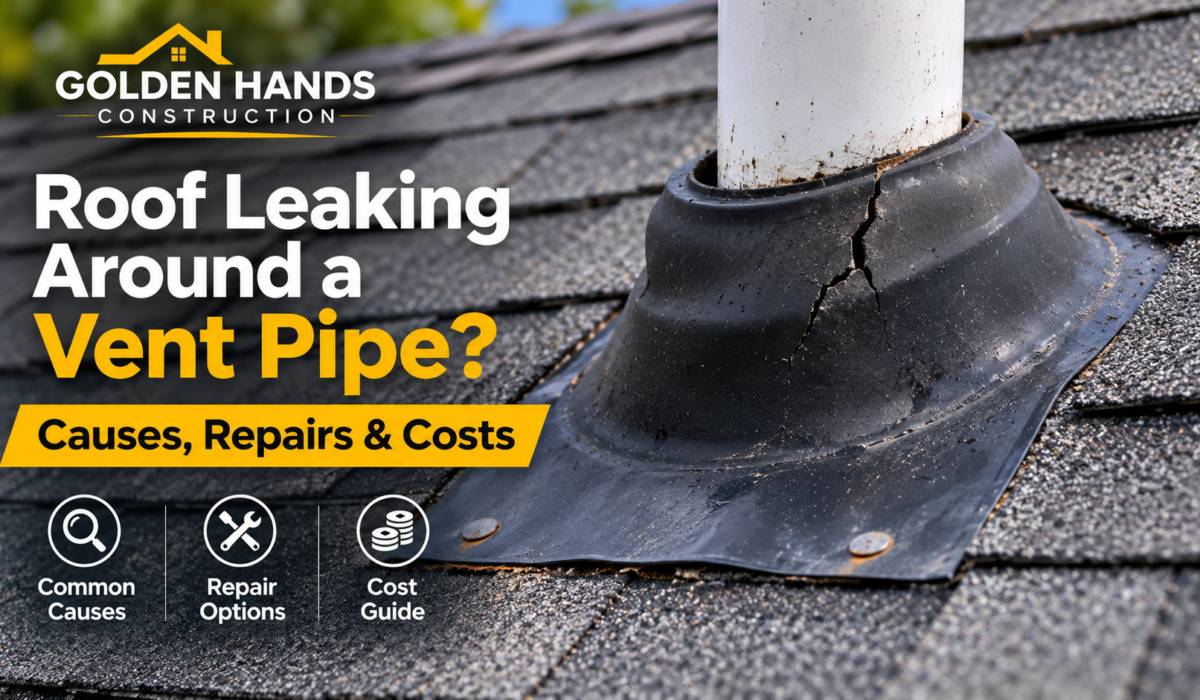
A roof leak around a vent pipe is one of those problems homeowners may not notice until water stains begin appearing on their ceilings, attic insulation becomes damp, or dripping water develops during heavy rain.
The good news is that a leaking roof vent pipe does not automatically mean you need a new roof. In many situations, the problem involves a damaged rubber pipe boot, deteriorated flashing, or a gap where the pipe passes through the roofing system.
For homeowners in East Hampton, Southampton, Sag Harbor, Bridgehampton, Montauk, and surrounding Long Island communities, identifying these problems early can help limit water damage and avoid unnecessary roofing expenses.
At Golden Hands Construction, we provide professional roof repair and inspection services throughout Long Island, helping homeowners identify roofing problems and choose appropriate repairs.
In this guide, we’ll explain why roof vent pipes leak, how to identify warning signs, what repairs may be needed, and when to contact a roofing contractor.
What Is a Roof Vent Pipe?
A roof vent pipe is a vertical pipe that extends through the roof, commonly as part of a home’s plumbing ventilation system.
Plumbing vent pipes help regulate air pressure within the drainage system and allow sewer gases to discharge outdoors.
Because these pipes pass directly through the roof, they create penetrations that require specially designed waterproofing details.
On many asphalt shingle roofs, a vent pipe is surrounded by a flashing assembly containing a metal or plastic base and a rubber collar.
The collar fits around the pipe while the flashing base integrates with surrounding shingles.
When properly installed, this assembly helps direct rainwater away from the penetration.
However, the materials can deteriorate over time.
The U.S. Department of Energy’s Building America Solution Center explains the importance of proper flashing around roof penetrations, including vent pipes.
7 Common Reasons a Roof Leaks Around a Vent Pipe
Understanding the source of a roof leak is essential before choosing a repair.
1. Cracked Rubber Pipe Boot
One common cause of water entering around a plumbing vent is deterioration of the rubber collar surrounding the pipe.
Roof boots are continuously exposed to sunlight, rain, temperature changes, and seasonal weather.
Over time, certain rubber materials may become brittle or develop cracks.
Once the collar separates from the pipe, rainwater can enter through the opening.
The damage may be especially difficult to notice from the ground because cracks can develop on the uphill side of the boot.
2. Improperly Installed Vent Flashing
Roof flashing must be integrated correctly with the surrounding roofing materials.
On a conventional asphalt shingle roof, the flashing generally needs to shed water over lower shingles while remaining protected by properly arranged upper shingles.
If the flashing is installed incorrectly, rainwater may enter beneath the roofing system.
Installation errors may not become obvious until a period of heavy or wind-driven rain.
3. Loose or Damaged Flashing
Flashing materials can become loose, bent, cracked, or otherwise damaged.
Wind, previous roof work, movement, and material deterioration may contribute to these problems.
Even when the rubber collar remains intact, damage to the flashing base can create a pathway for moisture.
4. Deteriorated Sealant From Previous Repairs
Some homeowners discover that a previous contractor applied roofing sealant around a leaking vent pipe.
While certain compatible sealants have legitimate uses, applying caulk over a deteriorated flashing assembly is not always a durable repair.
Sealant may crack, separate, or fail to address water entering beneath the surrounding shingles.
The appropriate solution often involves correcting or replacing the defective flashing rather than repeatedly covering it with sealant.
5. Damaged Shingles Around the Vent
A roof leak near a vent pipe does not always originate from the pipe boot.
Missing, cracked, lifted, or incorrectly installed shingles above the penetration can allow water to enter and travel beneath the roof covering.
The water may then become visible near the vent pipe.
A professional inspection should assess the surrounding roof area rather than assuming the boot is responsible.
6. Improper Flashing After Roof Replacement
When a roof is replaced, existing penetrations need compatible flashing details.
Reusing deteriorated components or installing inappropriate flashing may leave an otherwise new roof vulnerable to leaks.
If leaking begins shortly after a roof replacement, the roofing contractor should inspect the penetration and surrounding installation details.
7. Condensation or Another Moisture Source
Not every water stain near a vent pipe comes from an exterior roof leak.
Condensation on cold surfaces, plumbing defects, or problems with exhaust ducts can also create moisture.
For example, bathroom exhaust ducts must be designed and terminated appropriately to prevent moisture from collecting in the attic.
Identifying whether water is entering from rain or forming inside the home helps prevent unnecessary roofing repairs.
Warning Signs Your Roof Vent Pipe May Be Leaking
Roof leaks are often difficult to identify because water can travel along framing and roofing components before appearing inside the home.
Several signs may indicate a problem around a roof penetration.
Water Stains on Ceilings
Brown or yellow stains near an upper-floor ceiling may indicate moisture infiltration.
If the stain becomes darker after heavy rainfall, an exterior leak should be investigated.
However, the location of the stain does not necessarily identify the exact point of entry.
Damp Attic Insulation
Wet insulation near a roof penetration may indicate that water is entering through damaged flashing or another part of the roofing system.
Moist insulation should be investigated promptly because it may lose thermal performance and contribute to deterioration of surrounding materials.
Water Dripping During Heavy Rain
Leaks that occur during storms may be associated with damaged roofing components.
Wind-driven rain can expose weaknesses that are not apparent during lighter rainfall.
Mold or Musty Odors
Persistent moisture may contribute to microbial growth and unpleasant odors.
If a roof leak is suspected, both the source of water and any affected materials should be evaluated.
Visible Cracks Around the Pipe
From a safe location, homeowners may sometimes notice damaged flashing or displaced roofing materials near the pipe.
However, many pipe boot cracks are too small or poorly positioned to be visible from the ground.
Do not climb onto the roof to investigate.
If you’re experiencing these symptoms, arrange a professional roof inspection on Long Island to determine the source.
Can a Leaking Roof Vent Pipe Be Repaired Without Replacing the Roof?
Yes. Many vent pipe leaks can be repaired without replacing the entire roofing system.
The best repair depends on the condition of the pipe, flashing, surrounding shingles, and roof decking.
Replacing a Damaged Pipe Boot
If the rubber collar has deteriorated, replacing the roof boot assembly may provide a suitable solution.
A contractor can remove the defective flashing and install a compatible replacement, integrating it correctly with the surrounding roofing materials.
A complete replacement may be preferable to a temporary patch when the existing materials have reached the end of their service life.
Repairing or Replacing Flashing
When the flashing base is damaged or improperly integrated with the roof, a contractor may need to remove nearby shingles and install new flashing.
The repaired area must direct water away from the penetration and maintain the roof system’s waterproofing details.
Replacing Damaged Shingles
If surrounding shingles have cracked, lifted, or become displaced, localized shingle replacement may be necessary.
The contractor should also inspect the underlying materials for water damage.
Repairing Damaged Roof Decking
If water has penetrated the roof for an extended period, sections of the underlying deck may be compromised.
Depending on the extent of deterioration, the affected materials may require replacement.
The condition cannot always be determined through a visual inspection of the exterior roof surface alone.
Addressing Other Moisture Sources
If moisture is caused by plumbing, condensation, or ductwork rather than exterior flashing, the solution may require a different trade.
A roofing contractor should explain the evidence supporting the diagnosis before recommending repair work.
Golden Hands Construction provides roof repair services across Long Island for damaged shingles, flashing, and related roofing components.
How Much Does Roof Vent Pipe Leak Repair Cost on Long Island?
The cost of repairing a roof leak around a vent pipe depends on the condition of the roofing system and the scope of work.
A straightforward pipe boot replacement may require significantly less work than repairing damaged decking and surrounding roofing materials.
Several factors influence the final estimate.
Type of Roofing Material
Asphalt shingles, cedar roofing, metal roofing, and flat roofing systems require different flashing products and repair methods.
A repair suitable for one roofing system may be inappropriate for another.
Roof Pitch and Accessibility
Steep roofs, high roof sections, or difficult access conditions may require additional safety equipment and labor.
Extent of Water Damage
If the leak has affected insulation, decking, or interior finishes, additional work may be necessary.
Number of Roof Penetrations
Some homes have several plumbing vents and other rooftop penetrations.
If multiple flashing assemblies are deteriorating, a contractor may recommend addressing them during the same visit.
Age and Condition of the Roof
An isolated leak on a roof in good overall condition is different from a leak occurring on a roof with widespread deterioration.
A contractor should assess whether localized repairs are likely to provide lasting value.
For a reliable price, request an inspection and an itemized repair estimate.
Why Roof Vent Leaks Can Be Difficult to Locate
Water does not always travel straight down.
After entering beneath damaged flashing, rainwater can move along roof decking, rafters, insulation, or other building components.
As a result, the stain inside your home may appear several feet away from the actual roof penetration.
This is one reason homeowners should avoid assuming that the first visible wet spot identifies the leak.
The National Roofing Contractors Association emphasizes the importance of roof inspections and identifying damaged flashing and other roofing defects before they become more serious.
A thorough inspection may include checking the vent pipe flashing, adjacent shingles, nearby roof penetrations, attic conditions, and the path of water intrusion.
Roof Vent Pipe Problems in East Hampton and Southampton
Homes across Long Island are exposed to changing weather conditions that may affect roofing components over time.
Properties in East Hampton, Southampton, Sag Harbor, Montauk, and Bridgehampton can experience heavy rainfall, coastal winds, and seasonal temperature changes.
These conditions make proper flashing installation and regular roof maintenance important.
East Hampton
Homes with asphalt shingle or cedar roofs should have roof penetrations evaluated when leaks or visible flashing deterioration appear.
Older roofing components may need attention even when the surrounding roof remains functional.
Southampton
Roof penetrations around plumbing vents, skylights, chimneys, and other features require properly integrated waterproofing details.
If staining appears after storms, the inspection should include the full surrounding roof area.
Sag Harbor
Properties with multiple roof sections or complicated rooflines may have several potential water-entry points.
A systematic inspection can help distinguish vent pipe leaks from other flashing problems.
Montauk
Coastal exposure can contribute to weathering of some exterior building components.
Roofing materials and flashing should be appropriate for the installation conditions and maintained as needed.
Bridgehampton
Both older and newer homes can experience roof penetration leaks.
A recently installed roof is not necessarily immune to flashing defects, while an older roof does not automatically require replacement.
The correct repair depends on the actual condition of the roof.
How to Prevent Roof Leaks Around Vent Pipes
Preventive inspection and maintenance can help identify flashing problems before they cause interior damage.
Include Vent Pipes in Routine Roof Inspections
Ask a qualified roofing contractor to check the condition of visible pipe boots, flashing bases, and nearby roofing materials.
Particular attention should be given to cracked rubber collars, displaced flashing, and signs of previous repairs.
Inspect the Roof After Significant Storms
Strong winds and severe weather can displace roofing materials or expose existing weaknesses.
If you notice new interior stains after a storm, arrange an assessment.
Avoid Repeated Temporary Sealant Repairs
A temporary repair may help limit immediate water intrusion, but it should not automatically be considered a permanent solution.
The original cause of the leak needs to be identified and corrected.
Review Flashing During Roof Replacement
When replacing a roof, confirm that plumbing vent flashing and other penetration details will be evaluated and replaced where appropriate.
Using compatible materials and correct installation methods is essential.
Address Interior Moisture Promptly
If water enters your attic or living space, protect belongings and arrange to have the source investigated.
Persistent moisture should not be ignored simply because dripping has stopped.
When Should You Call a Roofing Contractor?
You should consider professional assistance when you notice repeated ceiling stains after rain, visible damage around roof penetrations, water dripping into the attic, or deteriorating flashing.
A roofer can evaluate whether the problem requires a new pipe boot, flashing repair, shingle replacement, or more extensive work.
Avoid walking on a wet or damaged roof, particularly after storms.
If water is affecting electrical fixtures, creating ceiling deformation, or entering near electrical equipment, keep clear of the affected area and seek appropriate professional assistance.
The sooner the source of an active leak is identified, the sooner measures can be taken to limit further damage.
Frequently Asked Questions About Roof Vent Pipe Leaks
Why does my roof leak around the vent pipe when it rains?
Common causes include cracked rubber pipe boots, deteriorated flashing, incorrectly installed roofing components, and damaged surrounding shingles. A professional inspection is needed to confirm the source.
Can I put roofing caulk around a leaking vent pipe?
Sealant alone may not correct damaged or improperly installed flashing. The appropriate repair depends on the roofing materials and the condition of the penetration.
How long do roof pipe boots last?
Their service life varies depending on the material, installation, weather exposure, and maintenance. Some rubber collars deteriorate before the surrounding roofing system needs replacement.
Can a roof vent pipe leak cause mold?
Persistent moisture can create conditions favorable to mold growth. Addressing the source of water and evaluating affected materials is important.
Do I need to replace my entire roof because of a leaking vent pipe?
Not necessarily. A localized flashing or pipe boot repair may be sufficient if the remaining roof is in serviceable condition.
Can water leak around a vent pipe even if the boot looks fine?
Yes. Water may enter through improperly installed flashing, damaged shingles, another roof penetration, or a separate moisture source.
How do I know whether the leak is from my roof or plumbing?
The timing of the moisture can provide clues. Water that appears primarily during rain may suggest a roofing problem, while moisture associated with plumbing use can suggest another source. Neither pattern proves the cause without investigation.
Need Roof Vent Pipe Leak Repair on Long Island? Contact Golden Hands Construction
A damaged vent pipe boot may look like a small roofing problem, but water entering through the penetration can eventually affect insulation, roof decking, ceilings, and interior finishes.
Fortunately, many of these problems can be addressed with targeted roofing repairs when the surrounding system remains in good condition.
At Golden Hands Construction, we provide roofing services for homeowners throughout Long Island, including East Hampton, Southampton, Sag Harbor, Bridgehampton, Montauk, and surrounding communities.
Whether you’re dealing with a cracked pipe boot, deteriorated flashing, or an unexplained ceiling stain, our team can help investigate the problem and discuss appropriate repair options.
Protect your home before a small leak becomes a larger repair.
Call (631) 877-8338 to discuss your roofing concerns and request an estimate.
Visit Golden Hands Construction to learn more about our roof repair and inspection services.


