

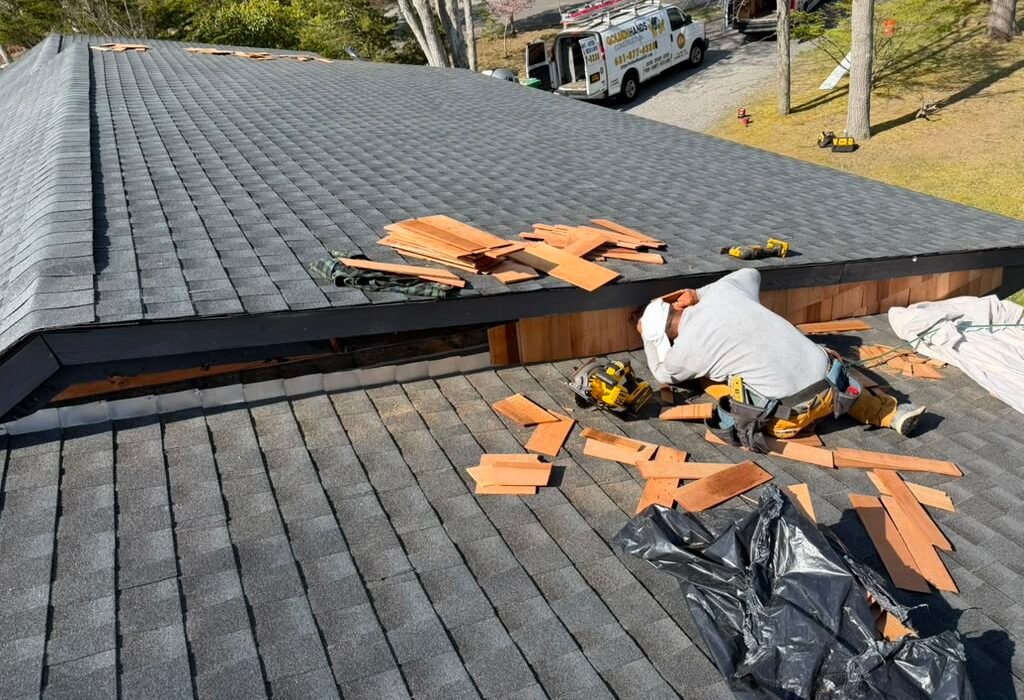
Roof leaks after heavy rain can leave Long Island homeowners wondering how serious the damage is. A small drip may stop when the weather clears, but that does not mean the problem has gone away. The next storm may bring water through the same opening.
The first step is to protect the affected area safely and record what happened. Then arrange an inspection to find where water enters. A lasting repair should address that entry point and any damaged materials around it.
For homeowners in the Hamptons, North Fork, Suffolk County, and Nassau County, understanding the leak pattern can make the repair process clearer.
Why a Roof May Leak Only During Heavy Rain
Some roof problems become noticeable only under certain weather conditions. Damaged shingles and deteriorated flashing can let moisture enter. Flashing protects joints around chimneys, skylights, vents, and other roof openings. GAF identifies these damaged components among common roof leak causes.
A leak that appears during one storm but not another still needs attention. Tell the contractor whether it happens during steady rain, wind, or a long period of wet weather. These observations provide clues, although they cannot confirm the cause on their own.
Avoid assuming that every storm-related drip requires a complete roof replacement. The condition of the whole roof and the extent of the damage should guide that decision.
What to Do When You Notice Water Indoors
Move furniture and valuables away from the wet area if you can do so safely. Place a container beneath a small drip where the ceiling appears stable. Keep people away from sagging ceilings and areas where water reaches electrical fixtures.
Do not climb onto a wet roof to find the opening. Avoid entering an unsafe attic or stepping onto surfaces that cannot support your weight.
Take photographs from a safe position. Capture the stain, drip, or affected wall, and note the date and time. If the damage changes, take another photograph. These records give the contractor a useful starting point.
Record the Leak Pattern Before the Inspection
A few clear observations can help explain a problem that is no longer visible when the roofer arrives. Note which room has the leak and how long it takes to appear after rain begins.
Record whether water enters near a chimney, skylight, exterior wall, or ceiling fixture. Mention any recent roof work and whether the same area has leaked before. Keep previous estimates and repair records available.
Describe what you saw without trying to diagnose it. For example, “water appeared beside the skylight after two hours of rain” gives more useful information than assuming the skylight needs replacement.
Why the Ceiling Stain May Not Identify the Roof Opening
Water can travel before it reaches the place where you see a drip. Golden Hands’ roof repair information explains that finding the source involves tracing the leak rather than assuming it sits directly above the visible damage.
This is why a repair needs more than a look at the stained ceiling. The contractor should examine relevant roof details and explain how the evidence supports the diagnosis.
Ask for photographs of the affected roof area. They can help you understand a recommendation without climbing onto the roof yourself.
What the Roofer Should Check
The inspection should follow the evidence from your home. Relevant areas may include damaged roof coverings, flashing, roof penetrations, and connections between different surfaces.
If water appears near a chimney or wall connection, the contractor should assess the flashing and nearby materials. Golden Hands provides roof flashing repair services for these vulnerable areas.
A broader roof inspection can also help establish whether the problem affects one section or forms part of wider deterioration. Ask what the inspection found, what remains uncertain, and whether additional access is needed.
Temporary Protection and Permanent Roof Repairs
If weather conditions prevent an immediate repair, ask the contractor whether temporary protection is appropriate. Clarify what it covers and when the permanent work can begin.
Temporary work should come with a clear follow-up plan. Keep the appointment details and ask what changes indoors would require urgent attention before the return visit.
For the permanent repair, request a written description of the damaged components and the proposed materials. GAF’s roof leak repair guidance offers further information about common leak sources and the importance of addressing them promptly.
Questions to Ask Before Approving the Work
Ask the contractor to explain why the proposed repair fits the problem. Does the estimate include removing damaged materials? Will the crew inspect the surface beneath them? How will they handle unexpected damage?
Confirm whether the price covers only the exterior roof repair. Interior ceiling repairs, insulation, and other affected materials may require separate work. Knowing the scope helps you budget and prevents misunderstandings.
Also ask about the expected schedule and any written warranty that applies. Keep these details with the estimate so you can refer to them after completion.
When to Discuss Roof Replacement
A leak alone does not establish that your roof needs replacement. A targeted repair may be practical when damage affects a limited section and the surrounding materials remain serviceable.
However, repeated leaks or problems across several areas deserve a wider assessment. Ask the contractor to explain whether further repairs are likely to provide useful service or whether replacement deserves consideration.
If both options are available, compare their written scopes. A lower repair price is easier to assess when you understand what it fixes and what concerns remain.
Planning Repairs for Seasonal Long Island Homes
If your property stays empty for part of the year, arrange access for inspections and repairs. Give the contractor a reliable contact number and explain who can enter the home to check the affected room.
Plan a follow-up check after rain once the work is complete. Save the repair photographs and invoice alongside your earlier leak records. If water returns, this information helps explain exactly what changed.
Golden Hands lists service areas across Southampton, East Hampton, Bridgehampton, Amagansett, Wainscott, Montauk, and Sag Harbor. Its coverage also includes Riverhead, Mattituck, Cutchogue, Southold, Greenport, Shelter Island, and communities across Suffolk and Nassau counties.
Arrange Roof Leak Repair on Long Island
A roof leak that stops after rain still deserves a clear diagnosis. Recording the pattern, arranging an inspection, and reviewing a written repair scope can help you make an informed decision.
Golden Hands Construction offers roof repair services on Long Island. To discuss a leak in the Hamptons, North Fork, Suffolk County, or Nassau County, contact Golden Hands Construction at (631) 877-8338 and request a free estimate. Share your property’s location and any photographs of the affected area.


