

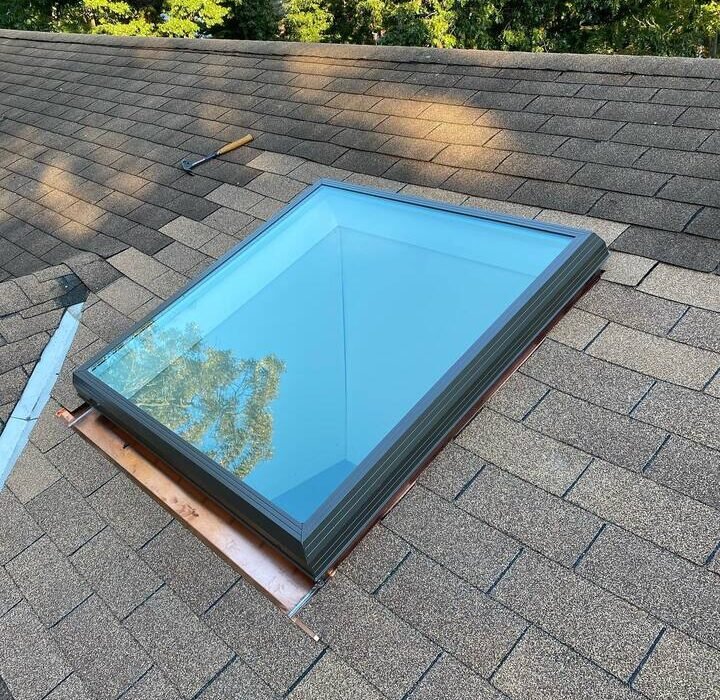
Skylight condensation in Southampton can leave droplets on the glass and sometimes cause dripping indoors. However, water around a skylight can also come from a roof leak or a problem with the skylight itself. Finding the source matters because each problem needs a different response.
Start with three observations. Note when the water appears, whether it sits on the glass or surrounding ceiling, and whether it follows rainfall. These clues help guide an inspection. They do not replace one, especially when stains keep growing or water reaches the room.
Water on the inside glass can come from indoor moisture
Condensation forms when moist air meets a surface cold enough for water vapor to collect as droplets. Skylights can show this clearly because warm, moist air rises toward the ceiling.
VELUX explains in its skylight condensation guidance that excess room moisture can cause condensation. Ventilation, air circulation, and moisture control can help reduce it.
If droplets appear after showers or cooking, record that pattern. Also note whether other windows show moisture at the same time. Similar conditions elsewhere in the room can support an indoor-moisture explanation.
Do not assume that every wet skylight needs exterior sealing. First establish whether the moisture forms inside or enters from outside.
Water after rainfall needs a different inspection
A stain that grows during rain deserves a check of the skylight and surrounding roofing. Flashing, roof coverings, seals, and installation details can all affect water protection.
Notice where the dampness begins. Does water appear at an upper corner, along the frame, or farther down the ceiling opening? Take a wide photo and a closer view before the area dries.
Golden Hands Construction provides skylight leak services. An inspection should consider the surrounding roof as well as the visible skylight.
Rain timing is useful evidence, but it does not identify the failed component by itself. Water can travel before it reaches the spot you can see.
Fog between the panes differs from surface condensation
Moisture on the room-facing glass differs from fog trapped inside an insulated glass unit. If the haze sits between panes, ordinary cleaning cannot reach it.
Persistent internal fogging can indicate a problem with the glass unit’s seal. The available repair depends on the model, age, condition, and replacement parts.
Avoid climbing or stretching to test an out-of-reach skylight. Photograph the cloudy area from below and ask the contractor to confirm where the moisture sits.
Before approving a full replacement, ask whether a suitable glass replacement exists for that model. The answer may differ between products.
A dry-weather drip does not settle the diagnosis
Dripping when it is not raining can suggest condensation, but it does not prove it. Moisture from an earlier event may remain in surrounding materials. More than one problem can also affect the same opening.
Keep a short record of the conditions when dripping occurs. Include recent rainfall, room use, and whether droplets cover the glass.
For a Southampton home checked only occasionally, ask the person visiting to photograph the same area each time. A dated sequence can reveal changes that one inspection photo misses.
Why the skylight shaft also matters
The skylight shaft is the opening that connects the roof window to the room below. Its surrounding construction can affect both temperature and moisture.
If problems continue, the inspection may need to include insulation and air sealing around the shaft. Access and construction vary, so the contractor should explain what they can inspect and where uncertainty remains.
Repeatedly wiping the glass may remove visible water without addressing the conditions that create it. Likewise, repainting a stained shaft can hide evidence before the source has been corrected.
What you can check safely before the visit
From floor level, photograph the glass, frame, and surrounding ceiling. Note peeling paint, dark marks, swollen trim, or changes since the last rain.
If you use a room humidity monitor, record its readings alongside the photos. A reading provides context, but it cannot confirm whether the roof leaks.
Use existing kitchen and bathroom ventilation as intended. Avoid blocking skylight drainage features or applying sealant to parts you cannot identify.
For high skylights, leave close inspection and access to the contractor. Ground-level observations are enough to start the discussion.
Repair should follow the confirmed problem
Indoor surface condensation may call for better moisture control, ventilation, or investigation of cold surfaces. A rain leak may require work on flashing, roofing, or the skylight assembly.
Trapped moisture between panes may lead to a glass-unit assessment. A damaged or outdated skylight may make replacement worth considering.
These paths can overlap. For example, correcting a roof leak does not necessarily resolve excessive indoor humidity.
Golden Hands Construction offers skylight repair services. Ask which findings support the proposed work and what result you should expect.
What affects repair and replacement costs
Access, roof slope, skylight size, and the source of the problem all influence the scope. Nearby roof damage or wet interior materials can add separate work.
A quote for an exterior repair may exclude drywall, trim, and painting. Ask the contractor to identify those boundaries before work begins.
For replacement, confirm the proposed model and whether the price includes suitable flashing and interior finishing. Compare complete scopes rather than headline prices.
If the product may have warranty coverage, locate its identification details and purchase records where available. Coverage depends on the product and warranty terms.
Common questions from Southampton homeowners
Can condensation make a skylight drip?
Yes. Enough condensation can collect and drip indoors. The cause still needs confirmation when water repeatedly affects the ceiling or trim.
Does foggy glass mean rain is entering?
Not necessarily. Surface moisture can come from indoor air. Fog trapped between panes raises a different question about the insulated glass unit.
Will adding sealant stop the problem?
Only a repair that addresses the actual fault can resolve it reliably. Exterior sealant does not reduce indoor humidity or restore a failed insulated glass seal.
Should I replace the skylight immediately?
The inspection should guide that decision. Some problems allow a focused repair. Others may make replacement more practical because of the unit’s condition or unavailable parts.
Get help with a wet skylight in Southampton
Golden Hands Construction serves Southampton homeowners with skylight repair and leak services. If you notice dripping, cloudy glass, or stains around the opening, share when the problem appears and where the water starts. Request an estimate or call (631) 877-8338 to discuss an assessment.


