

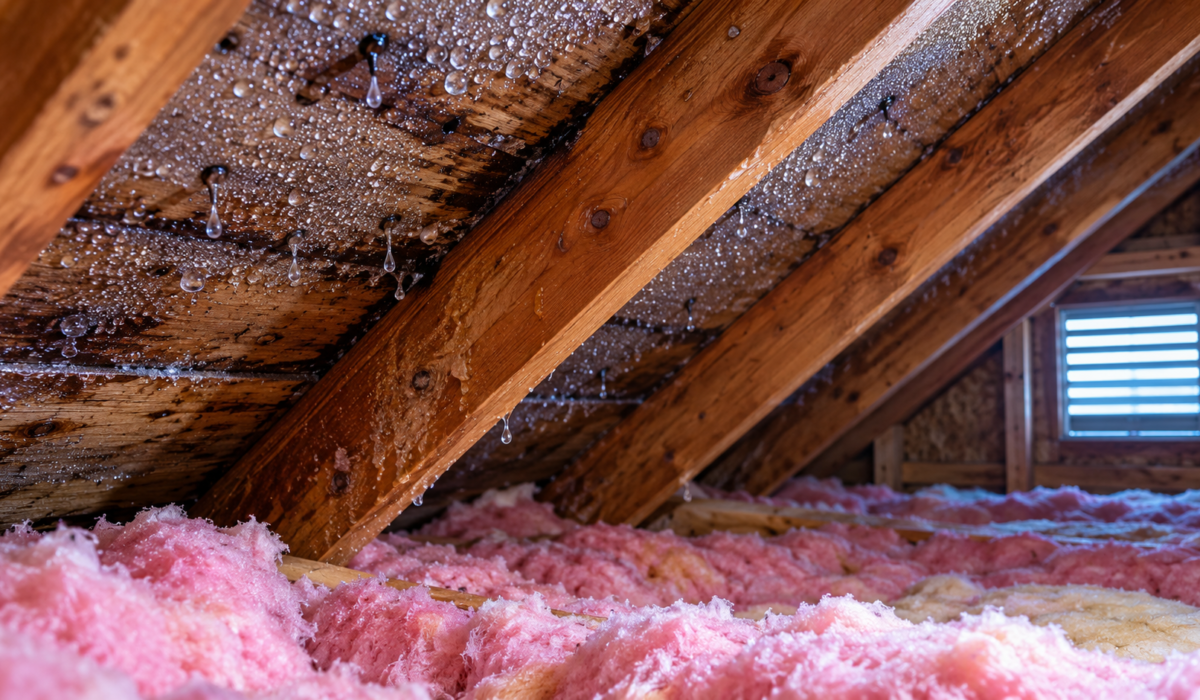
Finding water in your attic does not always mean your roof is leaking.
During colder Long Island weather, attic condensation can look very similar to a roof leak. Wet roof decking, damp insulation, dripping nails, water stains, and moisture around rafters can all make a homeowner assume rain or snow is entering through the roof.
Sometimes that is exactly what is happening.
Other times, warm humid air from inside the house is reaching a cold attic and turning into moisture.
Knowing the difference between attic condensation and a roof leak is important because the correct repair depends on what is actually causing the water.
What Causes Attic Condensation?
Condensation forms when warm, moisture-filled air reaches a cold surface.
During winter, the air inside your house is usually warmer than the attic.
Moisture from showers, cooking, laundry, humidifiers, and normal household activity can travel upward.
If warm air enters a cold attic, it may come into contact with cold roofing nails, rafters, sheathing, or other surfaces.
The moisture in the air can then turn into water droplets.
This can leave the attic looking as though rain has entered through the roof even when the roofing material itself is not leaking.
What Does Attic Condensation Look Like?
One clue is how widespread the moisture appears.
A roof leak commonly affects a more specific section of the roof.
Condensation can sometimes appear across a much larger attic area.
You may notice water droplets on roofing nails, dampness across several sections of roof decking, frost on the underside of the roof during very cold weather, wet insulation, or moisture around rafters.
Another clue is timing.
If attic moisture appears during extremely cold weather even when it has not recently rained, condensation becomes a stronger possibility.
What Does a Roof Leak Look Like?
A true roof leak usually begins when outside water finds a path through the roofing system.
Possible entry points include damaged shingles, failed flashing, skylights, chimney flashing, roof valleys, vents, or penetrations.
Golden Hands already provides dedicated roof flashing services on Long Island because flashing protects many of these vulnerable roof intersections.
A roof leak may appear as a concentrated stain, wet trail, dripping point, or damaged section of insulation.
However, water can travel along the roof deck before dripping.
That means the visible stain may not be directly below the actual leak.
The Weather Can Give You an Important Clue
Pay attention to when the moisture appears.
If water shows up shortly after heavy rain, melting snow, or wind-driven storms, a roofing leak becomes more likely.
If moisture develops during long periods of cold weather without precipitation, attic condensation may be responsible.
Problems can also overlap.
For example, a home may have poor attic ventilation and a small flashing leak at the same time.
This is why diagnosing moisture based only on one ceiling stain can be difficult.
Check for Dripping Roofing Nails
Metal roofing nails can become extremely cold during winter.
Warm attic air containing moisture can condense on those nails.
Homeowners sometimes notice small water droplets hanging from dozens of nail points.
That pattern can suggest condensation rather than dozens of separate roof leaks.
A single wet area beneath damaged flashing or shingles usually points toward a different type of problem.
Look at the Roof Decking
The underside of the roof deck can provide useful clues.
Condensation may create widespread dampness, frost, or small moisture droplets.
A leak may produce more obvious water trails or staining that begins near a specific roof feature.
Look carefully around chimneys, skylights, vent pipes, roof valleys, and other penetrations.
Do not assume that dark wood automatically means an active leak.
Older moisture stains can remain visible long after a previous problem was repaired.
Check the Insulation
Attic insulation can reveal how far the moisture has spread.
A roof leak may soak one concentrated area.
Condensation may create more widespread dampness, especially when warm indoor air is continuously entering the attic.
Wet insulation should not be ignored.
When insulation becomes saturated, its performance can be reduced, and prolonged moisture can affect nearby building materials.
The important first step is determining where the moisture is coming from.
Why Bathroom Fans Matter
Bathroom exhaust fans should move humid air outside the home.
If an exhaust duct ends inside the attic, warm humid air may be dumped directly beneath the roof.
That creates ideal conditions for condensation during cold weather.
Check whether bathroom fans, kitchen exhausts, or dryer vents are improperly terminating inside the attic.
They should not simply release moisture into that space.
Air Leaks Can Send Moisture Into the Attic
Small openings between the living area and attic can allow warm air to escape upward.
Common areas include attic access panels, recessed lights, electrical penetrations, plumbing openings, gaps around ducts, and wall cavities.
The more warm air that enters the attic, the greater the chance of condensation when outdoor temperatures fall.
This is why moisture problems sometimes continue even when the roof itself is in good condition.
Poor Attic Ventilation Can Make the Problem Worse
A properly designed vented attic allows outside air to move through the space.
Typical systems use intake vents near the lower roof edge and exhaust vents higher on the roof.
If soffit vents become blocked by insulation or debris, airflow can be reduced.
The same can happen when roof ventilation is inadequate or incorrectly installed.
Golden Hands already has content discussing the importance of attic heat ventilation, making this topic closely related to the company’s existing roofing work without simply duplicating another roof-repair page.
Could a Skylight Be the Source?
Skylights are another common place homeowners notice interior moisture.
However, moisture near a skylight does not automatically prove the skylight itself is leaking.
Condensation can form on cold glass or around the frame.
A true skylight leak may involve flashing, seals, roofing materials, or drainage problems around the opening.
Golden Hands provides a dedicated skylight leak repair service on Long Island that includes inspection of seals, flashing, and drainage areas.
Internal link:
https://goldenhandsny.com/services/skylight-leaks/
Chimney Flashing Is Another Area to Inspect
When attic moisture is concentrated near a chimney, damaged chimney flashing should be checked.
Flashing seals the area where the chimney passes through the roof.
If that protection becomes loose, damaged, or deteriorated, rainwater can enter around the chimney.
Golden Hands’ chimney flashing service explains that flashing is designed to direct water away from the point where the chimney meets the roof.
Internal link:
https://goldenhandsny.com/services/chimney-flashing/
How to Tell If the Problem Is Condensation
Attic condensation becomes more likely when several of these conditions appear together.
Moisture develops during cold weather.
There has been little or no recent rainfall.
Water droplets appear across many nails or surfaces.
Frost develops beneath the roof deck.
Bathroom or exhaust ducts release air into the attic.
Attic ventilation appears blocked.
Insulation is uneven or missing.
Moisture is spread across a wide section instead of one isolated point.
None of these clues provide a perfect diagnosis on their own, but together they can help narrow down the cause.
How to Tell If You Probably Have a Roof Leak
A roof leak becomes more likely when water appears immediately after rain or melting snow.
Other warning signs include damaged or missing shingles, water concentrated around flashing, stains around a chimney or skylight, a visible puncture in the roofing material, or a water trail beginning near a roof penetration.
Repeated leaking from approximately the same area during storms is another strong clue.
Why Guessing Can Become Expensive
Treating condensation as a roof leak can lead to unnecessary roofing work.
Treating a real roof leak as condensation can allow water damage to continue.
For example, adding attic ventilation would not repair damaged chimney flashing.
Likewise, replacing a few shingles would not solve moisture caused by a bathroom exhaust fan dumping humid air into the attic.
The diagnosis needs to come first.
Should You Inspect the Roof Yourself?
You can safely look inside an accessible attic if conditions allow.
Use a flashlight and look for water trails, wet insulation, frost, dripping nails, stains, and obvious problem areas.
Avoid touching electrical equipment near moisture.
Do not climb onto a wet, snowy, icy, or steep roof.
Roof surfaces can become extremely slippery, particularly during winter.
A professional roof inspection allows the outside roofing system and interior attic conditions to be compared.
Internal link:
https://goldenhandsny.com/services/roof-inspection/
What Happens During a Roof Leak Inspection?
A contractor may check the roof covering, flashing, chimney areas, skylights, valleys, vents, gutters, roof penetrations, and visible attic conditions.
The goal should be to find the source instead of simply covering the interior stain.
If the roof looks sound but condensation is visible throughout the attic, attention may shift toward ventilation, insulation, or air leakage.
If damage is found around flashing or roofing materials, the solution may involve a targeted roof repair.
Does Attic Condensation Mean Your Roof Needs Replacement?
Usually, not by itself.
Condensation is often connected to moisture movement, insulation, air leakage, or ventilation rather than failure of the entire roofing system.
However, severe or long-term moisture can damage the roof deck.
That is why persistent attic moisture should still be taken seriously.
If plywood or other wood materials remain wet repeatedly, deterioration can eventually occur.
Does a Roof Leak Always Mean Roof Replacement?
No.
Many roof leaks can be repaired without replacing the entire roof.
The correct decision depends on the age of the roof, condition of the shingles, amount of existing damage, number of problem areas, condition of the decking, and previous repair history.
A small flashing problem may require a very different repair from widespread roof deterioration.
What Should Long Island Homeowners Do?
If you find water in your attic, start by paying attention to the conditions.
Ask yourself:
Did it recently rain?
Is snow melting?
Has the weather been extremely cold?
Is the moisture isolated or widespread?
Are there droplets on many roofing nails?
Is the moisture near a chimney or skylight?
Do bathroom fans vent outside?
Has the same area leaked during previous storms?
Those details can make the inspection much easier.
Get the Source Checked Before the Damage Spreads
Whether the cause is attic condensation or an actual roof leak, repeated moisture should not be ignored.
Finding the source early can help protect insulation, ceilings, roof decking, and other parts of your home.
Golden Hands Construction provides roofing inspections and repair services across Long Island, Suffolk County, Nassau County, Riverhead, Montauk, Southampton, and the Hamptons.
If you have moisture in your attic and are unsure whether it is condensation or a leaking roof, call Golden Hands Construction at (631) 877-8338 to schedule an inspection.


