

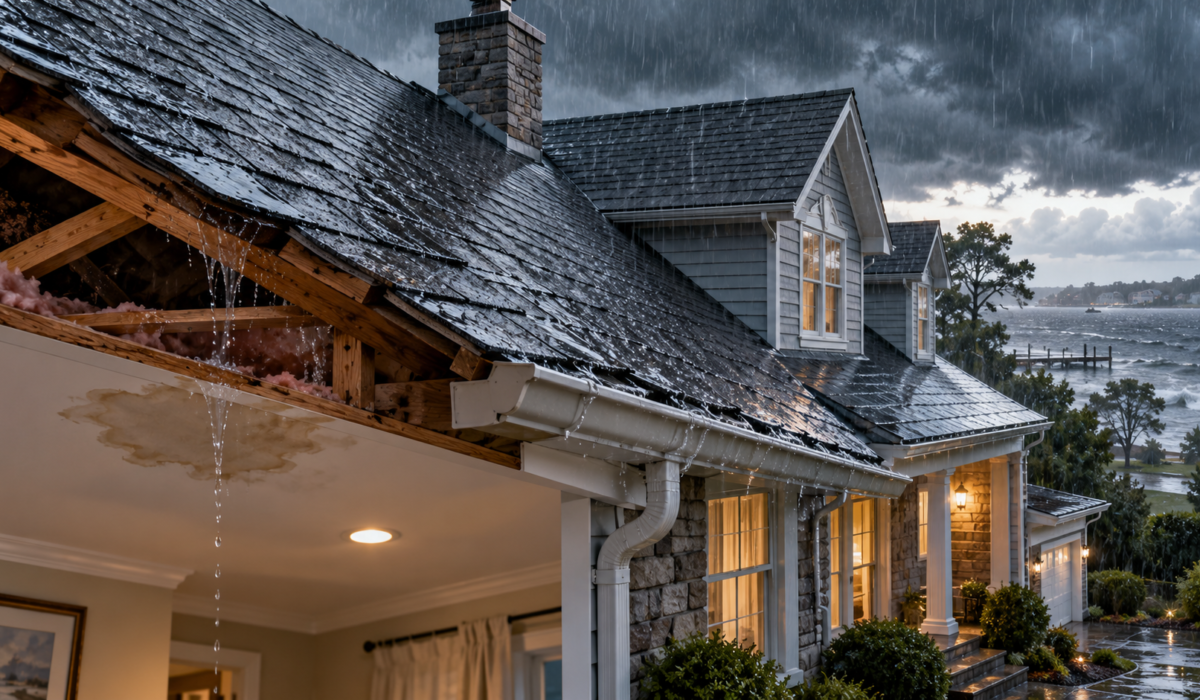
A roof leak after heavy rain on Long Island can start with one small water stain and quickly turn into damaged ceilings, wet insulation, mold concerns, or rotting roof decking. The difficult part is that the spot where you see water inside your house is not always directly below the place where rain entered the roof.
Water can travel along roof decking, rafters, pipes, flashing, and insulation before it finally becomes visible inside your home.
If you notice dripping water, brown ceiling stains, damp walls, peeling paint, or moisture in your attic after a storm, the safest approach is to find the actual entry point instead of simply covering the visible interior damage.
Here are seven of the most common places we would inspect when a Long Island homeowner reports a roof leak after rain.
1. Damaged or Missing Roof Shingles
Your shingles form the main weather barrier protecting the roof deck below.
Strong winds, falling branches, storms, age, and normal wear can loosen, crack, lift, or remove shingles. Once the protection is broken, rainwater may reach the layers underneath.
The damage is not always obvious from the ground.
A roof can appear normal while a shingle higher on the slope has lifted enough to allow wind-driven rain underneath it.
Warning signs can include:
Missing shingles after a storm, shingle pieces around the property, dark areas on the roof, exposed roof material, granules collecting near downspouts, or leaks that only happen during heavier rain.
If you suspect damage but cannot identify the source safely, a professional roof inspection on Long Island can help determine whether you need a small repair or whether a larger part of the roofing system is beginning to fail.
Internal link: Golden Hands Roof Inspection Service
Roof Inspection Service
2. Roof Flashing Around Chimneys, Walls and Vents
Flashing is one of the first places to inspect when a roof leaks even though the surrounding shingles still look good.
Roof flashing is installed around areas where the roofing system meets another surface. Common examples include chimneys, skylights, vents, valleys, walls, and roof intersections.
These are naturally vulnerable areas because water has to move around several changes in shape and direction.
If flashing becomes loose, cracked, corroded, improperly sealed, or displaced, rain may enter through a very small opening.
The leak can become especially noticeable during wind-driven rain.
Golden Hands already provides dedicated roof flashing services on Long Island, making this an important service to connect with homeowners reading this guide.
Internal link: Roof Flashing Repair and Installation
Roof Flashing Service
3. A Leaking Skylight
When water appears around a skylight, homeowners often assume the skylight glass itself is leaking.
That is not always the problem.
Water can enter around damaged flashing, worn seals, deteriorated roofing materials surrounding the skylight, or gaps created as materials age.
This is why simply applying caulk around a skylight may not solve the real cause.
Look for moisture around the interior frame, bubbling paint near the skylight, stains running downward from one corner, condensation between panes, or dripping during rain.
Golden Hands provides both skylight repair and dedicated skylight-leak services for Long Island homeowners.
Internal link: Skylight Repair on Long Island
Skylight Repair Service
Internal link: Leaking Skylight Service
Skylight Leak Service
4. Problems Around the Chimney
If the ceiling becomes wet near your fireplace or chimney after heavy rain, the roofing material itself may not be the only possible cause.
The chimney area contains several potential water-entry points.
Flashing can deteriorate. Mortar joints can develop damage. Sealing around the chimney may fail. Water can also collect where the chimney meets the roof.
Because several materials meet in one relatively small area, chimney leaks sometimes require a more detailed inspection than replacing one damaged shingle.
Do not ignore small water stains around a chimney.
Repeated moisture can damage nearby roofing materials and the interior finishes beneath them.
Internal link: Golden Hands Chimney Repair
Chimney Repair Service
5. Water Pooling on a Flat Roof
Flat and low-slope roofs behave differently from traditional steep-slope roofs.
Water needs a clear drainage path.
When drains become blocked or sections of the roof no longer drain correctly, water may remain on the surface.
Standing water increases the amount of time the roofing membrane is exposed to moisture. Existing cracks, punctures, seams, or damaged areas can then become leak points.
Golden Hands’ existing flat-roof service identifies ponding water, damaged membranes, clogged drainage, cracks, and punctures among the problems that can contribute to leaks.
If your flat roof continues holding water long after rainfall has ended, it is worth having the drainage and membrane inspected.
Internal link: Flat Roof Repair Long Island
Flat Roof Repair Service
6. Clogged Gutters and Poor Roof Drainage
Sometimes the leak is connected to how water is leaving the roof.
Leaves, twigs, dirt, shingle granules, and other debris can restrict gutters and drainage areas.
When rainwater cannot move away efficiently, it can overflow or back up around vulnerable parts of the roof.
Long Island homes surrounded by mature trees may experience debris buildup particularly quickly during fall.
After severe rainfall, look from the ground for overflowing gutters, water spilling behind the gutter, unusual pooling, sagging sections, or downspouts that appear to be draining very slowly.
Avoid climbing onto a wet roof to inspect these areas yourself.
Wet roofing materials can be extremely slippery.
7. A Small Roof Problem That Only Appears During Heavy Rain
One of the most frustrating roof problems is a leak that does not happen every time it rains.
Light rain may cause nothing.
Then one heavy storm produces a ceiling stain.
This often happens when water needs a particular combination of rain volume, wind direction, or duration before reaching the damaged area.
Small flashing gaps, lifted shingles, tiny membrane openings, and vulnerable roof intersections can behave this way.
That is why telling your contractor when the leak happens is useful.
Explain whether the leak happens:
During every rainfall.
Only during very heavy rain.
During rain combined with strong wind.
Several hours after the rain begins.
After snow or ice begins melting.
Only when rain comes from a particular direction.
Those details can help narrow down the possible source.
What Should You Do Immediately When Your Roof Starts Leaking?
First, protect the inside of the house.
Move furniture, electronics, rugs, and valuables away from the wet area when it is safe to do so.
Place a container beneath active dripping.
Photograph visible damage if you may need documentation later.
Do not climb onto the roof during rain or immediately after a storm.
Instead, inspect safely from inside the attic if the area is accessible and there are no electrical or structural hazards.
Look for wet roof decking, damp insulation, water trails, staining, or visible daylight.
Remember that the first wet area you find may still not be the original entry point.
Do Not Ignore Wet Building Materials
A roof leak is not only a roofing problem.
Water entering the home can affect insulation, drywall, ceilings, wood, paint, and other materials.
The CDC recommends drying wet areas and materials as quickly as possible and notes that materials that cannot be properly cleaned and dried within approximately 24 to 48 hours may require removal in some water-damage situations.
External reference:
CDC Mold and Moisture Cleanup Guidance
Finding and stopping the source of the water should therefore be a priority rather than repeatedly repainting the ceiling stain.
Does a Roof Leak Mean You Need a New Roof?
No.
A leaking roof does not automatically mean the entire roof needs replacement.
Some leaks come from isolated problems such as damaged flashing, several missing shingles, a skylight seal, a puncture, or another repairable area.
Other situations may involve widespread deterioration.
The correct decision depends on factors such as:
The age and overall condition of the roof.
How widespread the damage is.
Whether leaks continue appearing in different areas.
The condition of the roof deck.
The roofing material.
Previous repair history.
Storm damage.
Whether repairing one area would leave other failing areas untouched.
A proper inspection should identify the cause before a homeowner is pushed toward a major replacement.
Why Finding the Exact Leak Source Matters
A ceiling stain tells you that water reached the ceiling.
It does not necessarily tell you where water entered your roofing system.
Imagine rain getting beneath damaged flashing near a chimney.
Water may run several feet along the roof deck before reaching insulation. It may then follow a rafter before finally dripping through drywall.
Repairing the roof directly above the stain could leave the real opening untouched.
This is why leak diagnosis should focus on tracing the moisture path rather than guessing.
Roof Leaking After Tonight’s Rain?
If you are on Long Island and have just discovered a roof leak after heavy rain, document the visible damage and arrange an inspection before the next storm has a chance to make the problem worse.
Golden Hands Construction provides roofing and exterior services throughout Long Island, including Suffolk County, Nassau County, Riverhead, Montauk, Southampton, the Hamptons, and many surrounding communities.
The company also advertises 24/7 emergency roofing service for homeowners dealing with urgent roofing problems.
A leak may turn out to be a relatively small repair.
Finding it early is usually much better than discovering the same leak after several more storms.
Need your roof checked after heavy rain? Contact Golden Hands Construction at (631) 877-8338 for a roof inspection and free estimate.


