
Cedar shake roofs are a distinctive feature of many homes throughout East Hampton and the Hamptons. Their natural wood appearance complements traditional coastal architecture, but cedar requires proper maintenance to remain in good condition.
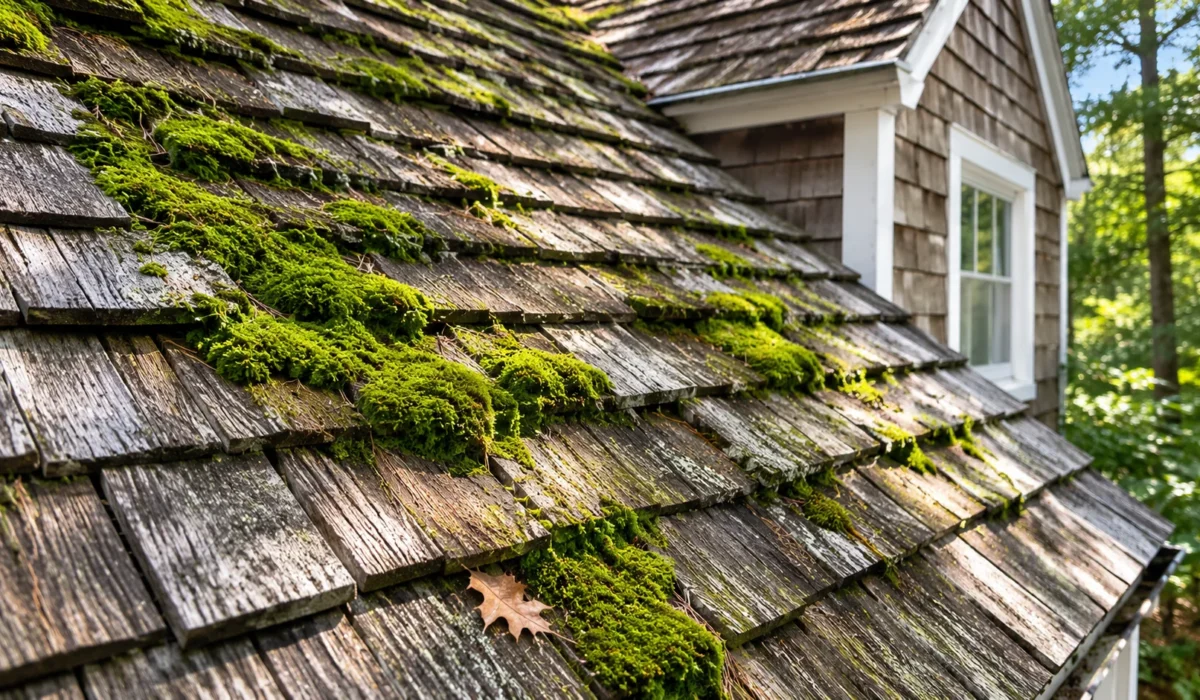
One problem homeowners may discover is green moss spreading across the roof, particularly in shaded areas, beneath overhanging trees, or along sections that remain damp after rainfall.
If you have noticed moss growing on your cedar shake roof in East Hampton, NY, the important question is not simply how to remove the visible growth. You also need to understand why moisture is accumulating and whether the underlying wood has suffered damage.
At Golden Hands Construction, we help Long Island homeowners evaluate roofing problems, including deteriorated cedar shakes, roof leaks, and weather-related damage.
This guide explains how moss affects cedar roofing, when cleaning may be appropriate, and how to determine whether repairs are needed.
Why Does Moss Grow on Cedar Shake Roofs in East Hampton?
Moss grows in environments where moisture remains available for extended periods.
Cedar roofing is naturally exposed to rain, humidity, changing temperatures, and airborne organic material. While properly installed cedar can perform well for many years, persistent dampness can contribute to unwanted biological growth.
Several property conditions may encourage moss development.
1. Overhanging Trees and Heavy Shade
Many East Hampton properties are surrounded by mature trees and established landscaping.
Although this vegetation creates privacy and attractive outdoor spaces, tree branches may shade sections of the roof for much of the day.
Shaded roofing materials can take longer to dry after rain, providing a favorable environment for moss.
Falling leaves and pine needles can also accumulate between individual shakes.
2. Moisture Retention Between Cedar Shakes
Cedar roofing is designed to shed water while allowing appropriate drying.
When debris becomes trapped between shakes, it may interfere with drainage and airflow.
The result can be prolonged moisture retention in localized sections of the roof.
3. Coastal Humidity and Weather Exposure
East Hampton, Amagansett, Montauk, and nearby coastal communities experience changing weather conditions throughout the year.
Moist air, rainfall, and shaded roof surfaces can create conditions where moss and algae develop.
Coastal location alone does not mean every cedar roof will develop moss. Roof orientation, tree coverage, installation, and maintenance all influence the risk.
4. Accumulated Leaves and Organic Debris
Leaves, small branches, dirt, and other organic material can collect around roof valleys and between shakes.
As this debris retains moisture, it can contribute to fungal growth and wood deterioration.
The Cedar Shake & Shingle Bureau recommends removing accumulated debris so cedar roofing can dry properly.
Is Moss on a Cedar Shake Roof Dangerous?
A small amount of moss does not automatically mean your roof requires replacement.
However, substantial moss growth should not be ignored.
The main concern is moisture retention.
Heavy moss can interfere with normal drainage, while persistent dampness may contribute to wood decay over time.
Potential consequences include:
Increased moisture around cedar shakes
Slower drying after rainfall
Deterioration of vulnerable wood
Water backing up around thick moss growth
Difficulty identifying cracked or damaged shakes
Possible water intrusion if underlying roofing components are compromised
It is important to distinguish between ordinary cedar weathering and actual roof damage.
Cedar naturally changes color as it ages. A gray or weathered appearance is not, by itself, evidence of roof failure.
A professional inspection can help determine whether your roof simply needs maintenance or has developed structural or water-shedding problems.
7 Signs Your Cedar Shake Roof Needs Professional Attention
Homeowners can often recognize warning signs from the ground or through upper-story windows.
1. Thick Green Moss Between Shakes
Moss growing between individual shakes can retain moisture and conceal damaged areas.
Dense buildup should be evaluated rather than scraped away aggressively.
2. Cedar Shakes That Are Curling or Lifting
Some dimensional changes occur naturally as wood ages.
However, severe curling or lifting may reduce the roof’s ability to shed water effectively.
A contractor can determine whether affected shakes should be replaced.
3. Missing or Broken Cedar Shakes
Strong winds, aging materials, or previous damage can leave gaps in the roofing surface.
Missing shakes can expose underlying components to additional weather.
4. Soft or Decaying Wood
Soft, deteriorated cedar may indicate prolonged moisture exposure or decay.
This condition requires closer inspection to determine whether damage extends beneath the visible roof covering.
5. Interior Water Stains
Water stains on ceilings, attic framing, or interior walls may indicate a roof leak.
Moss may be associated with the problem, but it is important to identify the actual entry point.
6. Debris Collecting in Roof Valleys
Roof valleys carry substantial amounts of runoff.
Accumulated leaves, branches, and other materials can interfere with drainage and create damp areas.
7. Repeated Moss Growth After Cleaning
If moss returns quickly after previous removal, underlying conditions may still be present.
Tree shading, persistent moisture, and trapped debris should be evaluated before scheduling another treatment.
For homeowners noticing these conditions, a professional roof inspection in Long Island can help establish the appropriate next steps.
Can You Pressure Wash a Cedar Shake Roof?
Homeowners sometimes assume that pressure washing is the fastest way to remove moss.
However, high-pressure cleaning can be particularly harmful to cedar roofing.
Cedar shakes contain wood fibers that can be damaged by aggressive water pressure.
Improper pressure washing may:
Erode the wood surface
Damage already weathered shakes
Force water beneath roofing materials
Reduce the remaining service life of affected shakes
Create additional problems around flashing and roof edges
The U.S. Forest Service’s wood shake and shingle maintenance guidance cautions against aggressive power washing and recommends experienced professionals when specialized cleaning is needed.
The safest cleaning method depends on the roof’s condition, material, and previous treatments.
Do not attempt to pressure wash cedar shakes from a ladder or rooftop yourself.
How Professionals Approach Cedar Roof Moss Removal
A responsible cedar roof maintenance project should begin with an assessment rather than immediate cleaning.
Step 1: Inspect the Cedar Roofing
A contractor evaluates the condition of the shakes, looking for missing sections, excessive splitting, deterioration, and other signs of damage.
The inspection also considers roof valleys, flashing, drainage, and areas that remain shaded or damp.
Step 2: Identify Moisture Problems
Understanding why moss developed is important.
Potential contributing factors include overhanging branches, debris accumulation, and inadequate drying conditions.
Removing moss without addressing these conditions may result in recurring growth.
Step 3: Select an Appropriate Cleaning Method
The contractor determines whether debris removal, gentle cleaning, or a compatible treatment is appropriate.
Cleaning methods should minimize disturbance to the wood fibers.
Not every cedar roof needs chemical treatment, and products should be selected according to their suitability for the particular roofing material.
Step 4: Replace Damaged Cedar Shakes if Necessary
If individual shakes are missing, severely deteriorated, or no longer performing properly, localized replacement may be recommended.
The goal is to preserve serviceable roofing while correcting defects that could allow water intrusion.
Step 5: Recommend Ongoing Maintenance
After the roof is evaluated, homeowners can establish a maintenance plan based on its condition, age, surrounding trees, and weather exposure.
Cedar Shake Roof Repair vs. Replacement in East Hampton
Finding moss on your cedar roof does not mean the entire roof must be removed.
Some roofs can be maintained or repaired, while others may have widespread deterioration requiring more extensive work.
When Cedar Shake Roof Repair May Be Enough
Localized repairs may be appropriate when:
Most cedar shakes remain structurally sound.
Damage is confined to a limited section.
Only a few shakes are missing or severely deteriorated.
Flashing defects can be corrected independently.
The underlying roofing system remains in acceptable condition.
Golden Hands Construction provides cedar shake roofing services in Long Island for homeowners who need an assessment of their existing roof.
When Cedar Shake Roof Replacement May Be Necessary
More extensive work may be appropriate when:
Large portions of the roof have significant deterioration.
Widespread wood decay is present.
Repeated leaks have affected underlying roofing components.
The roof has extensive damage that cannot be addressed economically through isolated repairs.
A professional should evaluate the roof before recommending a full replacement.
Cedar roof age alone is not enough to determine whether replacement is necessary.
How Much Does Cedar Shake Roof Moss Removal Cost in East Hampton, NY?
The cost of cedar shake roof cleaning or repair depends on the work required.
Unlike ordinary exterior cleaning, cedar roofing maintenance may involve delicate materials, specialized access, and damaged components.
Several factors influence pricing.
Roof size: A larger roof generally requires more time, labor, and materials.
Roof pitch: Steep roof sections can require additional access and safety equipment.
Moss coverage: Small affected areas may need less work than extensive growth across multiple roof slopes.
Cedar condition: Severely damaged shakes may require replacement rather than cleaning alone.
Property accessibility: Landscaping, building height, and surrounding structures may affect equipment requirements.
Treatment compatibility: Previously treated cedar may require special considerations before additional cleaning or preservative applications.
For an accurate estimate, arrange an inspection that identifies the required scope of work.
A low-cost cleaning quote is not necessarily a good value if the cleaning method damages the roofing material.
Cedar Shake Roof Maintenance Checklist for Hamptons Homeowners
Routine care can help reduce the likelihood of moisture-related damage.
Spring: Check for Winter Damage
After winter, inspect the roof visually from the ground.
Look for missing shakes, damaged edges, debris accumulation, and visible changes around flashing.
Schedule professional attention if you notice signs of deterioration.
Summer: Watch for Moss Growth
Warm weather provides an opportunity to observe shaded sections of the roof.
Look for moss, vegetation, and persistent damp areas.
Tree maintenance may help improve airflow and sunlight exposure when appropriate.
Fall: Remove Leaves and Debris
Autumn leaves can accumulate in valleys, gutters, and between roof sections.
Arrange safe debris removal before winter weather arrives.
Keep gutters and downspouts functioning properly.
After Major Storms: Inspect for Visible Damage
Strong winds and falling branches can damage cedar shakes.
After significant storms, look for displaced roofing materials or debris.
Avoid climbing onto a damaged or wet roof.
Schedule Periodic Professional Inspections
An experienced roofing contractor can identify issues that may not be visible from the ground.
The Cedar Shake & Shingle Bureau recommends regular inspections and prompt attention to damage.
The appropriate inspection frequency depends on the roof’s age, exposure, and condition.
Why Cedar Shake Roofs in the Hamptons Need Individual Assessments
Not all cedar roofs experience the same conditions.
A wooded East Hampton property may have substantial leaf accumulation and persistent shade.
A home in Montauk may experience different wind exposure and weather patterns.
A Bridgehampton property with complex roof valleys may present additional debris-management challenges.
Likewise, a Sag Harbor home with older cedar roofing may require a different repair approach from a newer installation.
This is why cedar roof maintenance should be based on the actual property rather than a single treatment recommended for every home.
Golden Hands Construction serves Long Island communities including East Hampton, Amagansett, Sag Harbor, Bridgehampton, Southampton, Wainscott, and Montauk.
Frequently Asked Questions About Cedar Roof Moss Removal
Does moss mean my cedar roof is rotting?
No. Moss does not automatically mean the underlying cedar has rotted. However, heavy growth can retain moisture and contribute to deterioration. A professional inspection can identify whether the wood is damaged.
Can I remove moss from my cedar roof myself?
Homeowners should avoid walking on cedar roofs or using aggressive cleaning methods. Professional assessment is the safer approach, particularly when the roof is steep, wet, or aging.
Will pressure washing damage cedar shakes?
High-pressure washing can erode cedar fibers and damage roofing materials. Cleaning methods should be selected by professionals familiar with wood roofing.
Should cedar shake roofs be sealed?
Cedar roofs generally should not be coated with waterproof sealers that trap moisture. Appropriate water-repellent treatments may be considered where compatible with the roofing material and its existing treatment.
How often should cedar shake roofs be inspected?
Annual or twice-yearly inspections can be useful, particularly for roofs surrounded by trees or exposed to challenging weather. Individual maintenance schedules should reflect the roof’s condition.
Can damaged cedar shakes be replaced individually?
Yes, localized replacement may be appropriate when the surrounding roof remains serviceable. A professional should assess the roof to determine whether individual repairs will provide an adequate solution.
Do you need to replace a cedar roof because it has turned gray?
No. Cedar naturally weathers and changes color over time. The roof’s structural condition and water-shedding performance are more important than color alone.
Schedule a Cedar Shake Roof Inspection in East Hampton, NY
Moss growth can be an early warning that your cedar roof is holding moisture longer than it should.
Addressing the problem early may help preserve roofing materials and prevent more extensive deterioration.
Whether you have visible moss, cracked cedar shakes, missing roofing materials, or unexplained water stains, professional evaluation is the first step toward choosing the right solution.
Golden Hands Construction provides roofing services throughout East Hampton, Southampton, Amagansett, Bridgehampton, Sag Harbor, Montauk, and surrounding Long Island communities.
If your cedar shake roof needs attention, contact our team to discuss an inspection and the available repair options.
Call (631) 877-8338
Visit Golden Hands Construction to request more information about cedar shake roofing and exterior services.
Protect the natural appearance of your cedar roof while keeping its performance and long-term condition a priority.


