

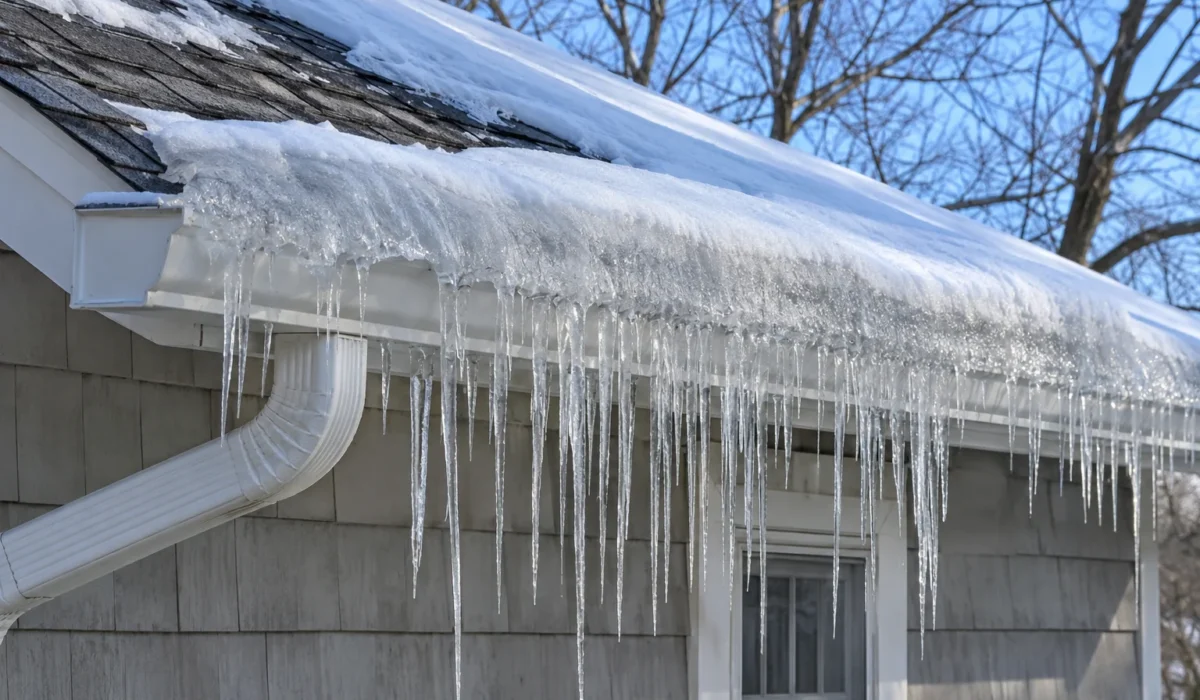
Winter can bring an unexpected roofing problem to Long Island homeowners: ice dams. These ridges of ice may look harmless along the edge of a roof, but they can trap melting snow, allowing water to work its way beneath roofing materials and into the home.
For homeowners in Southampton, East Hampton, Sag Harbor, Bridgehampton, Montauk, and surrounding Suffolk County communities, understanding ice dam prevention can help reduce the risk of expensive water damage during freezing weather.
At Golden Hands Construction, we provide professional roofing inspections and repair services across Long Island. This guide explains why ice dams develop, how to recognize the warning signs, and what homeowners can do to protect their roofs.
What Is an Ice Dam on a Roof?
An ice dam is a buildup of ice that develops near the lower edge of a sloped roof.
It commonly forms when snow melts over a warmer portion of the roof and the resulting water flows toward colder eaves, where it freezes again.
As ice accumulates, additional melting snow may become trapped behind it. That water can eventually find its way beneath roofing materials and cause interior leaks.
The U.S. Department of Energy’s Building America guidance explains how heat loss, insulation, air sealing, and roof design influence ice dam formation.
Although Long Island experiences milder winters than some northern regions, periods of snowfall followed by freezing temperatures can still create conditions suitable for ice dams.
Why Long Island Homes Can Develop Ice Dams
Several factors can contribute to ice dam formation in Suffolk County and the Hamptons.
1. Heat Escaping Through the Attic
Warm indoor air can escape through openings around attic hatches, plumbing penetrations, recessed lighting, and other gaps.
When escaping heat warms the roof deck, snow above that section may begin melting even while outdoor temperatures remain below freezing.
The resulting meltwater may freeze again when it reaches the colder roof edge.
2. Insufficient Attic Insulation
Insulation helps reduce heat transfer between living spaces and the attic.
When insulation is missing, compressed, or inadequate, heat can reach the roof deck more easily.
Improving insulation as part of a properly designed attic system may help reduce the conditions that cause ice dams.
According to ENERGY STAR, a history of ice dams can indicate significant attic air leaks that deserve attention.
3. Problems With Attic Ventilation
Some roof assemblies depend on carefully designed ventilation to manage temperature and moisture.
Blocked soffit vents or improperly configured attic ventilation can contribute to uneven roof temperatures.
However, adding vents is not automatically the solution. A contractor should evaluate how ventilation, air sealing, and insulation work together.
4. Snow Accumulation and Freeze-Thaw Cycles
Snow accumulation provides the water that can eventually become trapped behind an ice dam.
After snowfall, periods of daytime melting followed by overnight freezing may create repeated ice buildup.
This can become especially concerning around roof valleys, dormers, and complicated roof intersections.
5. Blocked Gutters and Drainage Problems
Gutters filled with leaves, twigs, and other debris can interfere with drainage.
While clogged gutters are not the primary cause of most ice dams, they can make winter water-management problems worse.
Before freezing weather arrives, consider arranging professional gutter cleaning in Long Island.
7 Warning Signs of Ice Dam Damage
Ice dams are not always easy to recognize from the ground. Homeowners should pay attention to changes both outside and inside their homes.
1. Thick Ice Along the Roof Edge
A continuous ridge of ice along the eaves can suggest that melting snow is repeatedly refreezing.
Not every icicle indicates a serious problem, but unusually heavy ice buildup deserves attention.
2. Water Stains on Ceilings
Brown or yellow stains near exterior walls or ceiling edges may indicate water entering through the roof assembly.
These stains can appear after snow begins melting.
3. Peeling Paint Near Exterior Walls
Water entering behind drywall or plaster may eventually cause paint to bubble, peel, or discolor.
4. Damp Attic Insulation
Wet insulation can lose effectiveness and may indicate that water is entering the attic.
Moisture should be investigated before replacing insulation.
5. Interior Leaks During Snowmelt
A roof that stays dry during ordinary rain but develops a leak when snow melts may have a winter-specific drainage problem.
Ice dams are one possible cause, but damaged flashing or other roof defects should also be considered.
6. Ice Around Gutters and Downspouts
Large ice formations around drainage components may indicate frozen water accumulation.
A professional inspection can determine whether the problem involves roof temperatures, blocked drainage, or both.
7. Repeated Winter Leaks in the Same Area
If ceiling stains reappear during multiple winters, the underlying cause may never have been fully corrected.
Rather than repeatedly sealing the visible leak, homeowners should investigate the roof and attic conditions responsible for the moisture.
How to Prevent Ice Dams on Long Island Roofs
Effective ice dam prevention focuses on reducing uneven roof temperatures and maintaining safe drainage.
Improve Attic Air Sealing
Air sealing is often an important first step.
Gaps between living areas and attic spaces can allow warm air to escape, contributing to snow melting on the roof above.
Qualified insulation or energy-efficiency professionals can assess these openings and recommend appropriate improvements.
Check Attic Insulation
Proper insulation helps limit unwanted heat transfer into the attic.
Homeowners should have existing insulation evaluated for gaps, moisture damage, and inadequate coverage.
Any upgrades should follow the requirements of the particular home and roof assembly.
Maintain Proper Roof Ventilation
Roof ventilation should support the overall attic design.
Depending on the construction, soffit and ridge ventilation or an appropriately designed unvented assembly may be suitable.
A professional assessment is preferable to installing additional vents without understanding the existing system.
Schedule a Roof Inspection Before Winter
A professional roof inspection in Long Island can help identify roofing defects before freezing temperatures complicate repairs.
Important areas include:
Roof valleys and intersections
Flashing around chimneys and skylights
Missing, loose, or damaged shingles
Roof-edge materials
Gutters and drainage outlets
Existing signs of moisture infiltration
An inspection cannot guarantee that an ice dam will never occur, but it can identify repairable vulnerabilities.
Keep Gutters and Downspouts Clear
Late fall is a useful time to remove leaves and other debris from the gutter system.
Long Island properties surrounded by mature trees may require additional attention after heavy leaf fall.
A clean gutter system supports normal drainage during rain and thawing periods.
Avoid Unsafe Ice Removal
Never climb onto an icy roof to break up an ice dam with a hammer, shovel, or sharp tool.
Aggressive removal can damage shingles, flashing, gutters, and other roof components.
Working near icy roof edges also creates a serious fall hazard.
If a substantial ice dam forms or water begins entering your home, contact a qualified roofing professional.
Ice Dam Repair vs. Roof Replacement: What Does Your Home Need?
Finding an ice dam does not automatically mean that the entire roof must be replaced.
The right solution depends on the underlying cause and any damage already present.
Targeted roof repairs may be appropriate when:
Damage is limited to a relatively small area.
Roofing materials remain in serviceable condition.
Specific flashing or roof-edge defects can be corrected.
Water-damaged components can be repaired without replacing the entire roof.
More extensive work may be needed when:
The roof has widespread deterioration.
Repeated water intrusion has damaged underlying materials.
Multiple roof sections are failing.
The existing roofing system has reached the end of its serviceable life.
A professional roof repair assessment helps determine whether localized repairs are practical.
Importantly, roof replacement alone may not resolve an ice dam problem caused by attic heat loss. Insulation, air sealing, and ventilation may also need attention.
How Much Does Ice Dam Repair Cost in Long Island, NY?
There is no single reliable price for ice dam repairs because the scope of work can vary significantly.
Costs depend on several factors:
Roof accessibility: Steep roofs, high elevations, and difficult access can require additional equipment and safety precautions.
Extent of water damage: Repairing a small flashing defect is different from replacing deteriorated roof decking or addressing damaged interior finishes.
Roofing material: Asphalt shingles, cedar shake, metal, and other roof systems require different repair methods.
Ice removal requirements: Safe removal methods depend on conditions and the equipment required.
Underlying attic problems: Some homes may need additional insulation, air sealing, or ventilation improvements to address the root cause.
For a more accurate estimate, homeowners should arrange an inspection that identifies both the visible damage and its likely cause.
Winter Roofing Considerations for Southampton and the Hamptons
Homes across Southampton, East Hampton, Sag Harbor, Bridgehampton, and Montauk can have different roofing characteristics.
Some properties feature steep asphalt-shingle roofs, while others have cedar shake roofing, dormers, complex rooflines, or flat and low-slope sections.
These differences matter when evaluating winter water problems.
For example, roofs with multiple valleys or dormers may have areas where snow accumulates unevenly. Low-slope roofs may require a separate drainage assessment rather than a conventional ice dam repair approach.
Coastal exposure also makes it useful to inspect flashing, fasteners, and roof coverings for weather-related deterioration.
A thorough winter roofing assessment should consider the property’s actual materials, roof geometry, drainage, and attic configuration.
What Should You Do If an Ice Dam Is Already Causing a Leak?
If water begins entering your home during winter, take action to limit damage.
First, move valuable belongings away from the affected area and collect dripping water when safe.
Avoid touching wet electrical fixtures, switches, or wiring. If water is near electrical equipment, seek appropriate professional assistance.
Take photographs of visible damage and note when the leak occurs.
Do not attempt to climb onto the roof or chip away the ice yourself.
Contact a roofing contractor to assess the situation and determine whether safe temporary protection or permanent repairs are needed.
Once the immediate water intrusion is addressed, investigate insulation, air leakage, and ventilation so that the same problem is less likely to recur.
Frequently Asked Questions About Ice Dams
Can ice dams happen on Long Island?
Yes. Ice dams can form when snow melts over warmer roof sections and refreezes near colder edges. Long Island homes can experience these conditions during freezing winter weather.
Do clogged gutters cause ice dams?
Clogged gutters can worsen drainage problems, but ice dams are commonly associated with uneven roof temperatures and snowmelt. Cleaning gutters is useful maintenance but may not solve the underlying problem.
Can ice dams damage asphalt shingles?
Yes. Water trapped behind an ice dam can move beneath roofing materials and reach vulnerable parts of the roof assembly.
Will installing a new roof prevent ice dams?
Not necessarily. New roofing may address damaged materials, but an unresolved attic heat-loss problem can still contribute to ice dam formation.
Should I remove ice dams myself?
Avoid climbing onto an icy roof or using sharp tools to break ice away. These methods can cause injuries and damage roofing materials.
When should I schedule a winter roof inspection?
A fall inspection provides an opportunity to identify damaged roofing materials and drainage issues before snow and ice complicate access. An inspection is also appropriate after a suspected winter leak.
Protect Your Long Island Home Before Winter Roof Problems Become Expensive
Ice dams can create problems that extend far beyond a few icicles along the roofline.
When trapped meltwater enters a home, it may damage insulation, ceilings, walls, and underlying roofing components.
Understanding the warning signs, maintaining your roof, and addressing attic heat loss can help reduce the risk.
Golden Hands Construction serves homeowners across Long Island, including Southampton, East Hampton, Sag Harbor, Bridgehampton, Montauk, and surrounding Suffolk County communities.
Whether you are concerned about a winter roof leak, damaged shingles, or other roofing problems, our team can help evaluate the condition of your roof.
Request a roofing inspection or repair estimate today.
Call (631) 877-8338 or contact Golden Hands Construction online.
Protect your home with a roofing solution based on the actual condition of your property.


