

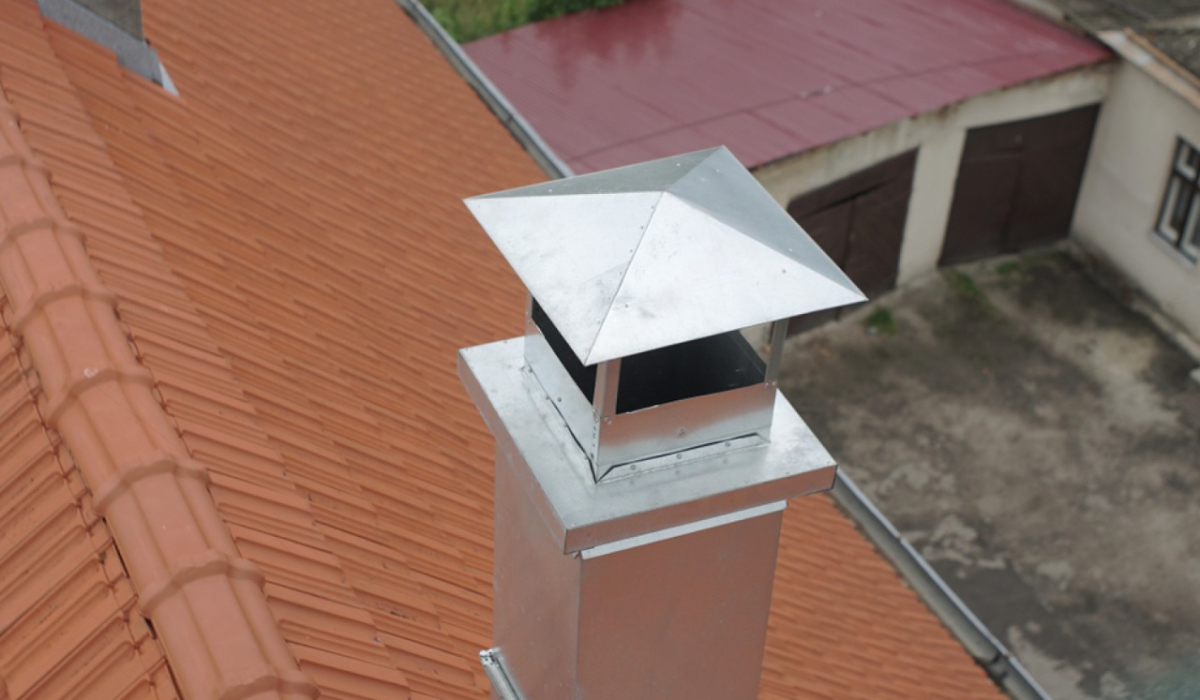
A chimney leaking after rain in East Hampton may have damaged flashing, a cracked crown, an exposed flue opening, or worn brick and mortar. The right repair depends on where water enters. A stain beside the fireplace does not, by itself, prove that the roof needs replacement.
Start by noting when the leak appears and where you first see moisture. Does water drip inside the fireplace? Does a ceiling stain grow beside the chimney? Does the problem happen during every shower or only during heavy rain? These details help a contractor narrow the inspection before recommending work.
What the location of the leak can tell you
Water inside the fireplace raises different questions from water on the ceiling beside it. An exposed chimney opening can admit rain from above. Problems around the roof junction can let water enter outside the chimney and reach nearby framing.
However, water can travel before it becomes visible. A stain may sit several feet from the entry point. Use its location as a clue, rather than a final diagnosis.
Take clear photos of the first damp area and any changes during the storm. Include a wider photo that shows its position beside the chimney or fireplace. A close-up alone may hide useful context.
When chimney flashing needs attention
Flashing protects the joint where the chimney passes through the roof. The Chimney Safety Institute of America identifies damaged flashing as a route for rainwater to enter living spaces.
A contractor should inspect the metal, its overlaps, and its connection with the roof and chimney. Visible gaps, damaged sections, and failing joints deserve attention. Nearby roofing also needs a check, since the leak may involve more than one component.
Golden Hands Construction provides chimney flashing services for problems at this roof junction.
Ask the contractor to explain which part has failed. “The chimney needs sealing” is less useful than a clear description of the opening and the proposed repair.
How the crown and cap differ
The chimney crown is the sloped top surface around the flue on a masonry chimney. The cap covers the flue opening. They have different jobs, so repairing one does not automatically fix the other.
A damaged crown can allow water into the chimney structure. A missing or damaged cap can leave the opening exposed to rain. An inspection should consider both components, even when one defect looks obvious.
The Chimney Safety Institute of America’s water-damage guidance explains why caps, crowns, flashing, and masonry protection all matter.
Why brick and mortar also need inspection
Chimney leaks do not always start at a metal joint. Brick can absorb moisture, and damaged mortar joints can provide additional paths for water.
Look from the ground for crumbling joints, cracked bricks, or pieces of masonry below the chimney. Share those observations with the contractor. A roof-level inspection may reveal damage that ground-level photos cannot show.
Waterproofing should follow an assessment of the masonry. A surface treatment cannot replace missing mortar, rebuild damaged brickwork, or correct a failed flashing detail.
What to record before the inspection
For your East Hampton home, a short leak history can make the first visit more useful. Record the date, the rooms affected, and whether the problem appeared during light rain or a longer storm.
Mention recent roof or chimney work. If someone previously applied a patch, explain whether it stopped the leak and for how long. Share old repair invoices or photos when available.
If you are away from the property, ask the person checking the house to photograph the same area after each rain. This gives the contractor a clearer record than a single dry stain.
Avoid climbing onto the roof to gather evidence. Interior photos and safe observations from the ground are enough to begin the conversation.
What a useful inspection should establish
A useful inspection should connect the indoor damage with a likely outdoor entry point. It should also identify any limits to that conclusion.
The contractor may need to inspect the flashing, chimney top, masonry, and nearby roof covering. If the cause remains unclear, ask what further investigation would help. A visible defect can matter without being the only source of water.
Before agreeing to repairs, request photos of the problem where practical. Ask which work stops the leak and which work addresses damage the leak has already caused.
Repair or replacement depends on the damaged component
A chimney-area leak does not automatically require a new roof or a complete chimney rebuild. A limited defect may need a focused repair. Wider deterioration may require more extensive work.
The condition of the surrounding materials matters. Repairing flashing against sound roofing differs from repairing it beside damaged roof decking. Likewise, isolated mortar damage differs from widespread loose or failing masonry.
Ask for the reasoning behind the recommendation. A clear explanation should describe what remains serviceable, what needs replacement, and why a smaller repair would or would not hold.
What affects chimney leak repair costs
The repair price depends on the source, access, materials, and extent of damage. Chimney height, roof slope, and the condition of nearby roofing can also affect the work involved.
Compare written scopes rather than totals alone. One quote may cover a small patch, while another includes removal and replacement of damaged materials. Those are different jobs.
Ask whether the estimate includes debris removal, concealed-damage allowances, and any interior restoration. Confirm which items require a separate contractor or quote.
Questions East Hampton homeowners often ask
Can a chimney leak when nobody uses the fireplace?
Yes. Rain enters through exterior defects regardless of whether you light a fire. An unused fireplace still needs weather protection.
Will a new chimney cap stop every leak?
No. A cap helps protect the opening, but it does not repair flashing, cracked crowns, or damaged mortar. The repair needs to match the entry point.
Does a stain beside the chimney prove the flashing has failed?
No. Flashing deserves inspection, but water can travel from another area. The stain helps guide the investigation; it does not replace one.
Should I wait for another storm before arranging a visit?
You do not need another storm to report an active leak. Share the evidence you already have. If the cause remains uncertain, the contractor can explain what additional observations would help.
Arrange chimney leak help in East Hampton
Golden Hands Construction serves East Hampton and nearby Long Island communities. If rain leaves water inside your fireplace or stains beside the chimney, explain where it appears and when it started. Request a chimney leak assessment or call (631) 877-8338 to discuss the problem and an estimate.


