

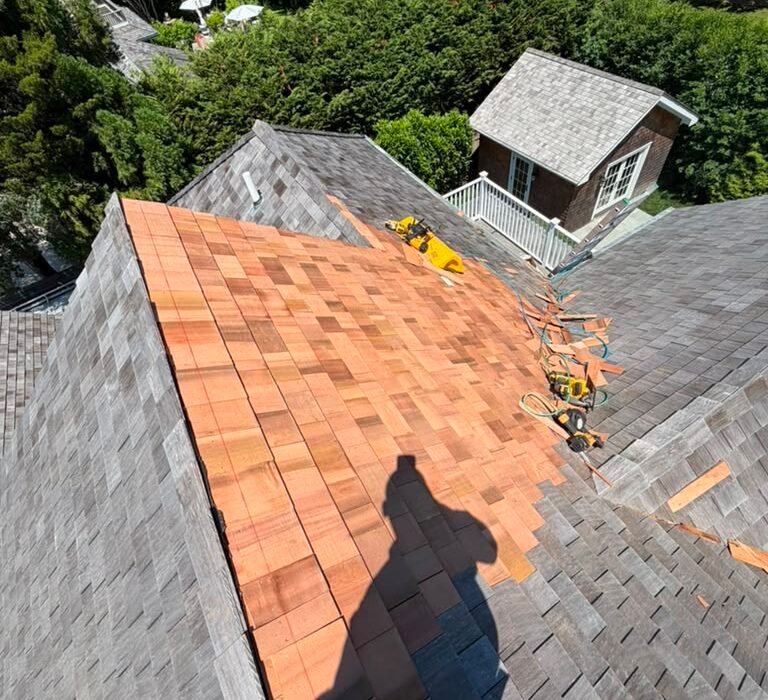
Wind damage to roofs on Long Island can loosen shingles, damage flashing, expose roofing materials, and create leaks that may not appear right away. After a strong storm, homeowners should check their property for signs of roof damage as soon as conditions become safe.
Long Island homes regularly face coastal winds, thunderstorms, heavy rain, and changing weather. Strong gusts can place significant pressure on shingles and other roof components.
Some wind damage is easy to see from the ground. Other problems remain hidden until rain enters the roof.
Knowing what to look for can help you act before a minor issue becomes a larger repair.
How Wind Can Damage a Roof
Strong wind does not always damage an entire roof at once.
It often affects the weakest areas first.
A loose shingle, aging seal, exposed roof edge, or damaged flashing can become more vulnerable during a storm.
Wind Can Lift Shingles
High winds can move underneath loose shingle edges.
The force may lift the shingle away from the roof.
A lifted shingle may later settle back into place. However, the seal can remain damaged.
That makes the problem difficult to spot from the ground.
Shingles Can Blow Off Completely
More severe wind can remove shingles from the roof.
This exposes the materials underneath to rain, snow, and sunlight.
Missing shingles often require quick attention because the exposed area has less protection from moisture.
Golden Hands Construction’s existing roofing information includes customer reports involving roof sections that blew off during severe weather.
What Does Wind Damage Look Like?
Homeowners should inspect the property from a safe location after severe weather.
You do not need to climb onto the roof.
Several visible signs may indicate storm damage.
Missing Shingles
Look for empty areas where shingles should appear.
You may also find shingles on the lawn, driveway, or around the property.
Lifted or Curled Shingles
A shingle may remain attached but no longer sit flat.
Raised edges can allow rain to move underneath the roofing surface.
Cracked Shingles
Strong winds can bend and stress older shingles.
This movement may create cracks or splits.
Loose Roofing Materials
Check around roof edges and visible transitions.
Loose materials may move during future storms and create larger openings.
Check the Ground Around Your Home
You can often find useful evidence without going near the roof.
Walk around the property after the storm passes.
Look for Roofing Debris
Check for:
Shingles
Pieces of flashing
Roofing granules
Broken gutter parts
Pieces of trim
Branches
Other roof materials
Debris near the home may indicate damage above.
If you find a shingle on the ground, do not assume it came from another property.
Inspect your roof from a safe distance.
Check Your Attic for Water
Wind damage often becomes more noticeable when rain follows the storm.
A damaged roof can allow water inside.
Look for Moisture Signs
If you can safely enter the attic, check for:
Wet insulation
Water stains
Damp wood
Dripping water
Dark roof decking
Moist rafters
New discoloration
Use a flashlight to inspect darker sections.
Avoid electrical equipment if you see standing water or active leaks.
Wind-Driven Rain Can Enter Small Openings
Strong wind changes how rain hits a roof.
Instead of falling straight down, water can move sideways and upward around exposed areas.
Small Defects Can Start Leaking
Wind-driven rain may enter near:
Lifted shingles
Chimneys
Roof vents
Skylights
Flashing
Roof edges
Valleys
Wall connections
A roof may stay dry during normal rain but leak during a severe storm.
That pattern can point to a vulnerable roofing area.
Roof Flashing Can Become Loose
Flashing protects joints and openings throughout the roof.
You may find flashing around chimneys, skylights, valleys, vents, and walls.
Wind Can Stress Flashing
Strong gusts can affect flashing that already has loose edges or weak fasteners.
Once flashing moves, water may enter around the joint.
Golden Hands Construction provides https://goldenhandsny.com/services/roof-flashing/ services for Long Island properties. Its roof-flashing information also identifies severe weather and water intrusion as important concerns.
Check Around the Chimney
The area around a chimney can become vulnerable during storms.
Wind can place pressure on flashing and nearby roofing materials.
Look for Chimney Leak Signs
Watch for:
Water stains
Damp ceilings
Wet attic materials
Loose flashing
Missing shingles nearby
Moisture around the chimney
Golden Hands Construction also offers https://goldenhandsny.com/services/chimney-flashing/ services. Its existing service page notes that severe weather can damage chimney flashing.
Skylights Can Also Suffer Storm Damage
Skylights create another exposed area in the roof.
Wind can carry branches and debris across the roof surface.
Inspect Skylights From Inside
Look for:
Water stains
Cracks
Moisture around the frame
Dripping water
Damaged interior trim
Fogging between glass sections
The problem may involve the skylight itself or the surrounding roof materials.
Golden Hands Construction provides https://goldenhandsny.com/services/skylight-repair/ services on Long Island. Its current skylight page notes that storms, extreme rain, and wind-blown debris can damage skylights.
Trees Can Damage a Roof During High Winds
Trees create another risk during severe weather.
Wind can break branches and send them onto the roof.
Even Small Branches Can Cause Problems
A heavy branch can break roofing materials immediately.
Smaller debris may scrape shingles or damage flashing.
Look for branches resting on the roof after a storm.
Do not attempt to remove large branches yourself if the roof may have structural damage.
Gutters Can Pull Away From the Roof
Strong wind can also affect gutters.
This happens more easily when gutters already contain heavy debris or have loose fasteners.
Look at the Roof Edge
Check for gutters that appear:
Loose
Bent
Detached
Sagging
Twisted
Damaged gutters can affect drainage during the next rainstorm.
Water may then overflow near the roof edge or foundation.
Cedar Shake Roofs Need Attention After Storms
Cedar shake roofing can develop its own wind-related problems.
Individual shakes may split, loosen, or shift.
Inspect for Missing Cedar Shakes
Look for visible gaps or pieces of cedar around the property.
Golden Hands Construction’s https://goldenhandsny.com/services/cedar-shake-roofing/ page discusses cracking, splitting, warping, and weather exposure as common cedar roofing concerns.
Can Wind Damage Cause a Roof Leak Later?
Yes.
A storm can damage the roof without causing an immediate leak.
The Next Rain May Reveal the Problem
For example, wind may loosen a shingle during one storm.
The roof may remain dry afterward.
Several days later, heavy rain may reach the damaged area.
Water can then move beneath the shingle and enter the roofing system.
This is why an inspection can make sense even when you do not see water immediately.
Why Small Wind Damage Should Not Be Ignored
Minor roofing damage can become worse over time.
Wind may loosen a shingle during one storm and remove it during the next.
Water Can Increase the Damage
Once moisture gets under the roofing materials, it may affect:
Roof decking
Insulation
Ceilings
Drywall
Interior paint
Wood framing
Early repairs can limit the area exposed to future weather.
Should You Climb Onto the Roof?
No homeowner should feel required to climb onto a roof after a storm.
Storm-damaged roofs can become unstable or slippery.
Inspect From the Ground First
Use safe viewing points around the property.
Binoculars can help you see upper roof sections.
You can also inspect the attic for water signs.
If you suspect damage, schedule a professional roof inspection.
Golden Hands Construction offers https://goldenhandsny.com/services/roof-inspection/ services throughout Long Island.
What Happens During a Roof Inspection?
The exact inspection depends on the property and roofing system.
A roofer may examine several areas for storm damage.
Shingles
The inspector can look for missing, loose, cracked, or lifted shingles.
Flashing
Flashing around chimneys, skylights, walls, and vents may need inspection.
Roof Edges
Strong wind often affects roof edges because gusts can reach underneath exposed sections.
Valleys
Roof valleys carry large amounts of rainwater.
Damage in these areas can increase the risk of leaks.
Penetrations
Vents, pipes, and other roof openings may develop damaged seals.
Repair or Replace After Wind Damage?
Wind damage does not automatically mean you need a new roof.
Many storm problems affect only a small section.
Roof Repair May Work for Local Damage
A repair may address:
Several missing shingles
Loose flashing
A damaged vent area
A small leak
A limited damaged section
Replacement May Make Sense for Wider Damage
More extensive storm damage may require a larger project.
The roof’s age and overall condition also matter.
A contractor should inspect the roof before recommending replacement.
What to Do Immediately After a Windstorm
Once conditions become safe, check your property.
Walk Around the Home
Look for missing shingles, branches, gutter damage, and loose materials.
Check the Attic
Look for new moisture or water stains.
Photograph Visible Damage
Photos can help document the condition of your property.
Take pictures only from safe locations.
Protect the Interior
Move furniture, electronics, and valuables away from active leaks.
Use containers to catch dripping water when safe.
Schedule an Inspection
A roofing inspection can help determine what the storm damaged.
How to Prepare Your Roof for Future Wind
Homeowners cannot control the weather, but regular maintenance can reduce avoidable roof problems.
Repair Loose Shingles
Address visible roofing defects before severe weather arrives.
Maintain Flashing
Check vulnerable roof transitions and penetrations.
Keep Trees Maintained
Remove unsafe branches that could fall onto your home.
Keep Gutters Clear
Good drainage helps water move away from the roof.
Schedule Periodic Inspections
An inspection may identify weak areas before the next storm.
Wind Damage to Roofs on Long Island Should Be Checked Early
Wind damage can range from one loose shingle to major sections of missing roofing.
The visible damage does not always show the full problem.
Water may enter later when the next storm arrives.
After severe weather, inspect your property from the ground. Check your attic for moisture and look for debris around the home.
Golden Hands Construction serves homeowners throughout Long Island, including Suffolk County, Nassau County, Southampton, East Hampton, Riverhead, Montauk, and the Hamptons.
For help with storm damage, roof repairs, or a roof inspection, call (631) 877-8338 or visit https://goldenhandsny.com/ to request a free estimate.


