

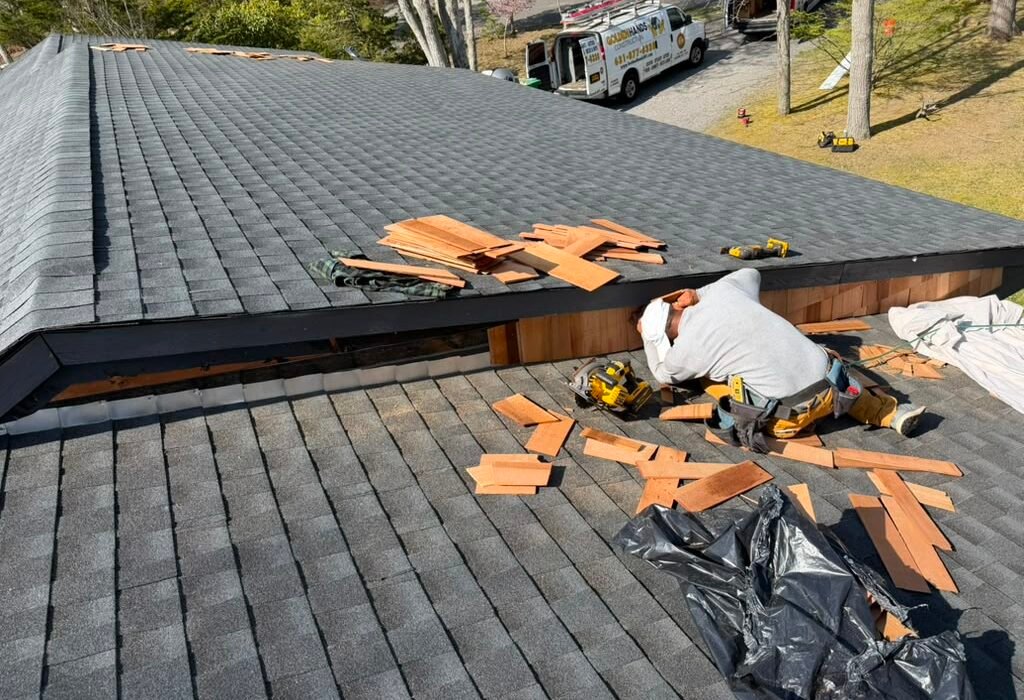
A roof leaking after heavy rain on Long Island can point to damaged shingles, failed flashing, clogged drainage, or another weak area in the roofing system. Even a small leak deserves attention. Water can travel beneath roofing materials before it becomes visible inside your home.
Long Island homes face heavy rain, strong winds, snow, coastal weather, and changing temperatures throughout the year. These conditions can expose roofing problems that remain hidden during dry weather.
If you notice a ceiling stain, dripping water, or moisture in your attic after a storm, finding the source should become a priority.
Golden Hands Construction provides roof repair and inspection services throughout Long Island, Suffolk County, Nassau County, Southampton, East Hampton, Riverhead, Montauk, and the Hamptons.
Why Does My Roof Leak Only During Heavy Rain?
Some roof problems appear only when a large amount of water reaches the roof.
Light rain may drain away before water enters a weak area. Heavy rain puts more water on the roof in a shorter period.
Wind can also push rain underneath damaged shingles or around flashing.
The Leak May Be Away From the Water Stain
The spot where you see water indoors may not sit directly below the roof damage.
Water can move along roof decking, rafters, pipes, or other surfaces before it drips into a room.
That makes roof leaks difficult to diagnose without a proper inspection.
Check for Missing or Damaged Shingles
Shingles create the main protective surface on many Long Island roofs.
Strong wind, age, falling branches, and storms can damage them.
Signs of Shingle Damage
Look for shingles that appear:
Missing
Cracked
Curled
Lifted
Loose
Torn
Worn around the edges
A missing shingle can expose the roofing layers underneath.
Cracked or lifted shingles may also allow wind-driven rain to enter.
If you can see obvious roof damage from the ground, arrange an inspection rather than climbing onto a wet roof.
Roof Flashing Can Cause Rain Leaks
Flashing protects areas where roofing materials meet other structures.
You can usually find flashing around chimneys, vents, skylights, valleys, walls, and roof intersections.
Why Flashing Fails
Flashing can loosen or deteriorate over time.
Sealants may also crack. Fasteners can become loose, and older metal flashing may develop corrosion.
Heavy rain can expose these weaknesses.
Water may then enter around the joint and travel underneath the roof covering.
Golden Hands Construction provides https://goldenhandsny.com/services/roof-flashing/ services for homes across Long Island. The service focuses on vulnerable roof areas where proper water control matters.
Check Around Your Chimney
A chimney creates one of the most common transition areas on a roof.
The roofing materials must connect correctly with the chimney while still directing water away from the opening.
Chimney Flashing Can Let Water Enter
Damaged flashing around a chimney can create a path for rainwater.
You may notice stains near the fireplace, chimney breast, attic, or upper ceiling.
Water around the chimney does not always mean the chimney itself has failed. The problem may sit at the connection between the roof and chimney.
Golden Hands Construction offers https://goldenhandsny.com/services/chimney-flashing/ services for this type of roofing issue.
Skylights Can Develop Leaks
Skylights add natural light to a home, but they also create another opening in the roof.
Water must drain correctly around the skylight frame and flashing.
Signs of a Skylight Leak
Look for:
Water stains around the skylight
Damp drywall
Peeling paint
Dripping during heavy rain
Moisture around the frame
Discoloration on nearby ceilings
The skylight itself may not always be the cause.
Roofing materials or flashing around it can create the leak.
Golden Hands Construction provides https://goldenhandsny.com/services/skylight-leaks/ services for Long Island homes with leaking skylights or surrounding roofing problems.
Roof Valleys Need Proper Drainage
A roof valley forms where two sloping roof sections meet.
Large amounts of rainwater often move through these areas.
That makes valleys especially important during heavy storms.
Watch for Valley Damage
A damaged valley can allow water to enter underneath the roofing system.
Leaves and debris may also collect there and slow water flow.
If water cannot move freely toward the gutters, it may remain on the roof longer.
An inspection can help determine whether the valley materials need repair.
Clogged Gutters Can Make Roof Problems Worse
Gutters help move rainwater away from the roof.
Leaves, branches, dirt, and other debris can block that flow.
Water Can Back Up Near the Roof Edge
A clogged gutter may overflow during heavy rain.
Water can remain around the roof edge or fascia instead of flowing into the downspout.
Over time, moisture may damage nearby materials.
Check gutters regularly, especially during fall when leaves collect quickly.
You should also make sure downspouts direct water away from your home.
Flat Roofs Can Hold Water
Flat and low-slope roofs drain differently from steep roofs.
Water may collect if drains become blocked or the roof develops low areas.
Standing Water Deserves Attention
Water that remains on a roof can place extra stress on roofing materials.
Cracks, punctures, seams, or damaged areas can then allow moisture inside.
Golden Hands Construction provides https://goldenhandsny.com/services/flat-roof-repair/ for residential and commercial properties across Long Island. Their existing service information identifies water pooling, cracks, and punctures as common flat-roof concerns.
Wind-Driven Rain Can Find Small Openings
Heavy rain often arrives with strong wind.
Wind changes the direction of the water.
Instead of falling straight down, rain can move sideways underneath loose roofing materials.
Small Gaps Can Become Important
Wind-driven rain may enter around:
Lifted shingles
Roof vents
Flashing
Chimneys
Skylights
Siding connections
Roof edges
A roof may appear fine during gentle rain but leak during a severe storm.
That pattern can provide an important clue during an inspection.
Roof Vents Can Also Leak
Roof vents create necessary openings through the roofing system.
Installers use flashing and seals to keep water outside.
Those components can wear over time.
Check the Area Around Vent Pipes
Cracked rubber boots and damaged flashing may allow rainwater to enter.
Inside the attic, you may notice moisture near a vent pipe.
Water stains can also appear on the ceiling below.
A roofer can inspect the vent area and determine whether the flashing or seal needs repair.
Look Inside the Attic After Heavy Rain
Your attic can provide useful clues about the location of a roof leak.
If it is safe to enter, inspect the area during daylight.
Signs of Water Entry
Look for:
Wet roof decking
Dark stains
Damp insulation
Water droplets
Moist rafters
Mold-like growth
Discolored wood
A flashlight can help you inspect darker areas.
Do not touch exposed electrical equipment if water is nearby.
Do Not Ignore Small Ceiling Stains
A small brown mark on the ceiling may look harmless.
However, the visible stain may represent only part of the moisture problem.
Water Can Spread Above the Ceiling
Moisture may already exist inside insulation or building materials.
Repeated leaks can damage drywall, wood, paint, and insulation.
Finding the roof problem early may reduce the amount of interior repair you need later.
What Should You Do When Your Roof Starts Leaking?
Your first priority should be protecting people and the interior of the home.
Move furniture and electronics away from dripping water.
Use a container to catch water if you can do so safely.
Avoid Climbing Onto a Wet Roof
Wet roofs can become extremely slippery.
Strong wind and rain create even greater risk.
Do not walk across a roof during a storm to search for the leak.
Wait for safe conditions or contact a roofing contractor.
Schedule a Roof Inspection
A professional roof inspection can help locate visible damage.
The inspection may include shingles, flashing, roof penetrations, valleys, edges, and other vulnerable areas.
Golden Hands Construction provides roofing services throughout Long Island and offers https://goldenhandsny.com/ services for homeowners who need roof repairs or inspections.
Can a Roof Leak Be Repaired Without Replacing the Entire Roof?
In many cases, a roof leak does not automatically mean you need a complete roof replacement.
The correct solution depends on the cause and condition of the roof.
A Localized Repair May Be Enough
A roofer may repair:
Several damaged shingles
A flashing problem
A vent seal
A small damaged roof section
A leaking roof penetration
However, widespread damage may require a larger project.
An inspection can help determine the appropriate option.
When Might Roof Replacement Make More Sense?
Some roofs develop repeated leaks because the entire roofing system has reached an advanced stage of wear.
Repairing one area may not solve problems elsewhere.
Consider the Overall Roof Condition
Factors include:
Number of leaks
Amount of damaged roofing
Condition of the shingles
Previous repairs
Roof age
Storm damage
Condition of the roof deck
A contractor should evaluate the roof before recommending replacement.
Prevent Future Roof Leaks
Regular maintenance can help you catch roofing problems earlier.
You do not need to wait for water to appear inside your home.
Inspect After Major Storms
Look at the roof from the ground after severe wind or rain.
Check for missing shingles and fallen branches.
Keep Gutters Clear
Remove leaves and debris that can block drainage.
Watch Flashing Areas
Pay attention to chimneys, skylights, vents, walls, and valleys.
Respond to Indoor Warning Signs
Do not ignore ceiling stains, damp attic materials, or peeling paint.
Repair Problems Early
Small roofing defects can become more expensive when water continues to enter the building.
Long Island Weather Can Test Your Roof
Roofs across Long Island face a wide range of conditions throughout the year.
Heavy rain, coastal wind, snow, freezing temperatures, and storms can all expose weak roofing areas.
You may not notice a problem until the right weather conditions occur.
That is why a roof that leaks only during heavy rain still deserves attention.
Roof Leaking After Heavy Rain on Long Island?
Finding the cause early can help protect your home from additional water damage.
Check for damaged shingles, flashing problems, clogged gutters, skylight leaks, chimney issues, roof valleys, and damaged roof vents.
Do not climb onto a wet or storm-damaged roof.
Golden Hands Construction serves homeowners throughout Long Island, including Suffolk County, Nassau County, Southampton, East Hampton, Riverhead, Montauk, and the Hamptons.
For help with a leaking roof, roof inspection, or roofing repair, call (631) 877-8338 or visit https://goldenhandsny.com/ to request a free estimate.


