

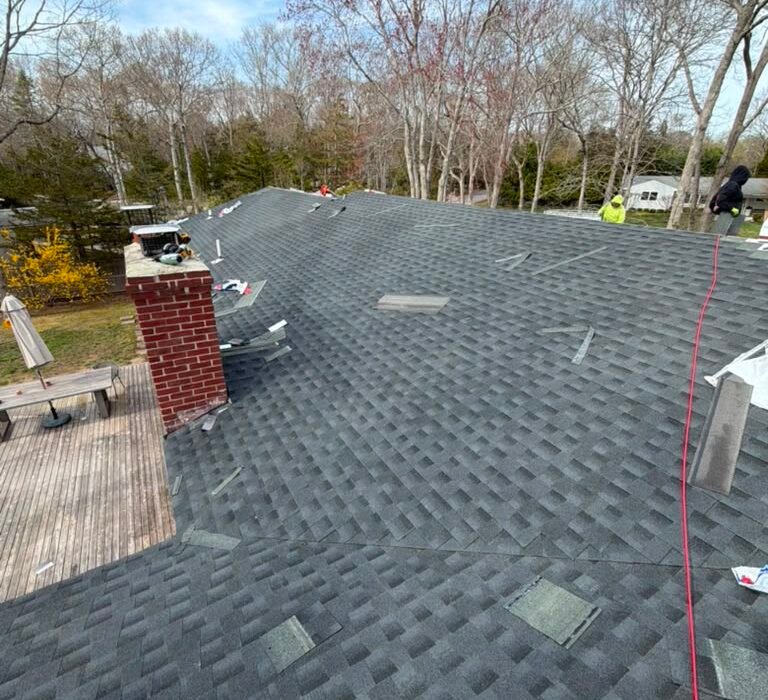
Ice dam prevention on Long Island can help homeowners protect their roofs from leaks, moisture, damaged shingles, and costly winter repairs. Snow and ice can create problems when temperatures rise and fall. Water melts higher on the roof and then flows toward colder roof edges. It may freeze again and create an ice dam.
Long Island winters often bring changing temperatures, rain, snow, and freezing nights. These conditions can put extra stress on a roofing system. Preparing your roof before winter can reduce the risk of leaks and damage.
Golden Hands Construction provides roofing services throughout Long Island, including Suffolk County, Nassau County, the Hamptons, Southampton, East Hampton, Riverhead, Montauk, and nearby communities.
What Is an Ice Dam?
An ice dam is a ridge of ice that forms near the edge of a roof. It can prevent melting snow from draining correctly.
How Ice Dams Form
Heat from inside a home can reach the roof deck. This heat may melt snow on the upper part of the roof.
The melted water then runs toward the colder eaves. Once it reaches that colder section, it freezes again. More water can freeze in the same area and make the ice dam larger.
Water may then collect behind the ice instead of leaving the roof.
The U.S. Department of Energy explains that differences in roof temperature can contribute to ice dam formation. You can learn more at https://www.energy.gov/.
Why Ice Dams Can Cause Roof Leaks
A sloped roof helps move water away from your home. An ice dam can block that normal drainage.
Water may collect behind the ice. It can then remain on the roof much longer than ordinary rainwater.
Small Roof Problems Can Become Larger
Standing water can expose existing weaknesses in your roof.
A damaged shingle may let moisture enter. Loose flashing can create another opening. Old seals around roof penetrations can also cause problems.
Homeowners often notice the interior damage first. A ceiling stain, damp wall, or wet attic insulation may signal a roof leak.
A professional https://goldenhandsny.com/services/roof-inspection/ can help identify visible roofing problems before winter weather makes them worse.
Attic Heat Can Increase the Risk
The condition of your attic can affect what happens on your roof.
Warm air naturally rises inside a home. If too much heat escapes into the attic, it can warm parts of the roof above.
Snow over those warmer sections starts to melt. The water then moves toward the colder roof edge and can freeze.
Insulation and Air Sealing Matter
Good insulation can reduce unwanted heat loss into the attic.
Air sealing can also limit the movement of warm indoor air. These steps may help keep roof temperatures more consistent during cold weather.
The U.S. Department of Energy recommends proper insulation, air sealing, and ventilation as important parts of controlling heat movement through a home.
You can find additional information at https://bsesc.energy.gov/.
Check Your Roof Before Winter Arrives
Fall offers a good opportunity to inspect your roof.
Homeowners should look for obvious signs of damage before snow and ice cover the roofing materials.
Look for Damaged Shingles
Check for shingles that appear:
Missing
Cracked
Loose
Curled
Lifted
Damaged around the edges
Even a small damaged area can become a weak point during winter.
Check for Previous Leak Signs
Look inside your attic when possible.
Dark stains, damp wood, wet insulation, or moisture around roof penetrations may indicate a problem.
You may also notice stains on ceilings or upper walls.
Fixing the cause before winter can help prevent additional damage.
Pay Attention to Roof Flashing
Flashing protects some of the most vulnerable areas of a roofing system.
Contractors commonly install flashing around chimneys, vents, skylights, valleys, and roof-to-wall connections.
Why Damaged Flashing Causes Problems
Flashing directs water away from joints and openings.
Loose or damaged flashing can allow water to enter the roof system. Winter conditions may make an existing flashing problem worse.
Repeated freezing and thawing can also place stress on weak roofing areas.
Golden Hands Construction provides https://goldenhandsny.com/services/roof-flashing/ services throughout Long Island.
Homeowners who have noticed leaks near roof joints should consider an inspection before winter.
Check the Area Around Your Chimney
The point where a chimney meets the roof requires careful protection.
Several roof surfaces and materials come together in this area. Flashing helps direct water around the chimney.
Watch for Chimney Flashing Problems
Damaged chimney flashing may allow moisture to enter around the chimney.
Warning signs can include:
Water stains near the chimney
Damp attic materials
Visible flashing damage
Loose roofing materials
Leaks during rain or melting snow
Snow and ice can make an existing weakness more noticeable.
Golden Hands Construction also offers https://goldenhandsny.com/services/chimney-flashing/ services for Long Island properties.
Keep Gutters Clear Before Winter
Your roof needs a clear path for water to leave the property.
Leaves, branches, pine needles, and other debris often collect in gutters during fall.
Why Clean Gutters Matter
Blocked gutters can slow drainage.
Water may remain near the roof edge instead of moving through the gutter system. Cold temperatures can then cause that water to freeze.
Cleaning your gutters cannot prevent every ice dam. However, it removes one common drainage problem.
Check your downspouts as well. Water should flow away from the building after leaving the gutter system.
Watch for Large Icicles
A few small icicles do not always signal a serious roofing problem.
However, large icicles or repeated ice buildup deserve attention.
Icicles May Point to Melting Snow
Snow may melt higher on the roof and then freeze near the eaves.
This cycle can create both icicles and ice dams.
Watch for other warning signs, including:
Thick ice along roof edges
Water stains indoors
Damp attic insulation
Repeated winter leaks
Ice inside gutters
Moisture near exterior walls
If the same problem returns each winter, you should investigate the cause.
Do Not Break Ice Off the Roof
Homeowners sometimes try to remove ice with a hammer, shovel, axe, or similar tool.
That approach can create new problems.
Sharp or heavy tools can damage shingles. They can also damage gutters and flashing.
Working around an icy roof also creates a serious fall risk.
Find the Cause Instead
Removing visible ice does not always solve the underlying problem.
Heat loss, poor drainage, damaged flashing, roof defects, or attic conditions may continue to create ice.
Finding the cause can provide a better long-term solution.
Roof Ventilation Also Matters
Ventilation plays an important role in many attic systems.
A properly designed ventilation system helps control conditions beneath the roof deck.
Every Roof Is Different
One ventilation solution does not fit every home.
Several factors can affect your roofing and attic system. These include:
Roof design
Attic size
Insulation
Skylights
Chimneys
Roof additions
Existing vents
A roofing inspection can help identify visible issues that may contribute to winter roof problems.
Repair Small Problems Before Snow Arrives
Small roofing defects can become more troublesome during winter.
A missing shingle may cause little trouble during dry weather. The situation can change after snow begins to melt.
Water may remain on the roof longer than rain. It can find weak areas and enter beneath roofing materials.
Do Not Wait for a Major Leak
Early repairs can help prevent more serious damage.
Homeowners should address known roofing problems before freezing temperatures become common.
Golden Hands Construction handles roofing work throughout Long Island. Services include roof inspections, repairs, flashing work, and other roofing projects.
Visit https://goldenhandsny.com/ to learn more.
When Should You Schedule a Winter Roof Inspection?
Fall is one of the best times to check your roof before winter.
An inspection gives you time to address problems before snow and ice make roof work more difficult.
Consider an Inspection If You Notice These Signs
You may want to schedule a roof inspection if:
Your roof leaked before
Shingles are missing
Flashing looks damaged
Your gutters overflow
Ice dams formed during previous winters
A recent storm damaged your roof
Your attic shows moisture
Your ceiling has water stains
Homes with complicated rooflines can also have more vulnerable areas.
Valleys, chimneys, skylights, vents, and additions create more places where water must drain correctly.
How to Reduce the Risk of Ice Dams
Homeowners can take several practical steps before winter.
Inspect the Roofing Materials
Check shingles and visible roof components for damage.
Inspect Flashing
Pay close attention to chimneys, vents, skylights, valleys, and walls.
Clean the Gutters
Remove leaves and debris before freezing weather arrives.
Check the Attic
Look for moisture, damaged insulation, and signs of previous leaks.
Reduce Unwanted Heat Loss
Proper insulation and air sealing can help limit excess heat movement into the attic.
Address Problems Early
Repairing a small roofing issue before winter can help prevent a larger problem later.
Protect Your Long Island Roof Before Winter
Ice dams can form when melting snow reaches colder parts of a roof and freezes again. The resulting ice can block normal drainage.
Water may then collect behind the ice and find weak areas in your roof.
Homeowners can reduce winter roofing risks by preparing early. Check shingles, flashing, chimneys, gutters, attic conditions, and drainage before cold weather arrives.
Golden Hands Construction serves homeowners throughout Long Island, Suffolk County, Nassau County, the Hamptons, Southampton, East Hampton, Riverhead, Montauk, and surrounding areas.
For a roof inspection, winter roof repair, or help with another roofing problem, call (631) 877-8338 or visit https://goldenhandsny.com/ to request a free quote.


