

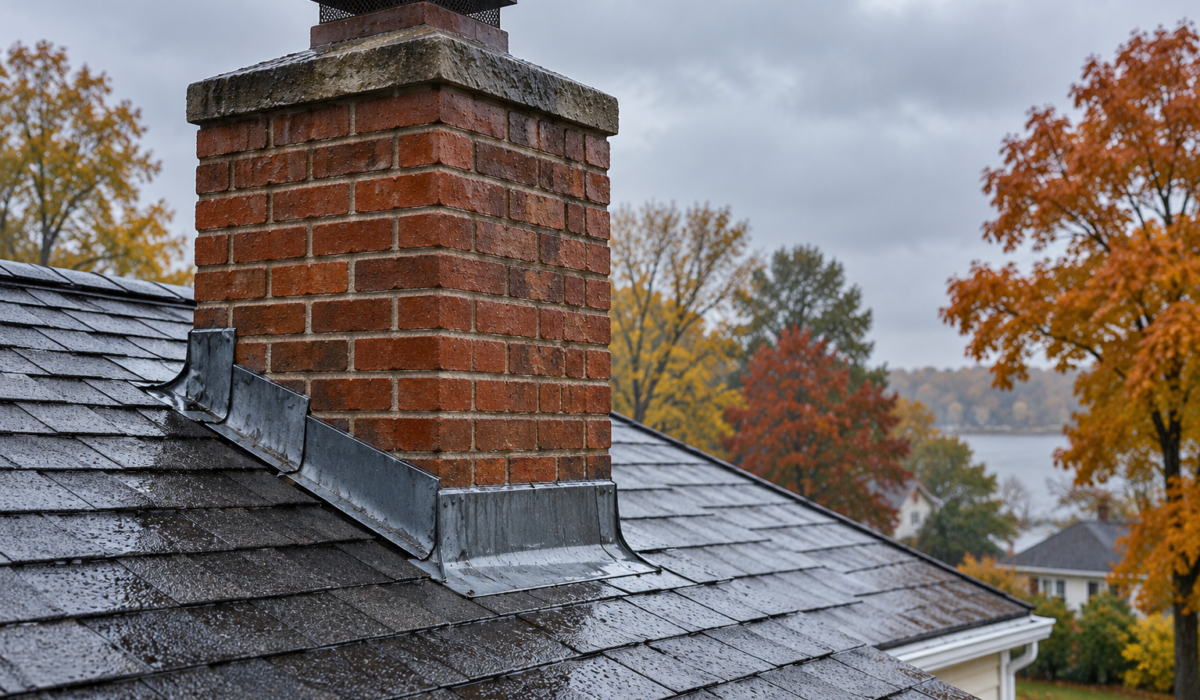
Chimney leaks during wind-driven rain can point to gaps in flashing, damaged masonry or problems near the chimney top. A fireplace may stay dry through light showers, then develop a drip when rain blows against the house. That pattern helps narrow the search, but it does not prove which part needs repair. Before covering the chimney with sealant, the first step is to trace where the water enters.
For Long Island homeowners, a stain beside the chimney raises an urgent question. Does the roof need work, or does the chimney need repair? Sometimes both systems need attention. A useful inspection checks how they meet, follows visible moisture paths and connects the proposed repair to the evidence.
Why the leak appears only in certain storms
Wind changes how rain reaches a building. Instead of falling mostly downward, rain can strike exposed chimney faces and joints at an angle. An opening that causes no visible trouble in a mild shower may let water through under different conditions.
Storm length also matters. A brief shower and hours of steady rain place different demands on the same chimney. Record whether the leak starts quickly or appears later. Note which side of the house faces the wind, if you can do so safely. These details give the contractor a starting point without turning a weather pattern into a diagnosis.
The roof joint needs a close look
Flashing manages water where the chimney passes through the roof. Its pieces must work together with the roof covering and the chimney surface. A gap, damaged section or poor overlap can interrupt that drainage path.
The Building America Solution Center explains chimney flashing as a connection between the roof and chimney water-control layers. It describes layered metal components that shed rainwater. This helps explain why a visible bead of caulk cannot tell you whether the whole assembly works properly. Building America Solution Center
When moisture appears near this joint, a chimney flashing assessment can help establish whether the metal needs repair, replacement or further investigation. Ask for photographs that show the defect and explain how the proposed work addresses it.
The chimney top may be the entry point
A wet fireplace does not automatically mean the roof flashing has failed. The chimney cap, crown and flue opening deserve attention too. The cap covers the opening while allowing the chimney to vent. The crown is the sloped surface around the flue at the top of a masonry chimney.
Damage in either area can create a separate route for rain. The Chimney Safety Institute of America identifies water in the fireplace, rust and damaged flashing as signs that warrant attention. It also describes a chimney cap as protection against direct rain entry. Plainfield, IN
A contractor should check the top rather than assume every chimney leak starts at roof level. If the inspection finds a crown defect, the scope of chimney crown repair should reflect its condition. A small surface flaw and a badly deteriorated crown may need different approaches.
Brick and mortar can also contribute
The chimney’s exposed walls need inspection as well. Cracked brick, worn mortar joints and damaged surfaces can allow moisture into the masonry. Water absorption may contribute to a leak even when the flashing looks intact from a distance.
In its chimney maintenance guidance, the Chimney Safety Institute of America explains that brick can absorb water. It notes that defective mortar joints can increase moisture movement into a masonry chimney. Plainfield, IN
This is why a coating should follow a diagnosis. It cannot replace missing mortar, correct broken flashing or rebuild a damaged crown. Before approving a waterproofing treatment, ask which surfaces need repair first and why the selected product suits the masonry.
A ceiling stain does not mark the exact opening
Water can move before it becomes visible indoors. The brown mark beside a chimney may sit below the entry point, while the defect lies higher on the roof or on another chimney face. Repairing only the area directly above the stain can leave the original problem unresolved.
The CSIA masonry chimney inspection guide includes checks of accessible attic areas, visible water damage, the crown and flashing. It also calls for checking a cricket where one exists. These separate inspection points help prevent an incomplete diagnosis. web.csia.org
Share the history of any previous repairs. If someone resealed the flashing last year and the same stain returned, that detail matters. It gives the next contractor a reason to investigate beyond the old patch.
What to record before the inspection
Take clear photographs of the stain and any visible dripping from a safe indoor position. Write down when the rain started, when the leak appeared and whether water entered the fireplace or the surrounding ceiling. Keep earlier repair estimates and photographs together.
Stay off a wet roof. Do not climb onto the chimney to search for cracks during a storm. Ground-level observations and indoor photographs can still provide useful evidence. If water reaches electrical fittings or a ceiling begins to sag, keep people away from the affected area and arrange urgent assistance.
Repair or replacement depends on the damage
An isolated defect may allow a focused repair when the surrounding materials remain sound. Wider deterioration can require more work. Failed flashing, damaged roof decking, loose masonry and a deteriorated crown each affect the scope in different ways.
Ask for an estimate that separates the confirmed problem from any hidden damage that might appear during work. Access, roof slope, chimney size and the condition of nearby materials can all affect the price. A useful proposal explains what the contractor found, what they plan to repair and how they will check the result.
Stop the water before repairing the stain
Fresh paint can hide a mark, but it cannot stop another storm from wetting the same area. Address the entry point first. Then assess the affected interior materials and allow the area to dry before completing cosmetic repairs.
If your Long Island home develops chimney leaks during wind-driven rain, contact Golden Hands Construction or call (631) 877-8338 to discuss an inspection. Describe when the leak happens and share your photographs so the assessment can begin with useful evidence.


