

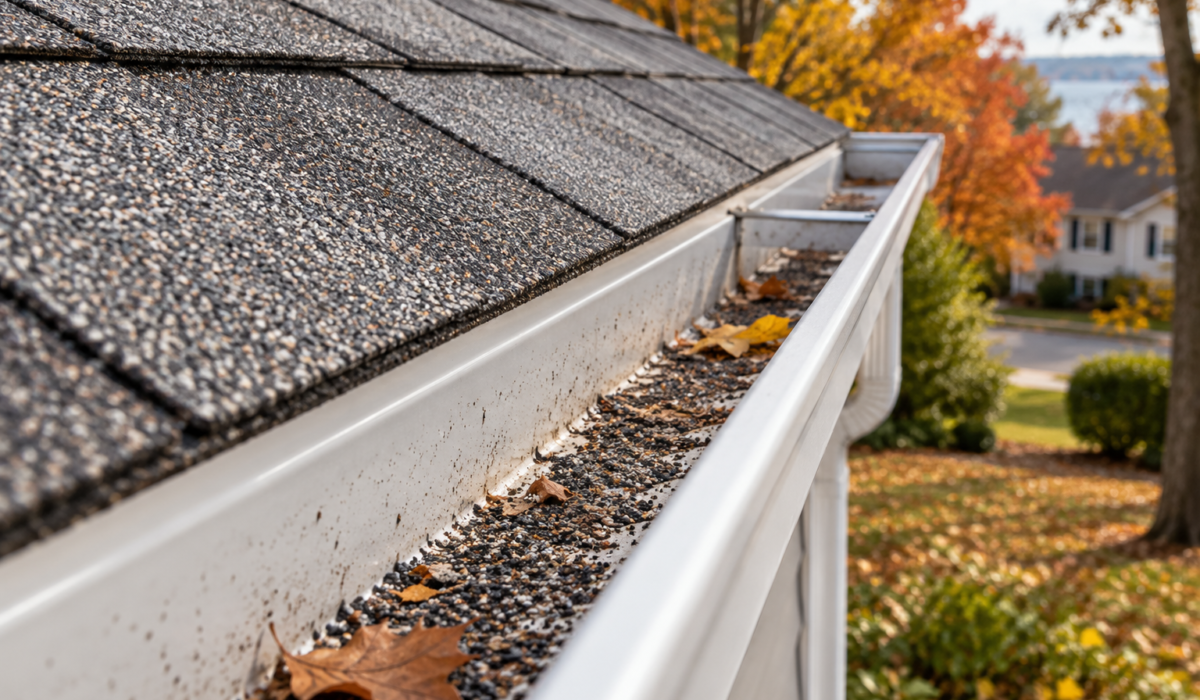
Shingle granules in gutters do not automatically mean you need a new roof. Some shedding can occur on newly installed asphalt shingles. However, persistent loss, visible bare areas or other shingle damage deserve a closer look. The right decision depends on the roof’s condition, installation history and where the material is coming from.
Finding gritty debris during fall gutter cleaning can be unsettling. It may look like coarse sand mixed with leaves and dirt. Before approving a repair or replacement, find out whether those particles reflect normal shedding or a problem with the shingles above.
What shingle granules do
Asphalt shingles have a textured surface made from small mineral granules. These particles give the roof its color and help protect the asphalt beneath them. When you see similar particles collecting in a gutter, they may have washed down from the roof.
The useful question is how the shingle surface looks now. A few loose particles and a roof with widespread bare patches present different concerns. GAF’s guidance on roof replacement warning signs distinguishes occasional granule loss from excessive loss that leaves bare areas. The latter can indicate aging shingles. gaf.com
A proper assessment connects the debris below with the condition of the roof above. It should explain what the contractor found and why it matters.
Why a new roof can shed loose granules
Granules in the gutter can be especially alarming when you recently paid for a roof installation. Yet loose particles do not always indicate defective shingles.
In its technical bulletin on granule loss from new shingles, GAF explains that extra granules can remain from manufacturing. These loose particles may shed most noticeably after installation, then decrease over time. The manufacturer treats that pattern as normal. gaf.com
That explanation should not dismiss visible damage. If shedding remains significant, the roof changes color or the shingles show other damage, GAF advises further follow-up. For another brand, check that manufacturer’s guidance and your installation records. Take photographs and contact the installer when the condition concerns you.
An older roof needs a wider assessment
On an older roof, granule loss should prompt a review of the whole covering. A contractor should look for cracks, curling, missing shingles and areas where the surface has worn away. The roof’s repair history also helps explain what you are seeing.
Age provides context, but it does not settle the decision by itself. Two roofs installed in the same year can have different conditions. Likewise, a roof can have a repairable defect without needing full replacement.
A roof inspection on Long Island gives you a chance to document those differences. Ask for clear photographs of the affected shingles and an explanation of whether the issue is isolated or widespread.
Why one gutter cleanout can be misleading
The amount of debris needs context. A gutter that has not been cleaned for a long time may contain material collected over many months. Comparing that buildup with a gutter cleaned a few weeks ago would give an uneven picture.
Record when the gutters were last cleared and when the roof was installed, if you know. Note whether the gritty material appears along the whole gutter or mainly in one area. These observations help guide the inspection, though they cannot establish the cause on their own.
There is no useful universal rule that a certain handful of particles means replacement. The condition and distribution of the remaining granules matter more than an unsupported quantity threshold.
What to do if you notice it after a storm
Discovering granules after heavy weather does not prove that the storm damaged the roof. You may simply be seeing debris you had not noticed before. Still, a sudden change deserves attention, especially when it appears with missing shingles, fallen roof material or a new indoor leak.
Photograph visible debris from a safe position. Keep any earlier roof photographs for comparison. Tell the contractor when you first noticed the change and whether the roof had known problems beforehand.
Avoid climbing onto a wet roof to investigate. A close inspection should establish the condition before anyone labels it storm damage or recommends a particular repair.
When a focused repair may make sense
A limited area of damage may allow a focused repair if the surrounding shingles remain suitable for the work. The contractor must consider how the replacement materials will fit and whether nearby shingles can tolerate the repair process.
Granules alone cannot establish that repair is practical. The inspection needs to identify the actual defect and its extent. A useful roof repair proposal should describe the affected area, the planned work and any limits caused by the existing roof’s condition.
Ask how the contractor will handle hidden damage discovered after removing materials. Clear terms make it easier to compare estimates and understand potential changes in scope.
When replacement deserves consideration
Replacement becomes a more relevant discussion when deterioration affects large areas or repeated repairs no longer address the wider condition. Extensive bare patches combined with other shingle damage warrant a broader review.
Before approving roof replacement, ask the contractor to show why repair would be unsuitable or short-lived. The recommendation should reflect documented conditions across the roof.
An estimate should also explain the materials, removal work, flashing details and how any damaged decking will be handled. Comparing those details gives you a clearer picture than comparing the final price alone.
Get a clear answer before paying for roof work
Shingle granules in gutters are a clue worth checking. They are not enough, by themselves, to determine how much work your roof needs. A careful inspection can help distinguish loose material on a new roof from deterioration that calls for repair or replacement.
If you have noticed persistent shedding, bare patches or other roof damage, contact Golden Hands Construction or call (631) 877-8338. Share the roof’s approximate age, recent repair history and any photographs so the assessment starts with useful information.


