

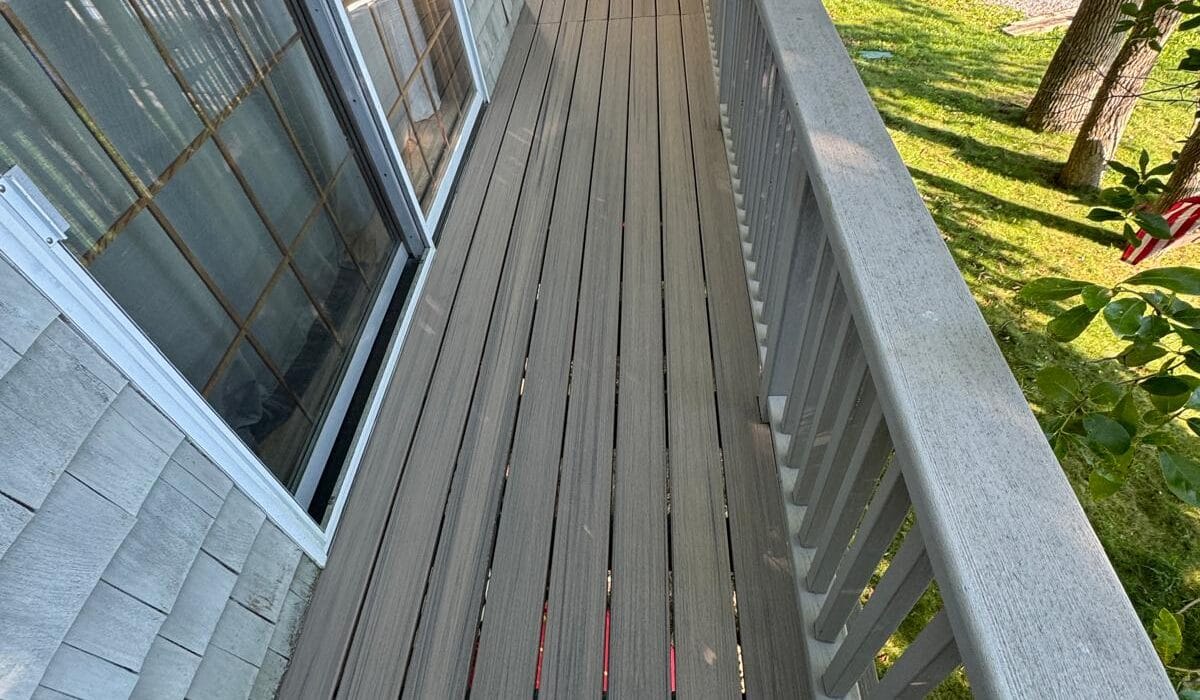
Deck replacement in Remsenburg is easier to plan when you separate three decisions: what is wrong with the old deck, how you want to use the new space, and what work the contractor’s price actually covers. Taking them in that order can prevent a surface problem from becoming an unnecessary rebuild. It can also prevent a new set of boards from hiding a problem beneath them.
You do not need to know the answer before calling a contractor. Describe what you see and feel when you use the deck. Then ask for an assessment of the structure and a proposal that explains the recommended work.
Identify the Trouble Spots First
Walk around the deck and note where problems occur. A loose board near a stair, a soft area beside the house, and a railing that moves may have different causes. Photos can help you remember the locations when you meet the contractor.
Look for patterns rather than counting every mark on the surface. Does the same area remain damp after rain? Have you replaced boards in one section several times? Does a step shift whenever someone uses it? Repeated trouble can point to a problem that cleaning or a single board replacement will not resolve.
Do not use an area that appears unstable until a qualified professional has checked it. Ask the contractor to examine the accessible framing, posts, stairs, railings, and connections, as well as the surface boards.
Decide Which Features Deserve to Stay
An old deck may have a useful footprint even when its materials have failed. Perhaps its position gives you afternoon shade. Maybe its height makes the transition from your back door comfortable. Those features can inform the new design.
You may also want a change that has little to do with damage. A smaller deck could leave more open yard. A different stair position might provide a clearer route to a garden. A wider landing might make it easier to carry food outside.
Tell the contractor both what you want to keep and what you want to improve. That gives the design a purpose. A replacement should respond to your property and daily routine, rather than reproduce the old deck without examining why it fell short.
Give Each Activity Enough Room
Picture a normal day on the new deck. If you eat outside, measure your table and chairs. If you use a grill, decide where it would fit without blocking the door or main walking route. If you mainly want a place to sit, you may not need a large dining area.
Draw a rough arrangement or place temporary objects on the old deck to test the space. Leave room for people to pass when chairs are in use. Notice whether an open door changes the available area.
Share these measurements during the estimate visit. They help the contractor propose dimensions that serve your needs. They also help you decide whether changing the deck’s shape would be more useful than simply making it larger.
Understand What Supports the Walking Surface
The boards you see are only part of a deck. Framing, supports, fasteners, railings, and stairs all contribute to the finished structure. Ask which existing components the contractor can inspect before removal and which may be hidden.
If the deck attaches to your home, discuss that connection specifically. Mention any staining or moisture you have noticed nearby. The International Code Council explains why the connection between a deck and a house needs careful design. The appropriate details depend on your project and applicable requirements. www.iccsafe.org
Do not assume that a deck needs full replacement because a few boards look worn. Do not assume that new boards can safely go over old framing, either. Let the inspection guide that choice.
Compare Materials as Complete Systems
Homeowners often begin with a choice between wood and composite boards. That matters, but it does not describe the whole deck. Ask what the contractor proposes for framing, railings, stairs, and fasteners along with the surface.
Look at samples outdoors next to your home. Notice how they appear in sun and shade. Ask for product names so you can read the manufacturer’s care instructions. Wood products, composite lines, and other decking materials can differ widely, even within the same broad category.
Choose a care routine you can maintain. Some surfaces need periodic finishing. Others have different cleaning requirements. Ask how the specific products in your proposal should be cared for after installation.
Golden Hands Construction provides an overview of its deck replacement work and related decking services.
Account for the Yard Around the Deck
A deck does not end at its outer boards. Think about where the stairs meet the ground and how people walk away from them. Look at nearby planting, paths, and areas where water collects.
Tell the contractor if the space under the old deck stays wet or fills with leaves. Ask whether the new layout will leave enough access to clean and inspect that area. If water appears to come from another source, discuss whether someone should assess it separately.
During construction, the crew also needs access to the work area. Show the contractor any narrow gate, planted area, or surface you want to protect. Find out where materials and removed debris will go.
Read the Removal Plan Carefully
One proposal might remove the entire old deck. Another might retain sound components. Neither description is clear enough until it identifies the actual parts involved.
Ask whether the price includes taking away boards, framing, stairs, and rails. Confirm how the crew will dispose of the material and clean up afterward. If any old structure will remain, ask what the contractor found during the inspection that supports keeping it.
Removal can expose conditions that no one could confirm at the first visit. Agree on how you will receive photos, an explanation, and a price for any additional work. Approve a change only after you understand its reason and scope.
Know When a Smaller Project Is Enough
If the underlying deck is sound, maintaining it may be a sensible choice. Suitable deck power washing can address dirt on some surfaces. A wood deck may also be a candidate for deck staining after someone assesses its condition.
If damage is confined to a few components, deck repair may address the issue without changing the whole structure. Ask what the proposed repair would fix and whether the existing layout still suits you.
Cleaning and staining improve appearance; they cannot secure damaged supports. A repair can address a defined defect; it will not give you a different footprint. Match the work to the outcome you want.
Plan the Schedule and Final Review
Before accepting a proposal, ask what needs to happen before work begins. Material selections, any applicable approvals, and ordering can affect timing. Tell the contractor if you need access to the yard during a certain period.
When the work ends, review the deck in person if possible. Walk its usual routes. Look at the stairs and railings, and compare the finished work with the written scope. Ask for the product information and care instructions for the materials installed.
Afterward, keep debris from collecting near the house or on the stairs. Watch for changes in the way boards and railings feel. If something moves or concerns you, arrange an assessment.
Request a Deck Assessment in Remsenburg
Golden Hands Construction can examine your existing deck and discuss whether repair or replacement fits its condition and your plans. Explain the trouble spots and how you want to use the finished space. Visit the contact page or call (631) 877-8338 to request an estimate for deck replacement in Remsenburg.


