

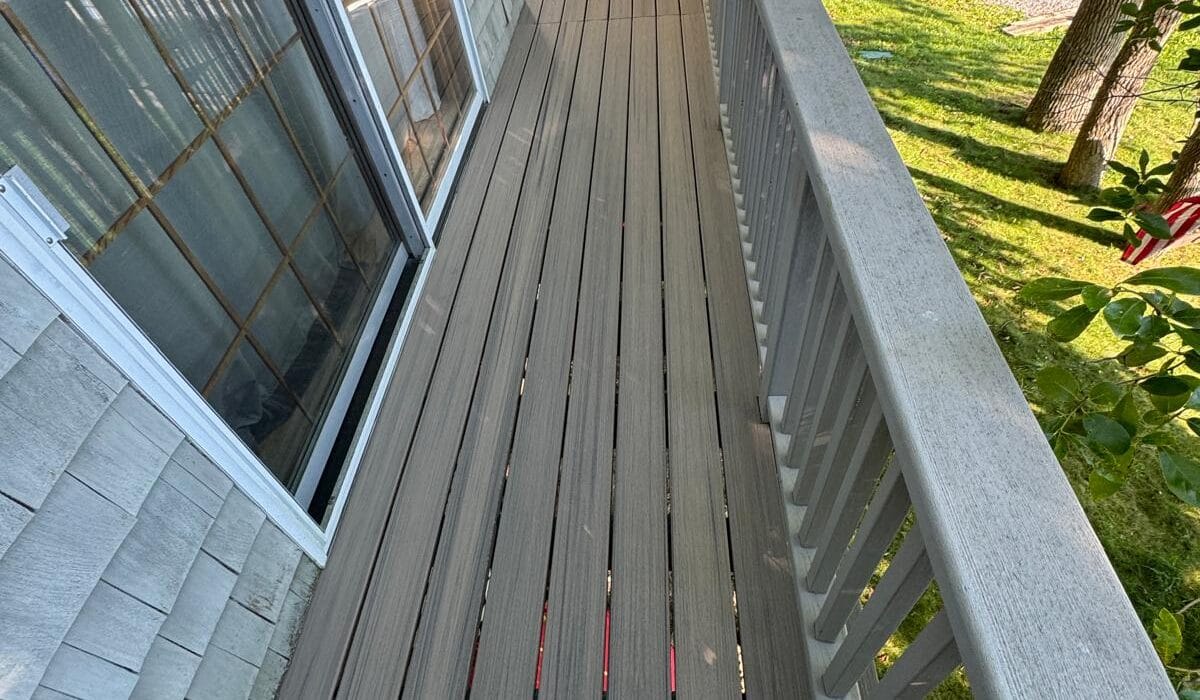
Deck replacement in Westhampton should leave you with a space that is easier to use and a structure whose condition you understand. The first decision is whether the existing deck truly needs to come down. The second is what should change if you build again. A contractor’s inspection can answer the first question; your experience using the deck helps answer the second.
A deck can disappoint its owner in several ways. It may feel unsteady, demand frequent repairs, or make it hard to move between the house and yard. Each issue deserves a clear response. Replacing boards may solve a surface problem, but it will not correct damaged supports or an inconvenient layout. Start by describing what you notice rather than choosing a material immediately.
Walk the Route You Take Every Day
Go from your back door to the places you normally use in the yard. Does the current deck make that route simple? Or do you squeeze around furniture, cross a busy seating area, and descend stairs in the wrong location?
These details may seem small on a drawing. They matter every time someone carries a meal outside or walks back into the house. Note where doors swing, where people gather, and how much space you need around a table. If the deck serves as a main path through the yard, give that path enough room in the new design.
Think about the ground beyond the last stair. A comfortable deck still needs a sensible connection to the yard. Show the contractor where you want people to arrive and whether the surrounding area creates an obstacle.
Learn What Has Failed
Before anyone recommends a replacement, ask for an assessment of the old structure. Have the contractor examine the accessible boards, framing, supports, railings, and stairs. Point out any area that moves, sags, or feels soft.
Repeated problems deserve special attention. If the same boards keep loosening, ask what is happening underneath them. If a stairway shifts, ask whether the problem lies in its treads, connections, or supporting structure. The visible symptom does not always reveal the full cause.
Keep people off any area that appears unstable until a qualified contractor has assessed it. A cosmetic improvement cannot make a weak structure safe. If damage is limited and the rest of the deck remains sound, ask whether deck repair would address the cause.
Decide What the New Deck Must Hold
List the items you actually expect to place on the deck. A dining set, grill, planters, and lounge chairs each take room. Measure them before deciding on the deck’s size. Leave enough space for people to pull out chairs and walk to the stairs.
Tell your contractor about any heavy item you intend to add. A hot tub, for example, requires a design that accounts for its load. Do not assume an existing deck or a standard replacement will support it.
You can also decide what to leave out. Permanent seating may look appealing, but movable furniture gives you more freedom to change the arrangement. A simpler layout may work better if you want open space for different uses.
Check the Parts That Meet the House
For an attached deck, the area where it meets the house deserves careful review. Tell the contractor if you have noticed water, staining, or deterioration near the doorway. Ask how the proposed work will address the deck connection and protect the adjacent area.
The International Code Council discusses why a deck’s connection to the house matters. Use that information to frame questions for your contractor. The correct construction details depend on the home and the applicable requirements. www.iccsafe.org
Ask which existing parts the contractor expects to remove. If a proposal reuses framing or supports, request an explanation of how their condition was assessed. Some conditions may only become visible after removal begins. Agree in advance on how the contractor will report those findings.
Choose Materials for the Way You Maintain Your Home
Material samples help with color, but upkeep deserves equal attention. If you choose wood, ask about the finish and its care schedule. If you choose composite or another manufactured product, read that product’s cleaning instructions. Different brands and product lines can have different requirements.
Look at samples outside, near the house. Compare them with your siding, trim, and surrounding yard. Then consider the railings and stairs. Their materials and colors will be visible alongside the deck boards.
Discuss the exposure at your Westhampton property. Sun, shade, moisture, and the site’s specific conditions can affect material choices. Ask why the contractor recommends a particular product for your deck. A useful explanation should go beyond calling it “maintenance free.”
Golden Hands Construction lists its broader deck replacement service and decking services for homeowners who want to review the types of work available.
Know What Demolition Includes
Removing an old deck is more than lifting its surface boards. The project may involve rails, stairs, framing, posts, and other components. Ask the contractor to state exactly what the crew will remove and what, if anything, will remain.
Discuss where debris will go and how the crew will reach the work area. If a narrow side yard, landscaping, or another feature limits access, show it during the estimate visit. These details can affect the proposed method and schedule.
Once the crew removes the old structure, hidden conditions may come into view. Ask for photos and a written explanation if they find unexpected damage. Review any added work and its cost before approving a change to the project.
Compare Estimates by Scope
A low total does not tell you whether two contractors proposed the same deck. Review the size, materials, framing, stairs, railings, demolition, disposal, and cleanup in each estimate. Check whether the proposal identifies specific products.
Ask who will determine the approvals needed for the planned work. A change in size or layout may raise different questions from a limited repair. Confirm how this step fits into the schedule before choosing a start date.
Make sure you understand payment stages and how changes will be documented. A detailed proposal gives you a better basis for questions during construction and for reviewing the completed work.
Give Rainwater and Debris Somewhere to Go
When you inspect the old deck, notice where leaves collect and where water lingers after rain. Share what you see with the contractor. The new design should let you clean and inspect the areas that need attention, especially near the house.
Do not assume the deck causes every water problem. Some concerns may involve the surrounding yard or another part of the building. Ask the contractor to explain what the deck project can address and whether another assessment is needed.
After installation, keep those areas clear. Sweep away leaves and follow the decking manufacturer’s cleaning guidance. Check stairs and railings periodically and arrange an assessment if something begins to move.
Consider a Smaller Project First
If an inspection finds that the structure is sound, you may have options short of replacement. Suitable deck power washing could address dirt. Depending on the surface, deck staining may refresh its finish.
Those services serve a different purpose from structural repairs. Ask which work matches the condition of your deck. You may find that a smaller project meets your needs, or that a replacement makes sense because the structure and layout both need attention.
Request a Deck Assessment in Westhampton
Golden Hands Construction can discuss the condition of your existing deck and the changes you want to make. Describe any movement, recurring damage, or layout problems when you request an estimate. Visit the contact page or call (631) 877-8338 to ask about deck replacement in Westhampton.


