

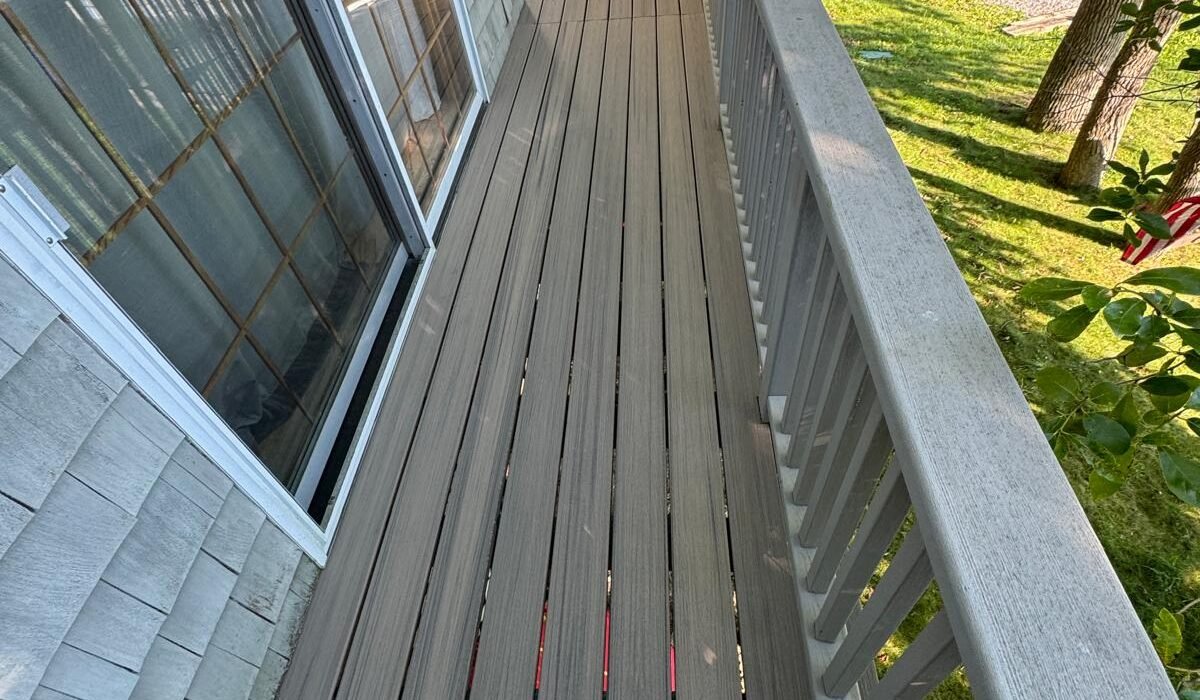
Deck safety checks on Long Island should begin with the structure that supports the deck, not just the boards you walk on. A worn finish may need maintenance, while a loose railing, damaged support, or failing connection needs closer assessment. Before choosing repairs or replacement, find out which parts are affected and whether the deck can remain in use.
For homeowners in Suffolk County, Nassau County, and the Hamptons, a deck often serves as an extension of the house. Its condition matters whenever people gather outdoors. A fresh stain can improve its appearance, but it does not show whether hidden connections and supports remain sound. A useful assessment considers the surface, stairs, railings, and supporting structure together.
Begin with Visible Changes and Avoid Testing Weak Areas
From a safe position, look for broken boards, missing railing pieces, uneven stairs, and supports that appear to have moved. Compare the deck with older photographs if you have them. Note any new gap, leaning section, or visible separation from the house.
Do not test a questionable deck by jumping on it, shaking railings, or placing extra weight on it. Keep people away from visibly unstable areas and arrange a qualified assessment. A homeowner’s visual check can identify concerns to report, but it cannot certify the deck as safe or establish the condition of concealed components.
Look Beyond the Walking Surface
A deck includes several parts that carry loads and connect them to the ground or house. The assessment should consider posts, beams, joists, and their connections as well as the boards above. On an attached deck, the house connection also needs attention. A freestanding deck has a different support arrangement.
The North American Deck and Railing Association’s deck evaluation guide covers stairs, supports, framing, the ledger, deck surfaces, and guards. Its scope shows why replacing surface boards alone is not a complete structural assessment. Ask the contractor which areas can be examined and whether anything remains concealed or inaccessible.
Loose Railings and Damaged Stairs Need Prompt Attention
Railings and stairs are easy to overlook when the main deck surface looks good. A loose post, detached handrail, or damaged tread can affect how safely people move around the deck. The repair should address the attachment and surrounding materials, rather than only the piece that visibly moves.
Record any concern you have already noticed during normal use. Avoid leaning against a suspect railing or using damaged stairs to reach other areas for inspection. Ask whether the proposed work includes the whole affected assembly, such as the post connection, adjacent framing, or stair supports. Replacing one visible piece may leave another damaged component in place.
Check the House Connection on an Attached Deck
Where a deck attaches to the house, the connection forms part of the supporting system. The contractor should assess its condition and how water is managed at that junction. Visible separation, staining, or deterioration nearby deserves investigation, but appearance alone does not reveal the full condition of the connection.
Ask whether the assessment can establish what the deck attaches to and whether further access is needed. Do not accept a conclusion based only on a new board covering the joint. If the connection or supporting wall raises structural concerns, a qualified design professional may be needed to determine the appropriate next steps.
Distinguish Surface Wear from Material Deterioration
Fading, a worn coating, and dirt differ from broken boards or deteriorated wood. Surface maintenance may suit a deck whose materials and structure remain in appropriate condition. It cannot restore strength to a damaged member or correct a failing attachment.
When discussing deck repair services on Long Island, ask which findings support the proposed repair. The scope should explain whether it addresses boards, railings, framing, connections, or a combination of those parts. Any concealed damage discovered during work should be documented before deciding how to extend the repair.
Decide Whether a Local Repair Is Enough
A limited repair may be appropriate when damage affects a small area and the surrounding structure is suitable to retain. The contractor needs to confirm that replacement materials and connections fit the existing deck. The repair also needs to address the reason the damage developed, where that can be established.
Broader deterioration, several failing components, or major changes to the supporting system may make replacement worth considering. Golden Hands Construction offers deck replacement services. Ask for an explanation of what can remain, what needs removal, and why. A replacement recommendation should follow the findings rather than the deck’s age alone.
Plan Layout Changes with the Structure in Mind
If you want to enlarge the deck or add heavier features, raise those plans before the assessment and estimate. A change in use can affect the design needed. Do not assume the existing deck can support a hot tub or other heavy addition because it has supported normal outdoor furniture.
Discuss your intended use alongside the available decking services. The appropriate design, approval requirements, and construction details depend on the property and project. Ask who will determine those requirements and whether design or permit-related work is included in the proposal.
Compare Estimates by the Work They Include
A surface repair and a structural repair can have very different scopes. One estimate may cover a few boards, while another includes railings, framing, or support work. Before comparing totals, ask each contractor to identify the areas assessed and the defects the work will address.
Costs depend on deck size, height, access, materials, and the extent of deterioration. Clarify the process for approving additional work if removal exposes more damage. Also ask which elements remain outside the agreed scope. A clear proposal helps you understand what the project will accomplish and what still needs attention.
Keep Maintenance Separate from the Safety Decision
Cleaning and refinishing can form part of ongoing care after necessary repairs. Their timing and methods should suit the deck material and product instructions. They do not replace an assessment of supports, connections, stairs, or railings.
Keep inspection notes, photos, and completed repair records together. Arrange another assessment if you notice new movement, visible deterioration, or damage after a storm. Do not rely on a deck’s improved appearance as proof that every component has been checked. The final conversation with the contractor should explain the work completed and any remaining limits or concerns.
Arrange Deck Safety Checks on Long Island
Deck safety checks on Long Island help homeowners make repair and replacement decisions based on the whole deck. Start with safe observations, keep clear of unstable areas, and ask for findings that explain the recommended work. For deck concerns in Suffolk County, Nassau County, or the Hamptons, contact Golden Hands Construction at (631) 877-8338 to discuss an assessment and the next steps for your property.


