

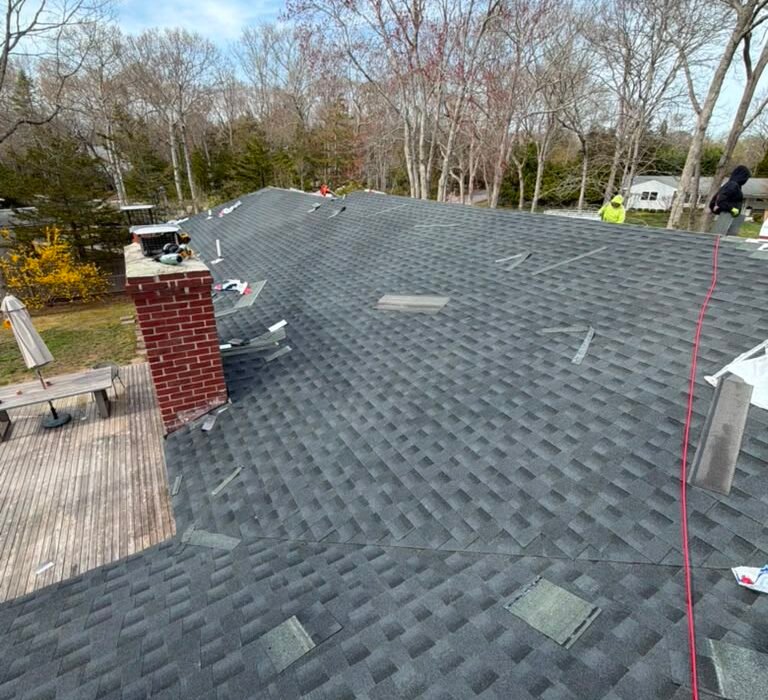
Wind damaged siding on Long Island does not always mean your home needs a complete exterior replacement. One loose panel may call for a limited repair. Missing sections, broken edges, or damage behind the siding may require more work. The decision starts with checking both the visible cladding and the parts that hold and protect it.
After a storm, a panel hanging from the wall can look like the whole problem. Yet simply putting it back may not address a damaged locking edge or weak attachment. For homeowners in Suffolk County, Nassau County, and the Hamptons, the useful question is what failed and how much of the wall is affected.
Check the Exterior Once Conditions Are Safe
Walk around the house from the ground after the storm has passed. Look for lifted panel edges, missing pieces, cracked siding, and loose corner trim. Compare each wall with older photographs if available. Note whether damage sits in one small area or extends across several courses of siding.
Stay clear of hanging panels, fallen branches, and downed wires. Do not pull at loose siding to see how much remains attached. Photograph the affected area from a safe distance, including a wider view that shows its position on the wall. These records help you explain the problem without disturbing the installation.
A Loose Panel Needs More Than a Quick Push
Vinyl siding panels connect through locking edges and attach along a fastening strip. If a panel has come loose, the contractor should check whether those features remain intact. A sound panel may be suitable for refitting. A torn strip or damaged lock may prevent it from staying securely in place.
The Vinyl Siding Institute installation manual discusses panel replacement, attachment, and the need to allow movement as temperatures change. It also emphasizes product-specific installation instructions. These details matter when repairing wind damage: adding random screws through the face is not the same as restoring the intended attachment.
Missing Siding Makes the Wall Behind It Important
Where panels are missing, ask what condition the underlying wall is in. Siding forms part of the exterior assembly, but it is not the only layer that manages rain. The water-resistive barrier and flashing behind it also play a role. A repair should account for any exposed or damaged layers before new panels cover them.
The size of the visible gap does not show the full extent of damage. If rain entered the wall, the contractor may need further access to assess affected materials. Ask what can be checked during the initial visit and what remains concealed. Avoid approving a cosmetic repair without understanding those limits.
Local Damage May Allow a Limited Repair
A small area of damage may be repairable when the surrounding siding, attachment points, and wall remain in suitable condition. The contractor needs to identify the product and find compatible parts. Panel shape and locking details matter as well as color. A piece that looks similar may not fit the existing system correctly.
Golden Hands Construction provides siding repair on Long Island. When discussing a limited repair, ask whether it includes the affected trim and the wall layers beneath the panels. Also ask how far the contractor must remove siding to complete the work without damaging adjacent pieces.
Color Matching Can Affect the Finished Result
New siding may differ in appearance from older panels that have weathered. Even when the original color remains available, the repaired section may stand out. Product availability can also limit the options, especially if the original profile has been discontinued.
Ask to see the proposed replacement material alongside the existing siding before agreeing to the final scope. A localized patch, replacement of a larger wall section, or a broader exterior update may produce different results. Decide how much a visible color difference matters to you, and have that expectation recorded in the proposal.
Repeated Failures Need a Wider Assessment
If the same section comes loose again, or several walls show similar damage, ask for an assessment beyond the detached panels. Attachment, accessories, the mounting surface, and product suitability may all need review. Repeated failure does not establish a single cause, but it is a reason to investigate the wider installation.
For homes with vinyl cladding, review the available vinyl siding services and ask how the proposed work addresses the findings. The material and installation should suit the property and the manufacturer’s requirements. A new panel will not resolve an underlying attachment problem on its own.
Repair and Replacement Estimates Should Explain Different Scopes
A repair estimate may cover a few panels and associated trim. A replacement estimate may include removing an entire wall’s cladding, repairing underlying materials, and installing a new system. Compare what each proposal includes before comparing its total price.
Costs vary with access, wall height, material availability, the affected area, and concealed damage. Ask how additional findings will be documented and priced. If broader work is appropriate, Golden Hands Construction’s siding installation and repair services provide a starting point for discussing options. The recommendation should connect the condition found with the work proposed.
Keep Records Before and After the Work
Save storm photos, the inspection findings, and the agreed repair scope. If you plan to ask your insurer about the damage, contact the insurer for its documentation requirements. Coverage and claim decisions depend on your policy and circumstances; a contractor’s estimate does not guarantee payment.
When work finishes, review the repaired area with the contractor. Ask about any remaining concerns and the care instructions for the installed product. Keep before-and-after photographs together. If panels move, separate, or show new moisture-related signs later, report the change rather than waiting for another storm.
Discuss Wind Damaged Siding on Long Island
Wind damaged siding on Long Island needs a repair that restores the affected assembly, including any damaged attachment or water-management details. A limited repair may be enough when the damage is local and compatible materials are available. Broader work may be appropriate when deterioration or installation problems extend beyond the visible gap. For siding concerns in Suffolk County, Nassau County, or the Hamptons, contact Golden Hands Construction at (631) 877-8338 to discuss an assessment.


