

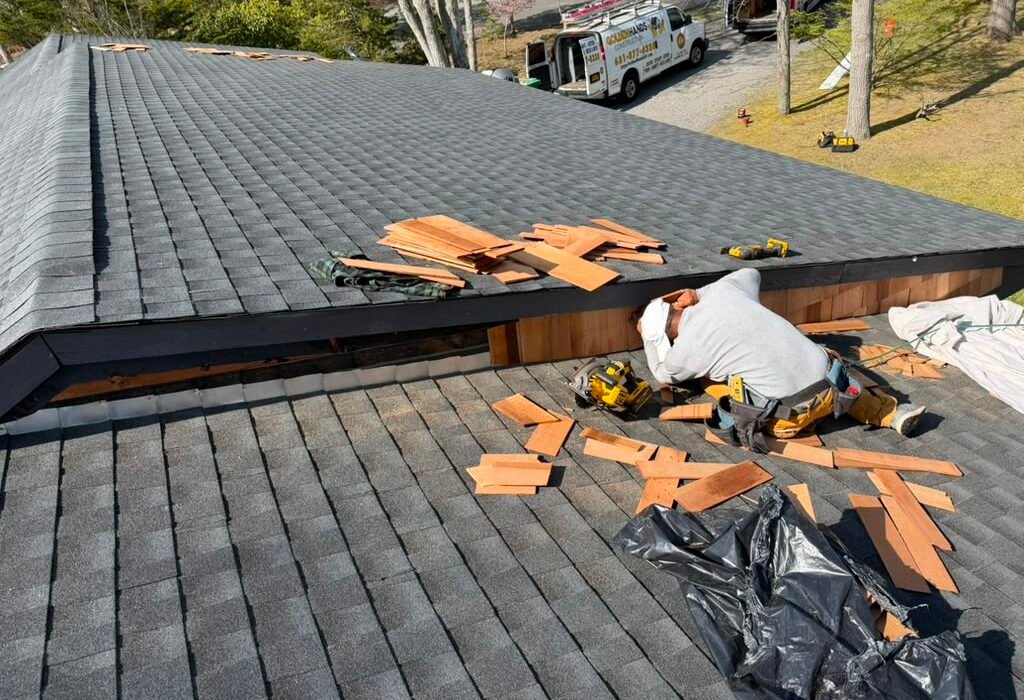
Fall roof maintenance on Long Island starts with clear drainage and a close look at areas where water can enter. Leaves in gutters, damaged shingles, and gaps around roof joints deserve attention before winter. The goal is to find visible trouble, arrange a proper inspection where needed, and resolve problems before another season of rain and cold.
For homeowners in Suffolk County, Nassau County, and the Hamptons, a useful fall plan goes beyond removing leaves. It also includes checking the roof edges, reviewing past leaks, and looking indoors for signs of dampness. You can make the first checks from the ground. Leave roof access and repairs to a qualified contractor.
Start with a Ground Level Roof Check
Walk around your home on a clear day and look at each roof slope you can see. Binoculars may help you spot missing shingles, raised edges, and branches resting on the roof. Compare the roof with older photos if you have them. A change that appeared after a storm deserves closer attention, even if you have not seen a ceiling leak.
Pay attention to the lower roof edges as well. Look for loose trim, uneven gutter sections, and staining beneath the gutters. Take photos and note the location of each concern. These details give a contractor a useful starting point, but they do not show the condition of hidden materials beneath the roof covering.
Clear Gutters and Check Downspouts Together
Removing leaves from the gutter trough is only part of the job. Downspouts also need a clear path so collected water can leave the system. A gutter may look clean from above while debris blocks an elbow or outlet. During rain, watch from a safe position for overflow, leaking joints, or water spilling behind the gutter.
If overflow continues after cleaning, the cause may involve gutter slope, damaged joints, or a blocked outlet. Cleaning alone will not correct every drainage problem. Golden Hands Construction offers gutter cleaning on Long Island, which is a relevant first step when leaves and debris interrupt water flow.
Keep Roof Valleys Free of Debris
A roof valley is the channel where two sloping roof sections meet. It carries runoff toward the gutters. Leaves and twigs can collect in this channel and interfere with drainage, so a clean gutter does not always mean the entire roof drains properly.
GAF’s guide to roof valleys explains their role and recommends regular debris removal. If you can see a buildup from the ground, ask a contractor to assess it. Avoid climbing onto the roof to pull out leaves or branches. An inspection can also check the valley covering for damage while arranging appropriate cleaning.
Review Flashing Around Chimneys and Skylights
Flashing helps direct water away from roof joints and openings. Chimneys, skylights, and roof connections need attention because these areas join different surfaces. A stain nearby does not prove that the flashing caused the leak, but it gives the inspection a place to begin.
Ask the contractor to explain any visible gap, loose section, or previous patch. Adding sealant without finding the cause may leave a hidden problem unresolved. If a joint needs work, the repair should suit the roof material and the way that connection sheds water. Read about roof flashing services when planning an assessment of these areas.
Look Indoors for Moisture Clues
Check upstairs ceilings and the areas around skylights for new marks. If your attic has safe, accessible flooring, look for damp insulation, stained wood, or changes since the last inspection. Do not step between joists or enter an area with unsafe access. Record what you can see safely and share it with the contractor.
Moisture does not always come from a roof leak. Condensation, plumbing, and other sources can produce similar signs. Finding the source matters more than covering the stain. The EPA’s guide to moisture and mold advises fixing water problems and drying wet materials within 24 to 48 hours to help prevent mold growth. Do not wait for a seasonal appointment if materials are currently getting wet.
Use an Inspection to Set Repair Priorities
A fall inspection should help you decide what needs attention now and what you can monitor. Share the roof’s approximate age, known repairs, and any leak history. Explain whether dampness appears during rain or at other times. Ask for photos of identified problems and a written description of the proposed work.
Golden Hands Construction provides roof inspections on Long Island. Before approving repairs, ask which finding supports each recommendation. A clear explanation should connect the observed damage with the work proposed, including whether the contractor needs to examine concealed materials.
Plan Maintenance Around Your Property
The right timing depends on your home. A roof beneath trees may need another drainage check after more leaves fall. A property with recurring leaks needs an assessment sooner. If you will leave a seasonal home vacant, complete the checks before departure and arrange a way to notice new water damage while you are away.
Keep dated photos, inspection notes, and repair records together. These records help you compare changes over time and explain past work to a contractor. Maintenance costs vary with roof access, roof size, debris buildup, and the repairs required. Ask for an itemized estimate that separates cleaning, repair work, and any additional investigation.
Arrange Fall Roof Maintenance on Long Island
Fall roof maintenance on Long Island is easier to plan when you know how your roof and drainage system are performing. Start with safe visual checks, resolve active moisture problems promptly, and use inspection findings to guide the next steps. For roofing and gutter concerns in Suffolk County, Nassau County, or the Hamptons, contact Golden Hands Construction at (631) 877-8338 to discuss your property.


