

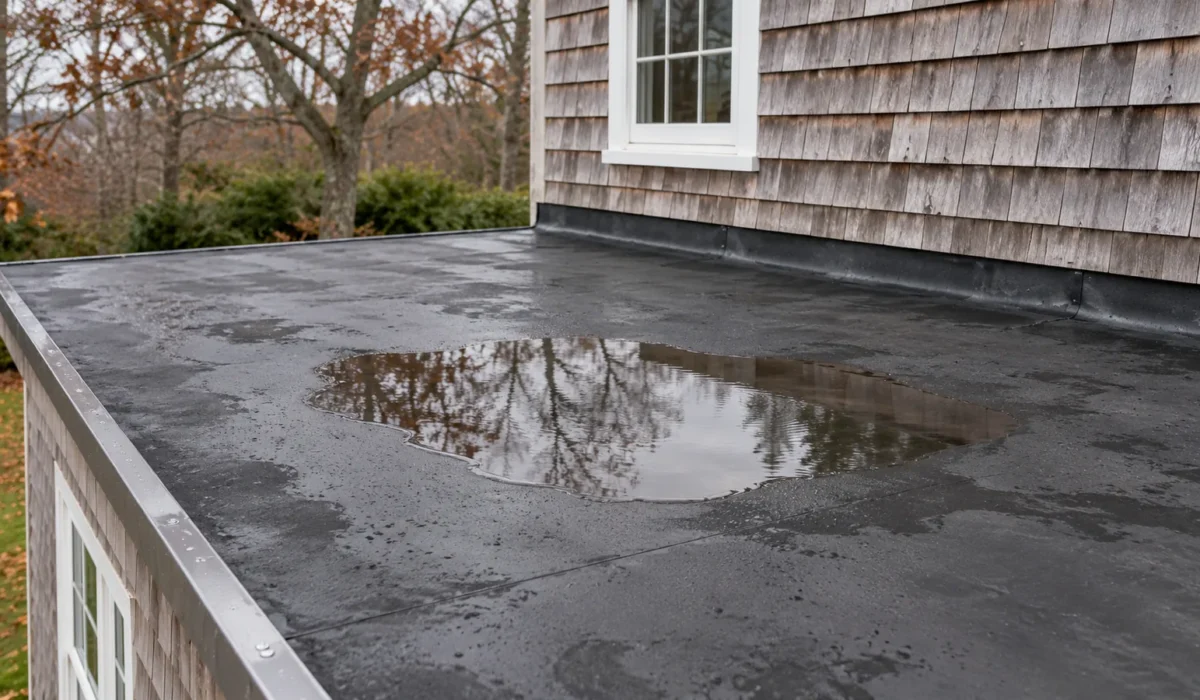
Flat roof drainage in East Hampton, NY, is worth checking when the same puddle appears on a porch, garage, or addition after each storm. Start with where the water sits. A puddle that spreads out from a drain can point to a blockage. One that keeps forming in the middle while the area around the drain has dried can point to a low spot. The location and how long the water stays give a roofer a better starting point than a photo of a wet roof on its own.
See what the roof looks like after the rain stops
If you can see the roof from an upstairs window, take one photo after the rain ends and another the next dry day. Use the same angle so you can tell whether the edge of the puddle has moved. Try to include the roof edge or drain in the photo. Note when the rain stopped and whether it started up again between pictures. If the roof is out of view from indoors or from the ground, leave the rooftop check to a roofer.
Shade and cool air can slow drying. A repeat puddle with the same outline is easier to investigate than a roof that is generally damp. The Asphalt Roofing Manufacturers Association uses 48 hours as a benchmark for standing water on low-slope asphalt roof systems. The exact roofing material and drying conditions matter, so use the length of time as one clue when you report the problem. An active leak warrants a prompt assessment. For the asphalt roof benchmark, see its guidance on ponding water.
Water collects around an outlet
A low-slope roof may drain into a gutter along an open edge, through an opening in a raised roof edge, or into a drain set in the roof surface. An opening through the raised edge is called a scupper. Knowing which type you have helps narrow down the possible blockage. A roofer may find leaves at the opening, a clogged drain strainer, or an issue farther along the outlet or downspout. What matters is whether the whole path carries water out once the area is clear. GAF explains how roof layout affects runoff in its guide to water movement on low-slope roofs.
If a steep section of the house roof empties onto the flat addition, mention it when you describe the puddle. That smaller roof may be taking rain from a much larger area than it appears to cover. Also tell the roofer if a gutter was added or a downspout was moved before the pooling started. A change higher up can alter where rain lands below.
The same puddle forms away from the drain
If the roof drains at the edge but a patch of water stays in the middle, there may be a dip or a raised spot between the puddle and the outlet. A roofer can check the height of the surrounding surface relative to the drain and look for changes in the roof deck, the solid surface under the roofing layers. If the dip is new or the roofline looks bowed from below, note when you first saw it. That detail helps determine whether the roof surface or the framing below needs a closer look.
Depending on the roof, the repair may involve changing the drainage path. During some roof repairs or replacements, crews use tapered insulation boards to build a gentle slope toward an outlet. These boards are thicker at one end so they can guide water across the roof. A roofer still needs to check which direction the water should travel and how any change will meet a wall, door threshold, or roof edge. GAF describes how these boards work on its tapered roof insulation page.
There is a ceiling stain under the flat roof
On a roof covered with a waterproof sheet called a membrane, a puncture or a gap where two pieces join can let in water. A roofer may also check the flashing, which seals the joints around walls, vents, and drains. Water can travel along the layers beneath the membrane before it reaches the ceiling, so the stain gives the roofer a starting area to investigate. If the puddle spreads over a seam or reaches the wall of the house, a photo of that overlap can help. Golden Hands Construction covers seams and membranes through its flat roof repair services.
On an East Hampton house with a flat addition against the main house, point out any room or wall that gets damp only when the rain blows toward that joint. If a stain gets larger after a long, steady rain, share that pattern too. A date and a photo of the stain in the same light can help show whether it is spreading. If other work was recently done on the roof or nearby siding, include the work date and the area that was changed.
Compare the work included in a drainage estimate
Ask the contractor to show where the water collects and where it should go. A straightforward estimate might cover clearing an outlet and checking that it flows. An estimate for a localized leak might describe repairing a single seam or the flashing around a drain. If drainage work is also proposed, ask how it will change the route water takes and whether the quote includes checking the deck or insulation if there are signs of moisture.
Roof access, the amount of material that needs to come up, and the condition of the layers below all affect the cost. A quote for an outlet repair and a quote for rebuilding part of the slope can cover very different work even when they describe the same puddle. If the cause is still unclear, start with a roof inspection and ask for photos showing what the roofer found. For a drainage correction, ask how the contractor will confirm the outlet is working and where the water is going.
When a roofer recommends replacing part or all of the roof, ask what made the repair area larger. A roofer may be able to patch a small opening if the surrounding membrane and the layers below are sound. Water that has reached several sections of insulation, a roof deck that needs repair, or low spots across the whole surface can change that plan. If the roof already needs new material, ask whether the estimate also corrects the slope and protects the joint where the roof meets the house. Those details matter when you want the same puddle to stop coming back.
Get standing water checked in East Hampton
If water keeps sitting on your flat roof or a mark indoors comes back with rain, contact Golden Hands Construction Inc for a roof assessment in East Hampton. Call (631) 877-8338 or email in**@***********ny.com. Share where the water gathers, when it first appeared, and any photos you took after the rain. That gives the team a place to start checking the roof and its drainage.


