

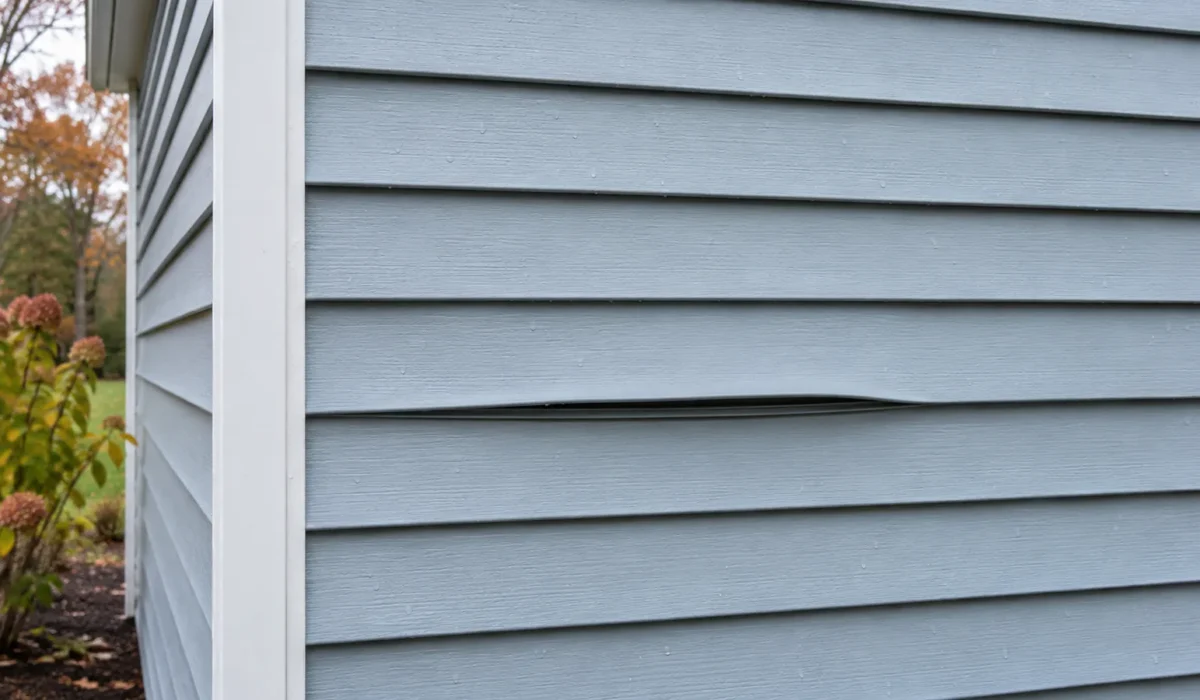
Vinyl siding repair in Quogue, NY, may be as simple as snapping a loose panel back into place after a windy day. That can work when the panel, the row below it, and the attachment above it are still sound. A cracked panel, a broken locking edge, or a torn strip where the nails go usually calls for a replacement piece. If several rows have moved or rain reached the wall behind them, the inspection needs to cover a larger area. Start by looking at where the loose section begins.
Look for the edge that came loose first
When the weather clears, stand back far enough to see the whole wall. Look for a new shadow under a siding row, an end sticking out by a corner, or a piece that seems to sag under a window. Take a wide photo so the contractor can see where the opening sits in relation to the window, trim, and foundation. A closer photo from the ground can show whether the bottom edge is bent or whether the panel still looks straight. If a piece came off and you can reach it safely, set it aside so the contractor can check its shape and look for product markings.
Whether you live near Dune Road or on a more sheltered street in Quogue, note which wall took the wind and whether there was rain at the same time. If one row opened above the porch and the rest look even, note that. If several pieces pulled out along the same corner, photograph the corner as well as the siding. A wide photo and the timing of the storm can help the contractor decide where to start without having to guess which part moved first.
One row is hanging loose in the middle of the wall
Horizontal vinyl siding panels lock together along their edges. When the bottom edge of one panel slips free from the row below, the top can stay attached while the loose section lifts in the wind. The panel may be reusable if the locking edge is intact and it holds once reattached. An installer can lift the row above as needed to check the strip that holds the fasteners and see whether the lower panel’s top edge is intact. A torn fastener strip or damaged lock can let the same section work loose again.
A crack through the face or a damaged locking edge can make it more practical to replace that piece. The size and shape of the replacement matter because the edges have to lock into the rows already on your house. The Polymeric Exterior Products Association shows how a single piece can be removed and fitted into an existing wall in its guide to replacing damaged vinyl siding.
Check the starter strip if the bottom row moved
The lowest row hooks onto a starter strip fastened along the base of the wall. If the bottom row lifts along a long stretch, or if it has come loose in the same spot before, ask the contractor to check both the row and its starter strip. The strip may be damaged, loose, or a poor fit for the panel’s locking edge. The first row depends on that connection. Replacing a loose section of siding will solve little if the strip it hooks onto can still move.
Also look at where the bottom row meets a porch or a wall corner. The contractor may need to see how the strip ends and how those nearby pieces are held in place. Finding out whether the issue stops at one row helps determine whether a small repair will hold. Golden Hands Construction assesses loose, damaged, and warped material through its siding repair services.
A ripple on a sunny wall can have a different cause
A loose panel tends to show a gap along an edge. A ripple that becomes more obvious when the wall warms up can point to siding that is being held too tightly. Vinyl changes size with temperature. If a fastener pins a panel down or the end has too little room inside the trim, the face can bow as the panel expands. A wave that stays in the same place through different temperatures may also lead the contractor to check whether the wall behind the siding is flat.
Tell the installer if the siding looked wavy before the wind or if one sun-facing side changes more during the day. That detail helps when deciding whether a loose lock, tight fastener, or something behind the panel needs attention. The industry’s vinyl siding installation guidance explains why panels need room to move and how fastening through the visible face can cause ripples.
Check behind the siding if rain reached the opening
Vinyl is the outer layer of the wall. Behind it, housewrap or another water-resistive layer helps guide water that gets past the siding back out. If a panel is missing near a window, a door, or an outdoor light, ask whether the layers around that opening are still in good shape. A torn wrap, damp wood, or a stain that shows up indoors after the same storm gives the contractor a reason to take a closer look. The Building America Solution Center explains how the layers work together in its guide to exterior siding and moisture.
What to ask before replacing more than one panel
Ask the contractor to identify the shape of the panel, the number of pieces affected, and whether the surrounding rows still hold firmly. A spare piece left from the original installation can help with matching. Even with the same named color, new siding can look brighter on a wall that has faded in the sun. Compare a sample against the wall in daylight, and check how the replacement’s edge fits with the siding above and below it. A close color match helps the repair blend in, and a compatible profile helps the panels stay connected.
Access, the availability of matching pieces, and the condition of any trim or wall layers can affect the price. A one-panel repair on a ground-floor wall can mean a very different scope from several rows that have come loose above a porch. Ask whether the estimate includes work on the starter strip, what happens if the contractor finds damage behind a panel, and what replacement options are available through Golden Hands Construction’s vinyl siding service.
Get loose siding checked in Quogue
If one panel is flapping, a row keeps coming loose, or you can see part of the wall through a gap, contact Golden Hands Construction Inc for a siding assessment in Quogue. Call (631) 877-8338 or email in**@***********ny.com. Share a wide photo of the affected wall and a closer view of the loose section if you have one. The team can check what came loose and explain which pieces can be kept.


