

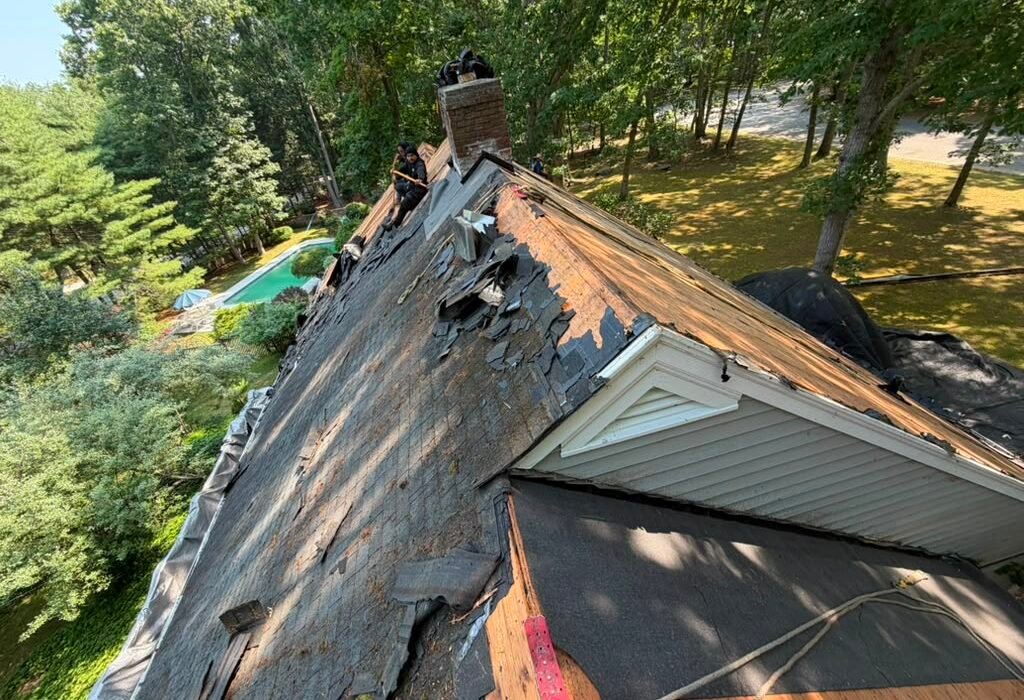
Roof leaks where the roof meets a wall can start when flashing is missing, damaged, or poorly connected to the surrounding materials. Shingles may look sound while water enters at the joint beside a dormer, an upper-story wall, or a lower roof. Finding the entry point matters because replacing nearby shingles alone may leave the leak unresolved.
For Long Island homeowners, a stain near this joint is a reason to arrange an inspection. It does not prove that flashing caused the leak. Water can travel before it appears indoors, and nearby windows, siding, or roof openings may also need attention. A useful assessment follows the likely water path instead of treating the stain as the exact entry point.
Why the roof and wall connection matters
A roof sheds rain down its surface. A wall also needs a way to drain water away from the materials behind its outer covering. Where these surfaces meet, the drainage details must work together. This joint needs more than shingles pushed against siding or a visible line of sealant.
The Building America Solution Center explains that flashing at roof and wall intersections should connect with the roof and wall water-control layers. Overlapping materials guide water down and out. The principle is simple, but checking an existing installation can require a contractor to examine details hidden beneath roofing or siding.
What step flashing does
Along the side of an asphalt shingle roof that meets a wall, step flashing uses individual pieces arranged with the shingle courses. Part of each piece sits against the wall, while the other part works with the roofing. The pieces help direct water back onto the roof surface as it moves downhill.
Because much of this detail is covered, its condition may not be clear from the ground. A contractor should assess the relevant layers rather than judge the joint only by its visible edge. Golden Hands’ roof flashing service is relevant when an inspection points to a problem at this connection.
Why kick-out flashing deserves attention
At the lower end of a roof that runs beside a wall, kick-out flashing redirects runoff away from the wall and toward the gutter. This small detail helps prevent water from continuing down the siding at the end of the roof slope.
Missing or ineffective kick-out flashing is worth checking when staining appears below that corner. The Building America guidance advises inspecting the wall near the roof eave for deterioration when this detail is absent. A dark streak alone cannot confirm hidden damage. It can, however, help identify an area that needs closer inspection.
Warning signs to record before the inspection
Notice whether the indoor stain grows after rain, whether paint peels near the joint, or whether the same area becomes wet repeatedly. Outside, look from a safe ground-level position for staining below the roof edge or damaged siding near the connection. Photos taken on different dates can show whether the problem is changing.
Write down when the leak appears. Does it happen in light rain, only during heavier rainfall, or when rain comes from a particular direction? Also mention recent roof, gutter, window, or siding work. These details help guide the investigation, although they do not establish the cause on their own. Avoid climbing onto the roof to take a closer look.
Why a surface patch may not solve the leak
A visible bead of sealant may make the joint look closed without correcting how water moves behind the materials. If the flashing or overlapping layers are wrong, a surface patch can leave the drainage problem in place. The right repair depends on the roof covering, wall assembly, product instructions, and condition of the existing materials.
Ask the contractor what caused the leak and how the proposed work will restore the water path. Sealants can have a role where the installation details call for them. However, the estimate should explain whether the work is a temporary measure or a repair to the underlying assembly. That distinction helps you compare proposals fairly.
What an inspection should establish
The assessment should consider the roof and wall joint alongside nearby features that could admit water. Depending on access and symptoms, this may include shingles, flashing, siding, a window above the lower roof, and visible interior damage. A roof inspection can help narrow the problem before choosing a repair.
Ask whether the contractor found a confirmed defect or a likely cause that needs further investigation. Some conditions cannot be assessed fully until a limited area is opened. If that is necessary, the proposal should describe the work and explain how additional damage would be documented and priced. Clear findings are more useful than a broad recommendation to replace materials without an explanation.
When siding or hidden wood needs repair
Correcting the flashing may require removing nearby siding to reach the wall layers. If the inspection reveals deteriorated sheathing or framing, those materials may also need attention. Covering damaged wood without addressing the leak and its effects can leave part of the problem unresolved.
The scope of siding repair should follow the actual findings. A stain does not automatically mean the entire wall needs replacement. Ask for photos of any exposed damage and a clear account of what needs repair. Matching existing siding and restoring the surrounding finish may also affect the work and its cost.
Does this mean you need a new roof
A leak at a roof and wall connection does not automatically require full roof replacement. A focused repair may be suitable when the problem is limited and the adjoining roof and wall materials remain serviceable. Broader work may be appropriate when inspection reveals widespread deterioration or several related defects.
Repair cost depends on access, roof height, the area that must be opened, materials, and any hidden damage. Request a written scope that covers the flashing work, surrounding materials, and cleanup. If there is a chance of additional work after opening the joint, agree on how the contractor will discuss it with you before proceeding.
Get help with a roof and wall leak on Long Island
A lasting repair starts with understanding where water enters and how it should drain away. If a stain returns after rain or a previous patch has failed, arrange an assessment of the roof and wall connection. Sharing photos and the leak’s history can help the contractor focus the inspection.
For help with roof flashing and leak assessment on Long Island, contact Golden Hands Construction or call (631) 877-8338. Describe the affected room, the nearby roof and wall features, and when you first noticed the water.


