

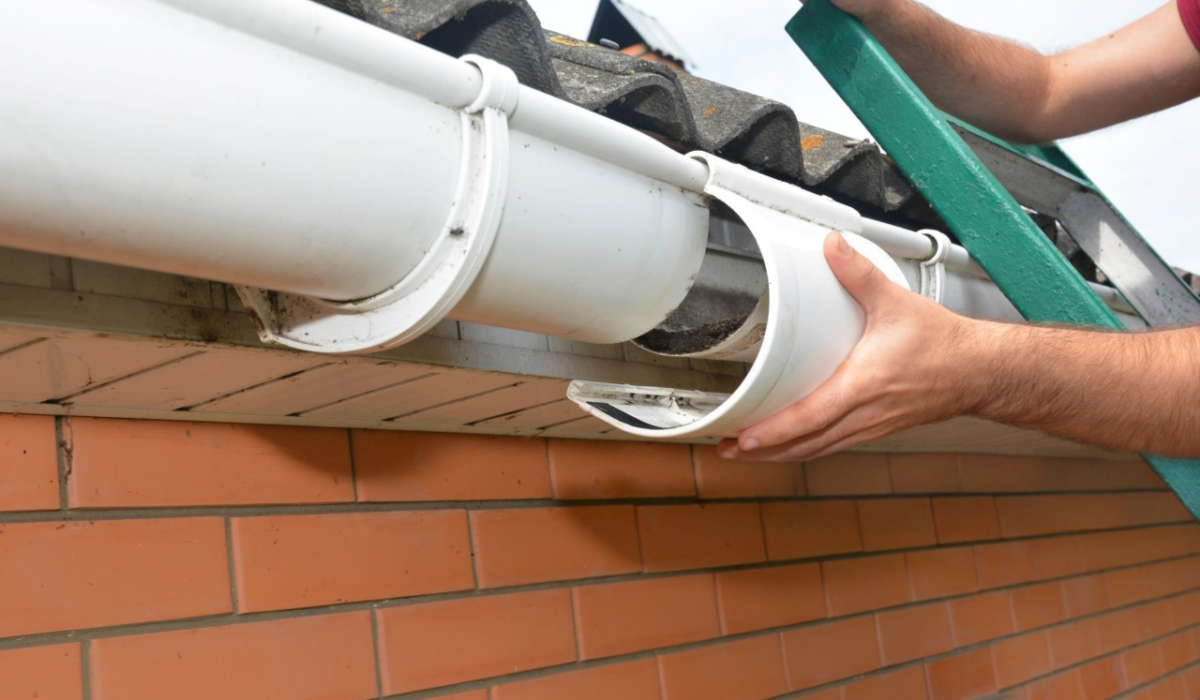
Gutters that overflow after cleaning may have a blocked downspout, a low spot, loose supports, or too little capacity for the water coming off the roof. Removing leaves is a useful first step. However, a clear gutter still needs an open outlet and a steady path for water to leave. Before paying for another cleaning or replacing the whole system, find out where the flow breaks down.
For Long Island homeowners, the most useful clue is often the location of the spill. Water pouring over one corner suggests a different problem from water escaping along an entire gutter run. Watching from a safe place on the ground can help you describe the issue when arranging an inspection.
Notice where the water spills
Look at the gutter during rain only when you can do so safely from a sheltered spot. Avoid going outside during lightning, strong winds, or dangerous weather. A short video from a window may show more than a dry-weather photo. Note whether water spills over the front edge, drips from a joint, or runs behind the gutter against the fascia.
These patterns are clues rather than a final diagnosis. A leak at a seam may need a joint repair. Water overflowing near an outlet may point to restricted drainage. Water running behind the gutter can involve its position or the roof-edge details. Tell the contractor when the problem happens and whether it began before or after the recent cleaning.
A clean gutter can still have a blocked downspout
Leaves and other debris can lodge at the gutter outlet or inside a downspout bend. The top of the gutter may look clear while the pipe below remains blocked. Water then backs up until it reaches the gutter edge. A buried drain connected to the downspout can also restrict flow farther along the route.
Ask whether the previous cleaning included the outlets and downspouts, and whether the worker checked that water could reach the discharge point. A complete assessment should follow the drainage path beyond the visible gutter. Golden Hands’ gutter cleaning service is a relevant starting point when debris appears to be the cause. Avoid climbing a ladder in wet conditions to investigate a blockage yourself.
Low spots can hold water after the rain ends
A gutter needs a suitable slope toward its outlet. If a section sags, water can collect in the low area instead of draining away. Loose supports or movement at the mounting surface may contribute to the problem. Cleaning removes debris, but it does not correct the shape or position of the gutter.
Standing water that remains in one section after the rest has drained is worth reporting. A contractor can check the slope, supports, and fascia before deciding what to adjust. Simply adding another fastener may not solve the issue if the wood behind the gutter has deteriorated. The repair should address the support as well as the visible sag.
Heavy rain can expose a capacity problem
If overflow happens mainly during heavier rain, the system may be receiving water faster than it can carry it away. However, a partial blockage can produce the same pattern. Clear outlets and downspouts should be confirmed before assuming the gutters are too small.
Roof size, roof shape, valleys, gutter dimensions, and outlet locations all affect how water moves through the system. A roof valley can concentrate runoff into a short section. An inspection may show that a revised outlet layout or another drainage change would help. Larger gutters alone may not solve the problem if the water still meets a narrow or poorly placed outlet.
Water behind the gutter needs a separate check
Water traveling between the gutter and the fascia is different from water spilling over the front. It may relate to gutter placement, roof-edge flashing, or other details that should guide runoff into the channel. Sealing a visible gap without checking the water path may leave the underlying issue in place.
Ask the contractor to inspect the roof edge and nearby wood if you notice staining, peeling paint, or repeated wetting behind the gutter. A gutter repair assessment can help identify whether the problem involves the gutter itself, its supports, or an adjoining component. A ground-level view cannot confirm the condition of hidden materials.
Check where the downspout sends the water
A gutter can stop overflowing while still sending water to an unsuitable place. Look for pooling near the house, runoff returning toward the wall, or discharge crossing a walkway. The final outlet matters just as much as the gutter above it.
The U.S. Department of Energy explains that roof runoff should be directed away from the building to reduce soil saturation near the foundation. Its guidance on stormwater, gutters, and downspouts describes why the full drainage route matters. The right arrangement for an existing property depends on its grading, available space, drainage connections, and applicable local requirements.
Decide between cleaning, repair, and replacement
Cleaning may be enough when debris is the only issue and the gutter drains correctly afterward. A limited repair may suit a loose section, damaged joint, or incorrect slope when the surrounding materials remain sound. Replacement becomes more relevant when damage affects several sections or the current layout cannot handle the roof runoff effectively.
Ask for an explanation of the cause before agreeing to the work. A useful estimate should identify the affected sections, the proposed correction, and any related fascia or drainage work. Access, materials, damage, and project size influence the price, so a property-specific estimate is more useful than a general figure. If overflow returns after cleaning, repeating the same service without checking the cause may leave you with the same result.
Arrange a gutter assessment on Long Island
Gutters should move water from the roof to a suitable discharge point. When they overflow after cleaning, checking that whole route helps separate a simple blockage from a repair or layout problem. Photos, the date of the last cleaning, and a description of when the spill occurs can make the assessment more useful.
For help with gutter cleaning or repairs on Long Island, contact Golden Hands Construction or call (631) 877-8338. Explain where the water escapes and whether it happens during light rain, heavy rain, or both.


