

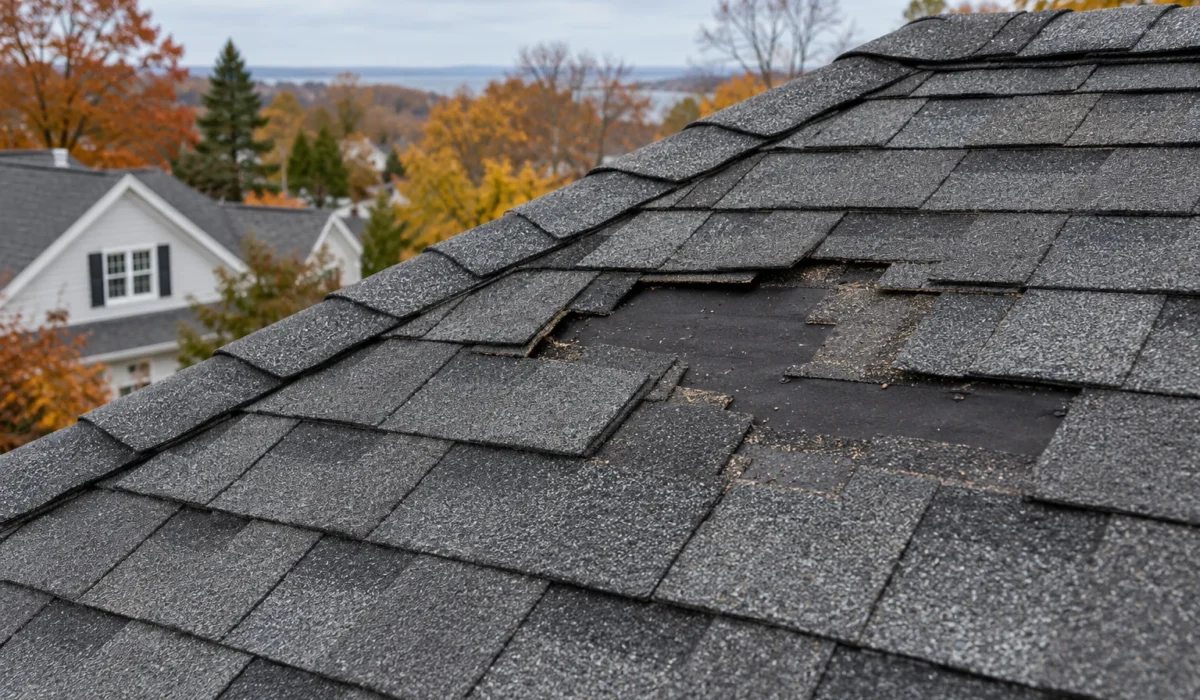
You can replace a few missing shingles when the damage is local, the surrounding roofing remains serviceable and compatible replacement materials are available. A small bare patch does not automatically mean you need a new roof. However, the number of missing shingles alone cannot determine whether a repair will last.
The important questions concern the condition around the damage. Can the roofer remove and replace the affected shingles without damaging nearby material? Is the underlying roof assembly sound? Did one isolated incident cause the loss, or does the roof have a wider problem?
For Long Island homeowners, an inspection should answer those questions before a contractor recommends a patch, a larger section of work or full replacement.
Why a few missing shingles still need attention
A roof can lose shingles without immediately leaking into the house. That does not mean the exposed area can safely remain as it is.
GAF’s guide to missing roof shingles explains that missing shingles can allow moisture into the roofing system and should receive prompt attention. gaf.com
An indoor stain may appear later than the original damage. Waiting for a ceiling drip before arranging an inspection can therefore leave the roof exposed longer than necessary.
Take photographs from the ground and note when you first noticed the change. If you find fallen shingle pieces in an accessible area, keep them for the roofer. They may help identify the material or explain how it failed.
When a small shingle repair makes sense
A targeted repair becomes a reasonable option when the damage affects a limited area and the surrounding shingles remain suitable for the work.
The contractor should examine the edges of the damaged section, nearby shingles and any visible underlying materials. The inspection should establish the actual repair boundary rather than count only the pieces missing from view.
For example, a bare patch may require removing adjacent shingles to reach the attachment points and restore the overlapping courses properly. That does not necessarily turn the project into a large replacement.
Ask the contractor to explain which shingles need removal and why. A clear description helps you understand the difference between replacing the visibly missing material and completing a reliable repair.
A proposal for roof repair on Long Island should connect the scope to the condition found.
The surrounding shingles can change the decision
Two roofs with the same number of missing shingles can need different work.
One may have a small damaged section surrounded by serviceable roofing. Another may have widespread cracking, repeated losses or nearby material that cannot tolerate the work needed for a local repair.
Ask the roofer to show the condition beyond the bare patch. Photographs of the surrounding area help support the recommendation.
The roof’s age provides useful context, but age alone should not decide the outcome. Installation quality, previous repairs and the present condition also matter.
If the contractor recommends replacement, ask what makes a local repair unsuitable. The answer should identify an observed limitation rather than rely only on the roof being “old.”
Find out why the shingles came off
Replacing the missing pieces addresses the visible damage. Understanding the cause helps determine whether more work is necessary.
Wind may be part of the history, but a storm does not explain every detail of a failure. A contractor should also assess the attachment and condition of nearby shingles.
GAF’s wind-damaged shingle guidance identifies lifted and missing shingles as conditions that can allow water to reach the roof deck. gaf.com
Tell the roofer whether the same section has needed repairs before. Repeated losses in one location warrant a closer explanation before another similar patch goes ahead.
Also mention any recent roof work. That information may help the contractor understand how the affected section connects with earlier repairs.
A matching color does not guarantee a compatible shingle
Homeowners understandably want a repair that blends into the existing roof. Appearance matters, but choosing a replacement involves more than finding a similar shade.
Ask the contractor to identify the proposed product and explain its suitability for the existing installation. Dimensions, profile and installation requirements need consideration.
Discuss the visual result before work starts. A new shingle may look different beside weathered material, even when the color name seems close.
A physical sample can help you assess the proposed match. View it outdoors rather than relying only on a screen image.
If the original product is unavailable, ask what that means for the repair. It may affect the appearance, the practical scope or both. The contractor should explain those limitations before you agree.
Check the roof beneath the missing shingles
The visible surface does not show the complete condition of the damaged area.
Where removal exposes underlying materials, the roofer should assess their condition before covering them again. Any finding that changes the scope should come with photographs and an explanation.
Owens Corning’s contractor expectations checklist recommends assessing the roofing system beyond the shingles, including the deck, attic, flashing and roof penetrations. owenscorning.com
Ask how the estimate handles concealed damage. A clear process should explain how the contractor will document it, price additional work and obtain your approval.
That discussion protects both sides from an unclear assumption about what a small repair includes.
A leak near missing shingles may need a wider investigation
A missing patch and an indoor stain can be related, but their positions do not prove a direct connection.
Water can travel before it becomes visible inside the house. Nearby flashing, a roof penetration or another damaged section may also need attention.
Tell the contractor where the stain appears and whether it changes during different rain conditions. Photographs taken when the moisture first becomes visible can provide useful context.
A roof inspection should distinguish confirmed damage from suspected leak routes. That helps avoid a repair that replaces missing shingles while leaving the actual entry point unresolved.
What to do while waiting for the roofer
Inspect from the ground. Use a phone camera’s zoom or binoculars if available, and keep clear of fallen branches or unstable debris.
GAF’s ground-level roof inspection guide describes looking for missing areas and fallen roofing material without accessing the roof. gaf.com
Do not climb onto the roof to count missing pieces or attach a temporary covering yourself. Explain any active leak when arranging the visit so the contractor can assess the need for temporary protection.
Protect movable belongings indoors where you can do so safely. Keep a record of when the damage appeared, along with photographs and repair correspondence.
What affects the cost of replacing a few shingles?
The price depends on more than the number of replacement pieces.
Roof height, slope and access affect the work. Material availability, the repair location and the condition beneath the shingles can also change the scope.
A small repair near an accessible roof edge differs from work beside a skylight or high on a steep slope. The contractor may also need to remove and reinstall surrounding materials.
Ask whether the estimate includes access equipment, disposal, compatible replacement shingles and any related flashing work.
Avoid comparing proposals only by the total. First establish that they cover the same damaged area and address the same findings.
When broader roof replacement deserves consideration
A larger replacement may make sense when the inspection finds widespread deterioration or several damaged areas that cannot support reliable local repairs.
Ask whether the recommendation concerns one roof section or the entire roof. Those are different scopes and should receive separate explanations.
If someone recommends full replacement after seeing one bare patch, request evidence showing why the rest of the roof needs that work.
A roof replacement assessment should explain the limitations of repair and the condition supporting the larger investment.
You should leave the discussion understanding what each option addresses and what concerns would remain.
Common questions about missing shingles
Will my roof leak if only one shingle is missing?
A missing shingle increases concern, but the visible loss alone cannot predict whether or when an indoor leak will appear. Arrange an assessment rather than use a dry ceiling as proof that the roof is protected.
Can the repair wait until warmer weather?
Ask the contractor to assess the exposed area and current conditions. A suitable temporary measure may be necessary if permanent work cannot proceed immediately. Do not assume that a small patch can remain open through further rain.
Does every missing shingle mean storm damage?
No. The inspection should consider the material and installation as well as the reported weather. A photograph of a bare patch alone cannot establish the full cause.
Can a small repair look different from the existing roof?
Yes. Discuss the proposed material and expected appearance before installation. The practical repair and the visual match are related decisions, but they are not identical.
Choose the repair scope after the inspection
You can often replace a few missing shingles without replacing the whole roof. The decision should follow the condition of the surrounding roofing, the underlying materials and the cause of the damage.
Golden Hands Construction Inc provides roof repair and replacement services on Long Island. Request an inspection and estimate or call (631) 877-8338. Share photographs and mention any previous repairs so the assessment can focus on the right area.


