

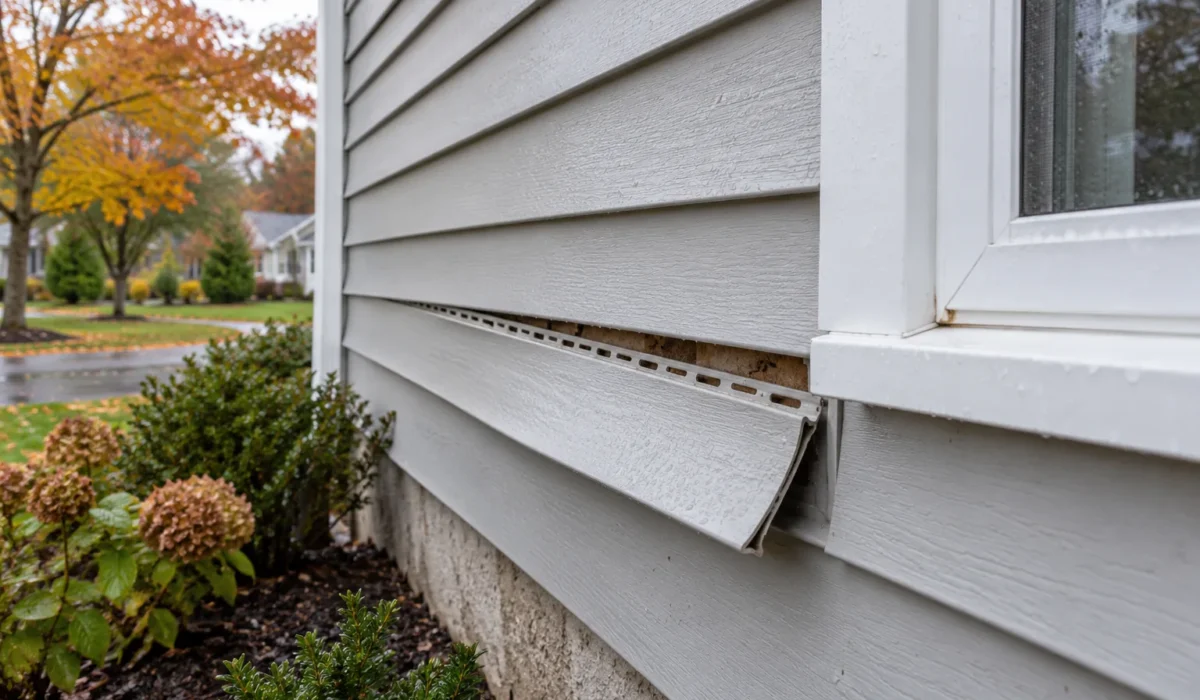
Loose vinyl siding after wind may involve a disconnected panel, a damaged locking edge, a fastening problem or deterioration behind the siding. A panel that has lifted away from the wall does not automatically mean the whole house needs new siding. However, pushing it back into place without checking why it moved can leave the same problem waiting for the next storm.
The first step is to document the damage from the ground. Look for lifted edges, missing pieces and movement around nearby trim. Keep clear of hanging panels, and avoid pulling on the siding to test its strength.
For Long Island homeowners, the main decision is whether the damage allows a local repair or points to a wider installation problem. A useful inspection should answer that question before work begins.
A loose panel does not always need replacement
Vinyl siding panels connect through interlocking edges and attach to the wall through a fastening strip. A panel may separate at its connection while remaining otherwise intact.
In that situation, a contractor should check whether the locking edges still engage properly. The inspection should also examine the panel above, the attachment points and nearby accessories.
A sound panel with an undamaged connection may allow a targeted repair. A torn fastening strip, cracked edge or distorted profile may require replacement instead.
The difference matters. Replacing an intact panel may add unnecessary expense, while reconnecting a damaged one can produce a short-lived result. Ask the contractor to show the condition that supports the recommendation.
Why securing vinyl siding too tightly can create another problem
A loose panel can make it tempting to add screws through its face and pull it firmly against the wall. That approach can interfere with how the siding is designed to move.
Vinyl changes size as temperatures change. The Vinyl Siding Institute’s installation manual explains that panels need room for expansion and contraction. It also describes proper locking and fastening practices. The product manufacturer’s instructions should govern the specific repair. vinylsiding.org
A repair should restore secure attachment while preserving the movement the system requires. Simply making a panel feel rigid is not a reliable measure of installation quality.
Ask how the proposed repair will address both attachment and movement. A clear answer should relate to the siding product and the condition of the existing wall.
Repeated movement deserves a closer inspection
One loose section after a storm and the same section coming loose repeatedly are different situations.
If a panel has already received a repair, tell the contractor when the work happened and how long it lasted. Photographs from earlier incidents can help establish whether the same connection keeps failing.
The inspection should consider the panel profile, locking edges, fastening locations and supporting material. It should also check whether adjacent panels place stress on the affected area.
Repeated failure does not prove that every panel is defective. It does justify looking beyond the visible gap before performing the same repair again.
A proposal for siding repair on Long Island should explain why the next repair is appropriate for the condition found.
Check the trim around windows and corners
The loose panel may draw your attention, but the surrounding trim can help explain what happened.
Look from the ground for displaced corner pieces, loose trim near windows and gaps that appear different from the rest of the wall. Photograph these areas without pushing anything back into position.
Some spaces are intentional parts of a siding installation. An opening should not automatically receive caulk merely because it looks unfinished to an observer.
Ask the contractor to distinguish required movement or drainage spaces from actual defects. That distinction can prevent an attempted repair from interfering with the wall’s intended performance.
The inspection should follow the affected section to its ends, rather than focus only on the middle of the panel.
The material behind the siding matters
When siding opens up, the condition of the wall behind it becomes part of the assessment.
The Building America Solution Center explains that exterior cladding works with a water-control layer and drainage details behind it. Siding alone should not be treated as the wall’s complete waterproof barrier. Building America Solution Center
This does not mean every loose panel has caused hidden damage. It means an inspection should consider whether the underlying protection remains intact.
Where removal exposes damaged materials, request photographs before they are covered again. Ask whether the finding changes the scope and what work is necessary to restore the assembly.
The Building America guidance on drainage behind exterior cladding provides useful background on how these layers work together.
What to do before the repair visit
Photograph the wall from a safe distance. Include a wide view showing the location and closer views that you can take without climbing.
Note when you first noticed the damage. Record whether you heard rattling beforehand or saw the same panel move during earlier windy weather.
If a piece has fallen and you can retrieve it safely, keep it for the contractor. Its profile and markings may help identify the existing product.
Avoid gluing the loose edges together or adding fasteners before the inspection. Those changes may complicate removal and obscure the original condition.
If a panel hangs above a walkway, keep people away from that area and explain the situation when arranging the visit. Let the contractor determine an appropriate temporary measure.
Can a contractor replace just one piece of siding?
A local replacement may be possible when damage is limited and a compatible panel is available.
Compatibility involves more than color. The replacement must work with the existing profile and connection system. A piece that looks similar in a photograph may not fit correctly.
Appearance also deserves discussion before installation. Compare a physical sample with the existing wall in daylight rather than relying only on a product image.
Ask whether the proposed repair will leave a visible difference and what alternatives exist. You can then weigh a small cosmetic mismatch against the cost of replacing a larger section.
If a suitable match cannot be found, a broader vinyl siding replacement assessment may help establish practical options. That does not automatically require replacing every wall.
When a larger replacement may make sense
A larger scope deserves consideration when several sections have damage, connections repeatedly fail or the inspection reveals a broader installation defect.
The contractor should identify the affected area and explain why a local repair would be unreliable. Photographs and a written description make that recommendation easier to assess.
Ask whether the proposed work covers one panel, one wall or the whole house. These are different decisions with different costs.
A whole-house recommendation should come with evidence supporting that extent of work. One loose panel alone does not establish the condition of every elevation.
The goal is to select a scope that addresses the observed problem without leaving known defects unresolved.
What should a siding repair estimate include?
A useful estimate identifies the damaged location, the proposed materials and the work needed to reach and restore the area.
Ask whether the price includes removing adjacent panels, replacing affected accessories and reinstalling undamaged material. The scope should also explain how the contractor will handle any concealed damage discovered during removal.
Access can influence the price. Work near ground level differs from a repair above a porch roof or at an upper-story corner.
Do not compare estimates only by the final total. One proposal may include underlying repairs that another excludes.
If additional work becomes necessary, agree on a process for photographs, explanation and approval before the contractor proceeds.
Questions homeowners often ask about loose siding
Is some movement in vinyl siding normal?
Vinyl siding needs allowance for thermal movement. That differs from a panel hanging away from the wall or disconnecting at its locking edge. A contractor should distinguish normal movement from a failed connection.
Can I leave one loose panel until spring?
The urgency depends on its condition, location and exposure. A hanging piece or exposed wall area deserves prompt assessment. Do not assume a small visible gap will remain unchanged through further storms.
Will caulk hold the panel in place?
Caulk should not replace the attachment and interlocking details required by the siding system. The repair should follow the product’s installation requirements and address the damaged component.
Does siding damage mean water has entered the house?
Not necessarily. The condition of the layers behind the siding and nearby flashing matters. An inspection can identify visible defects, while some concealed areas may require further investigation.
Arrange a repair that addresses why the panel moved
Loose vinyl siding after wind deserves more than a quick push back into place. The inspection should establish whether the panel, its connection, its fasteners or the supporting materials need attention.
Golden Hands Construction Inc provides siding services on Long Island. Request a siding repair inspection and estimate or call (631) 877-8338. Share photographs and mention any earlier repairs so the assessment can focus on the cause of the problem.


