

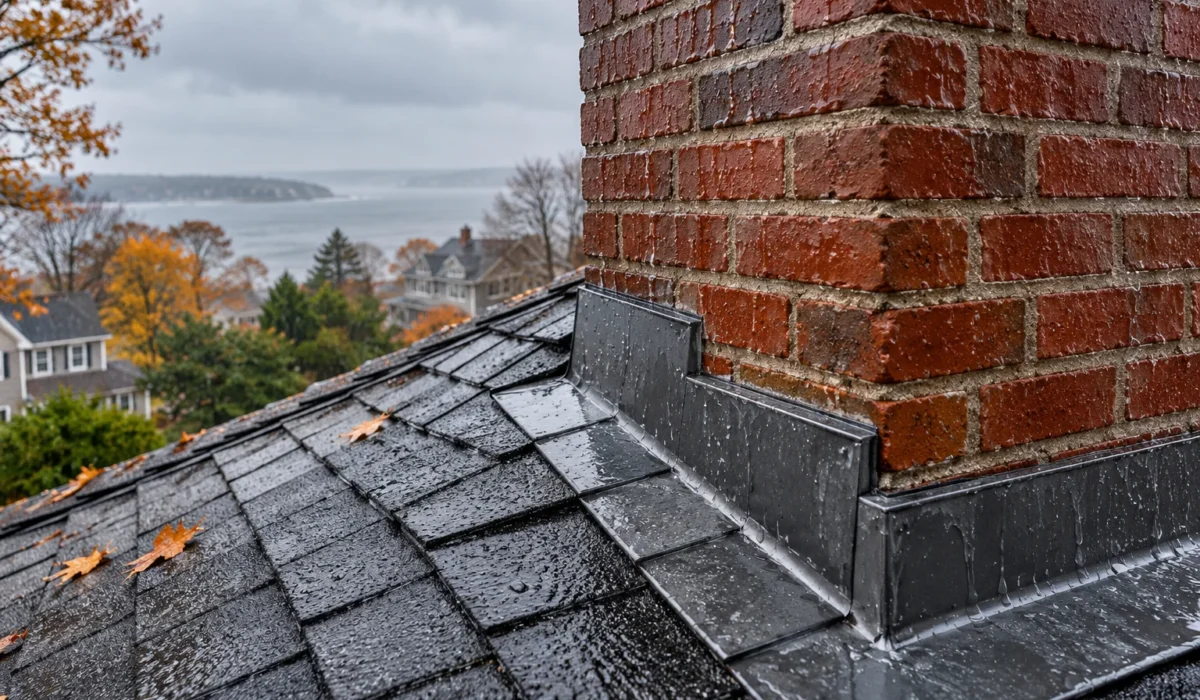
A chimney that leaks when it rains may have damaged flashing, a cracked crown, a missing rain cap or deteriorated masonry. The right repair depends on how water enters. A wet fireplace does not automatically mean the roof needs replacement, and a stain beside the chimney does not prove the bricks are responsible.
The first useful question is where the moisture appears. Water inside the firebox, dampness on the chimney breast and staining on a ceiling near the roofline can point toward different inspection areas. However, water can travel before it becomes visible. These clues help guide an inspection rather than confirm a diagnosis.
For Long Island homeowners, the goal is to identify the entry point before choosing a repair. A patch that stops one visible drip may leave another route open. Understanding the main components makes it easier to ask useful questions and compare proposals.
Start with the location of the water
Look at the affected area from inside the house without opening walls or climbing onto the roof. Note whether water collects inside the fireplace, stains the surrounding masonry or appears where the ceiling meets the chimney.
Water inside the firebox makes the chimney opening and upper components worth checking. A missing or damaged cap may allow rain into the flue. Nevertheless, a cap is only one possible entry point.
A ceiling stain beside the chimney makes the roof connection important to inspect. Water may enter near flashing, travel along framing and emerge some distance away. Nearby roofing defects can also create a stain that looks like a chimney problem.
Take photographs when the moisture first appears. Include a wider photograph that shows its location within the room. Close photographs document damage, while wider views help a contractor understand the layout.
A chimney cap protects the flue opening
A chimney cap sits above the flue opening and helps keep rain and debris out while allowing the system to vent as designed. A missing, loose or damaged cap deserves attention when rainwater appears inside the fireplace.
The Chimney Safety Institute of America’s homeowner guide explains how an uncovered flue admits rain and how prolonged moisture can damage chimney materials. — The Homeowner’s Guide To C
A replacement cap must suit the chimney and venting system. Choosing one based only on appearance or approximate size can overlook important installation requirements.
An inspection should also distinguish the cap from other components at the chimney top. A masonry crown and a metal chase cover perform different jobs. Calling everything a “chimney cover” can lead to confusion when discussing an estimate.
If the opening needs attention, a chimney cap inspection and repair can establish whether the existing component needs adjustment or replacement.
A cracked crown can leave the masonry exposed
The crown forms the weather-shedding surface at the top of a masonry chimney, around the flue. Its condition matters because water should drain away rather than collect on damaged surfaces.
Visible cracks, deteriorated edges and separation around penetrations warrant closer inspection. The repair should reflect the condition of the whole crown, rather than only the most obvious crack.
A contractor may recommend a suitable repair for limited deterioration. More extensive damage may require rebuilding the crown. Ask what makes the proposed approach appropriate and whether the remaining material provides a sound base.
Photographs are especially helpful here because most homeowners cannot see the crown clearly from the ground. A proposal should identify the affected area and explain how the work will restore drainage.
The existing chimney crown service page provides a relevant starting point when discussing this component.
Flashing problems can cause leaks beside the chimney
Flashing manages water where the chimney passes through the roof. This connection must accommodate the roof covering, the chimney surface and the direction of runoff.
The Chimney Safety Institute of America identifies damaged flashing as one potential source of chimney-related water entry. Its guidance also explains that water penetration can affect surrounding building materials. Plainfield, IN
A contractor should examine the flashing assembly and nearby roofing together. Visible sealant is not enough to establish that the underlying detail works properly. Likewise, an old patch does not reveal whether the original problem involved loose metal, damaged roofing or an unsuitable connection.
Ask whether the proposal addresses a limited flashing defect or replaces the assembly. If someone recommends coating the entire area, request an explanation of the defect that treatment will correct.
Chimney flashing repair on Long Island should focus on restoring the intended water path, with materials and installation details appropriate for the roof.
Brick and mortar need a separate assessment
A chimney can have more than one water-entry route. Even when the flashing looks serviceable, damaged mortar joints or deteriorated masonry may need attention.
Record visible cracks, missing joint material and fragments that have fallen onto the ground. Stay clear of areas beneath loose masonry. These observations help explain the concern, but they do not establish the chimney’s structural condition.
Ask the contractor to distinguish cosmetic wear from damage requiring repair. A recommendation to treat the masonry should explain whether the surface needs preparation, joint repairs or another intervention first.
Do not assume that applying a waterproofing product will solve every chimney leak. A surface treatment cannot replace a missing cap, rebuild a failed crown or correct an unsuitable flashing connection.
The estimate should connect each proposed treatment to an observed condition. That makes it easier to understand why the work is necessary.
Why the chimney may leak only during certain storms
An intermittent leak can be frustrating. The fireplace may remain dry through several rainy days and then become wet during one storm.
Record whether the leak follows strong wind, prolonged rain or a short downpour. Different weather conditions can expose different weaknesses. The pattern helps a contractor plan the investigation, although it cannot identify a failed component by itself.
The timing matters too. Note whether water appears immediately or several hours later. Delayed staining may reflect water travelling through concealed materials before reaching the room.
For example, tell the contractor, “The ceiling becomes damp after several hours of rain, but the firebox stays dry.” That description is more useful than simply reporting a leaking chimney.
Avoid testing the chimney yourself with a roof-mounted hose. Testing should follow a controlled plan so that it does not introduce water unnecessarily or confuse the diagnosis.
What to do while waiting for an inspection
Protect movable belongings and photograph the affected area. If safe, place a container beneath an accessible drip and keep people away from damaged finishes.
Do not light a fire to dry out a wet fireplace. Where water entry raises concerns about the chimney’s condition, arrange a professional assessment before use. CSIA recommends inspection before seasonal operation to identify water damage that could affect safe performance. Plainfield, IN
Avoid climbing onto a wet roof or attaching a temporary covering across the flue. A chimney opening must not be obstructed in a way that interferes with venting.
If the chimney also serves a heating appliance, tell the contractor before any work begins. That information helps establish the inspection scope and any precautions needed during repairs.
What a useful inspection should explain
A useful inspection should produce more than a list of materials. It should explain the likely entry point, the evidence supporting that conclusion and any areas that remain uncertain.
Ask for photographs of the cap, crown, masonry and roof connection where accessible. The report should distinguish observed defects from conditions that require further investigation.
If the contractor suspects several entry routes, ask how the repair sequence will address them. Repairing one clear defect first may be reasonable, but the proposal should explain what happens if moisture continues.
Also ask how performance will be checked afterward. Follow-up observations during rain can help establish whether the work addressed the reported symptom. One dry inspection cannot reproduce every storm condition.
Repair or rebuilding should follow the evidence
A chimney leak does not automatically require a full rebuild. An isolated cap, crown or flashing defect may allow a targeted repair when the surrounding assembly remains sound.
More extensive deterioration can change that decision. The contractor should explain why the damage exceeds the scope of a local repair and identify the sections involved.
Request separate descriptions for essential repairs and optional improvements. This helps you compare estimates without confusing a necessary water-entry repair with a broader renovation.
Be cautious about a firm diagnosis based solely on a photograph of an indoor stain. That photograph provides useful context, but it rarely shows the full condition of the exterior assembly.
What affects the cost of fixing a chimney leak?
The main cost factors include access, chimney height, roof conditions, material choices and the extent of concealed damage.
Replacing an accessible cap differs from removing roofing to rebuild a flashing connection. Crown reconstruction and masonry repairs also require different scopes of work.
Ask whether the estimate includes access equipment, removal of old materials, disposal and reinstatement of nearby roofing. If hidden damage may change the price, agree on how the contractor will document it and obtain approval for additional work.
A clear written scope offers more value than an unexplained total. It shows what the repair includes and gives you a basis for discussing any change.
Common questions about chimney leaks
Can a chimney leak even when the fireplace is never used?
Yes. Rain exposure continues whether you use the fireplace or not. An unused fireplace still needs its exterior components maintained, and the chimney may serve another appliance.
Will a new chimney cap stop every leak?
No. A cap addresses the flue opening. Water entering through the crown, masonry, flashing or adjacent roofing requires a repair suited to that location.
Should I repaint the stain after the next dry day?
First address the entry point and allow affected materials to dry appropriately. Repainting too early can hide the symptom without resolving the problem. Damaged finishes may also need assessment before restoration.
Does a leak mean I need a new roof?
Not necessarily. The problem may be limited to the chimney connection or another local component. A broader roof recommendation should come with evidence of broader deterioration.
Find the entry point before choosing the repair
A chimney that leaks when it rains needs an inspection that considers the top, masonry and roof connection together. The best next step is a clear explanation of how water enters and what work will address it.
Golden Hands Construction Inc provides chimney and roofing services on Long Island. Request a chimney leak inspection and estimate or call (631) 877-8338. Share photographs, the location of the moisture and the weather conditions that trigger it so the inspection can focus on the problem.


