

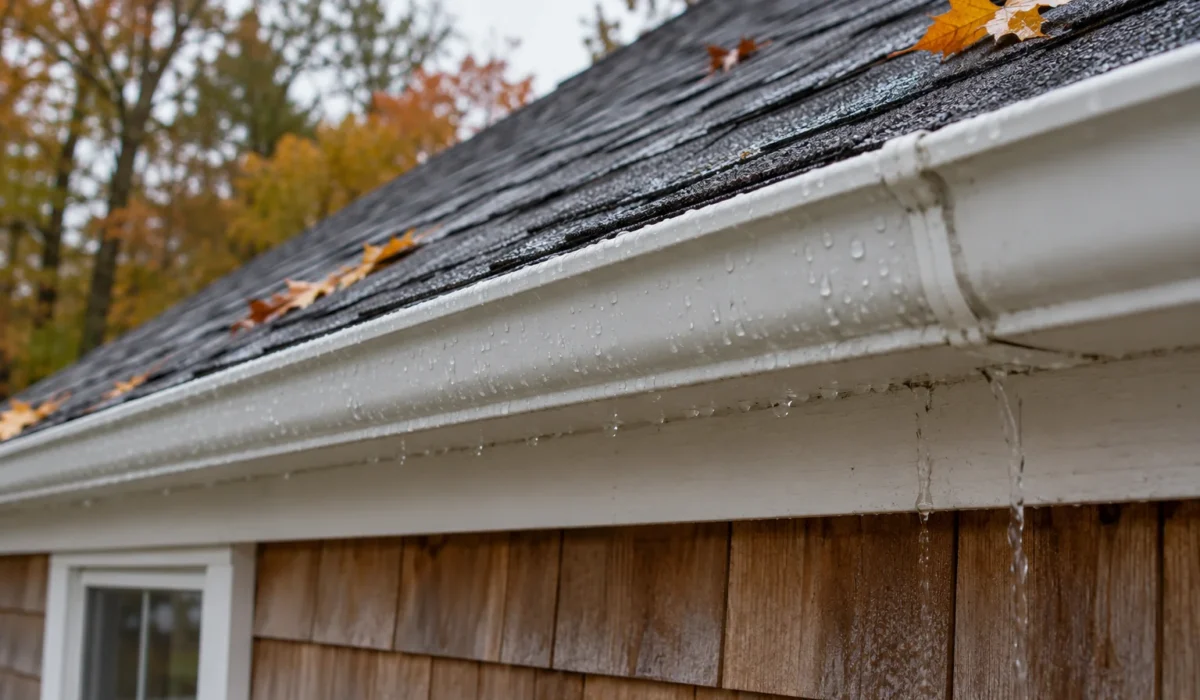
Water dripping behind gutters can mean that runoff is missing the gutter, water is backing up inside it, or the roof-edge flashing is failing to guide rain into the channel. The location of the drip alone cannot identify the cause. Before anyone adds sealant or recommends replacement, the gutter, downspout, fascia and roof edge need to be checked together.
The most useful first step is simple. From a sheltered place on the ground, watch where the water starts during rain. Does it spill over the front lip, appear between the gutter and the house, or fall from one joint? Those three patterns can call for different repairs.
For Long Island homeowners, this guide explains how to record the symptoms, what a contractor should inspect, and how to compare a repair proposal without paying for work that leaves the original problem in place.
Is the water behind the gutter or overflowing the front?
A gutter can look as though it leaks everywhere when one blocked outlet causes water to build up along the run. Water spilling across the front edge suggests an overflow problem. Water descending along the fascia behind the channel raises a different question: how is runoff moving from the roof into the gutter?
A drip directly beneath a corner or seam may come from that connection. However, water can travel along the underside before it falls. The place where it lands is a clue, rather than proof of the entry point.
Record a short video that includes the roof edge, gutter and nearest downspout. Keep clear of loose sections and do not stand beneath a sagging gutter. An inspection in dry weather can then use your footage to investigate the right area.
Blocked gutters and downspouts can force water out of its normal path
Leaves, twigs and other debris can restrict the channel or block an outlet. When drainage slows, the gutter can fill faster than it empties. That may cause overflow at the front, back or a low section, depending on the installation.
Check the downspout discharge from the ground. Very little flow while the gutter visibly overflows makes a blockage worth investigating. It does not prove one exists, because water may be escaping before it reaches the outlet.
A useful cleaning visit includes the outlets and downspouts, followed by a drainage check. Removing visible leaves alone may leave a restriction farther down the system. If cleaning restores normal flow but water still runs down the fascia, the roof-to-gutter connection needs closer attention.
The drip edge may not direct runoff into the gutter
Drip edge is metal flashing at the roof perimeter. Its relationship with the roofing, underlayment and gutter helps determine where water goes as it leaves the roof. GAF’s guide to roof flashing explains that drip edge helps guide water away from fascia and into gutters.
Missing, damaged or poorly positioned edge metal can leave an unintended route behind the gutter. The gutter can also sit too far away from the runoff path. These conditions can look similar from below, so an inspection should examine the connection rather than assume every rear drip needs the same fix.
The appropriate detail depends on the roof assembly and manufacturer instructions. Avoid treating a bead of caulk across the visible gap as a complete diagnosis. A durable solution should preserve the intended drainage path and address the cause.
Where the issue involves edge metal, roof flashing repair may need to form part of the gutter work.
Loose hangers or damaged fascia can change the gutter position
Gutter hangers secure the channel to its support. If fasteners loosen, the gutter can sag or pull away. That movement can affect drainage and leave roof runoff missing the opening.
The board behind the gutter matters too. A contractor should check whether the fascia can hold the proposed attachment securely. Tightening a fastener into deteriorated material may produce a short-lived improvement without restoring reliable support.
From the ground, look for a visible gap, a bowed run, peeling finishes or uneven alignment. These observations help locate an inspection area, but they do not establish how much wood needs replacement. Ask for photographs of any concealed damage uncovered during the work and a clear explanation before additional repairs proceed.
Heavy rain can reveal a capacity or layout problem
If a clean gutter performs well in light rain but overflows during heavier rainfall, the layout deserves attention. A roof valley can concentrate runoff into a small area. The gutter size, number of outlets and downspout arrangement also affect how quickly the system clears water.
The Building America Solution Center’s gutter and downspout guidance emphasizes adequate sizing and drainage away from the home. This is why a wider gutter alone does not automatically solve a bottleneck elsewhere in the system.
Ask the contractor whether the problem is debris, alignment, concentrated roof flow or overall drainage capacity. Each answer should lead to a different scope of work. Repeated overflow after cleaning warrants that broader assessment rather than another identical cleaning visit.
What to record before requesting a repair
Note whether the problem happens in light rain, heavy rain or after snow begins to melt. Record the affected side of the house and whether the drip occurs along the whole run or at one point. Mention any recent roof, gutter or fascia work.
Photograph stains from the ground when conditions are dry. If you notice dampness indoors, record its location as well. An indoor stain near an eave may involve the roofing or another water-entry route, so it should not automatically be blamed on the gutter.
Do not climb a wet ladder or lift shingles to investigate. Ground-level evidence can make the first conversation productive without exposing you to the roof edge.
What a useful gutter repair inspection should include
The inspection should follow the water path from the roof surface to the final downspout discharge. That means checking the roof edge and flashing, the gutter position, its support, the channel, outlets and downspouts.
Ask for an explanation that connects the observed condition with the proposed repair. For example, a blocked outlet supports cleaning and a flow check. A loose section with sound backing may support refastening and alignment. Deteriorated backing calls for a plan to restore support before reattachment.
A proposal for gutter repair on Long Island should distinguish the main repair from possible additional work. It should also explain how the contractor will check drainage afterward. Controlled testing can help assess performance, although one test cannot reproduce every wind-driven storm.
Should you repair or replace the gutters?
A local problem does not always require replacing every gutter on the house. An isolated connection failure, obstruction or loose section may allow a targeted repair when the surrounding material remains serviceable.
Replacement becomes a stronger option when the channel has extensive damage, repeated failures or a layout that cannot handle the roof’s runoff effectively. The condition of the supports and roof edge still matters. New gutters attached to damaged backing can inherit the same weakness.
Compare proposals by the cause they address, rather than by the length of gutter they replace. If two contractors recommend different solutions, ask each to show the evidence behind their diagnosis.
What affects the repair cost?
Access, building height, gutter material and the extent of damage all influence the estimate. A small accessible repair differs from work that requires removing a long run to reach deteriorated fascia or correct flashing.
Ask whether the price includes removal and reinstallation, disposal, roof-edge work, finish repairs and a drainage check. Any allowance for hidden damage should explain how the contractor will document it and agree on the added cost.
A firm price without inspecting the affected area can miss important details. A written scope makes it easier to compare the work and understand what the estimate covers.
Common questions about water behind gutters
Will gutter guards stop water dripping behind gutters?
Not necessarily. Guards address some debris problems, but they do not restore damaged fascia, reposition a sagging gutter or correct roof-edge flashing. The existing drainage problem should be diagnosed before adding another component.
Does water behind the gutter mean the roof needs replacement?
No. The cause may be limited to the gutter or roof edge. A roof assessment becomes more relevant when there are damaged roofing materials, indoor leaks or broader signs of deterioration. The evidence should determine the scope.
Can cleaning solve the problem?
Cleaning can solve a drainage restriction. If the gutter drains freely afterward but water still passes behind it, another condition remains. That is the point to inspect alignment, support and flashing rather than assume the cleaning failed.
Should a gutter still be checked if it only drips during storms?
Yes. Intermittent problems can still repeatedly wet the same area. Record the conditions that trigger the drip so the inspection can consider concentrated runoff and storm-related overflow.
Arrange a repair that addresses the water path
Water dripping behind gutters deserves a clear diagnosis before a quick patch or a full replacement. The goal is to catch roof runoff, carry it through an unobstructed system and discharge it away from the house.
Golden Hands Construction Inc provides gutter and roofing services on Long Island. Request an inspection and estimate or call (631) 877-8338. Share your rain footage and the location of the problem so the inspection can focus on its source.


