

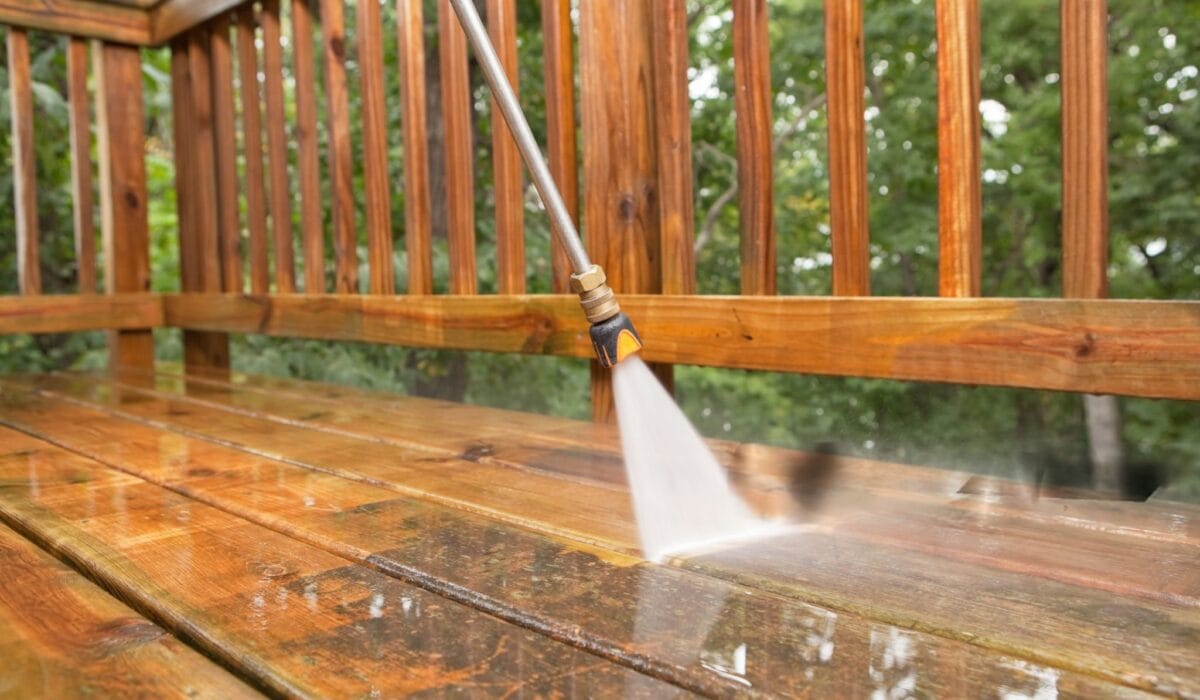
Deck power washing in Cutchogue is most useful when ordinary upkeep no longer removes widespread dirt or surface buildup. A deck does not need a powerful wash every time it looks untidy. Sometimes a broom, a suitable cleaner, and attention to one stained area are enough. At other times, the buildup covers the boards, steps, and railings, making a larger cleaning job worthwhile.
The first decision is what problem you are trying to solve. Do you want a cleaner surface for everyday use? Are you preparing wood for a new finish? Or has the deck begun to feel worn or unstable? These situations may look similar from a distance, but they call for different work. Washing addresses the surface. It will not strengthen a railing, replace a soft board, or renew a failing finish by itself.
If you are planning work on a Cutchogue deck, begin by sorting what you see into dirt, surface wear, and damage. That simple distinction makes it easier to request the right service and understand an estimate.
When a Light Clean May Be Enough
A few leaves, footprints near the door, or a recent spill may not call for professional power washing. Start with the care guidance for your deck material. Clear loose debris, clean the affected area with a suitable product, and let it dry before deciding whether a mark remains.
A small stain can be misleading while it is wet. Water temporarily darkens many surfaces and may make an area look more even than it will after drying. Check it again later. If the mark remains but the rest of the deck is clean, ask whether a targeted treatment is possible before scheduling a full wash.
Avoid choosing a cleaning product only because it is advertised as strong. The finish matters as much as the decking material. A product that is suitable for bare wood may not be right for paint or a particular composite board. If you do not know what is on the deck, ask for the surface to be identified before applying anything across it.
When a Full Deck Wash Makes Sense
A broader cleaning may be worth discussing when buildup extends across much of the deck, dirt is caught around railings and steps, or routine cleaning no longer gives an even result. It may also be part of a plan to prepare suitable wood for refinishing.
Look beyond the center of the floor. Soil often collects along the edge of the house, around posts, and in the corners of stairs. A quote that covers only the main boards may leave these visible areas untouched. Explain which parts you want cleaned and ask that they be named in the estimate.
A full wash should still be chosen with care. “Power washing” describes the service people search for; it does not mean every deck should receive a forceful spray. The cleaning approach should depend on the boards, their finish, and their condition. Excess pressure can leave lines or rough spots, creating a more obvious problem than the dirt it was meant to remove.
When to Ask About Repairs First
A surface that looks dirty may also have a separate maintenance issue. Walk the deck and notice whether any board bends or shifts, whether the stairs feel secure, and whether the railings move. Look for raised fasteners, splinters, or places that feel soft underfoot.
Tell the contractor about these concerns before washing starts. Damaged areas may need deck repair first, or they may need to be avoided until someone assesses them. Cleaning can expose the condition of a deck more clearly, but it does not make damaged components sound.
If problems appear throughout the structure rather than in one or two boards, it may be useful to discuss deck replacement as an option. That decision should follow an assessment of the deck, not a sales promise based on how weathered the surface looks.
Set a Realistic Goal for the Finished Appearance
One reason deck cleaning jobs disappoint homeowners is that “clean” and “new-looking” are treated as the same thing. They are not. Dirt may wash away while faded boards stay faded. A stain from a planter may remain after surrounding buildup is removed. Newer repair boards may keep a different color from older ones.
Before agreeing to the work, point out the marks that matter to you. Ask which appear to be surface dirt and which may be changes in the wood or finish. The answer may not be certain until cleaning is attempted, but an honest assessment helps you decide whether washing meets your goal.
Consider taking your own photographs of the dry deck before work begins. Include a wide view and close views of the areas you are concerned about. After the job and once the boards have dried, those photographs can help you review what changed without relying on memory.
Discuss the Material Before Choosing a Method
Wood, composite, and painted surfaces need different care. Wood can be damaged by a concentrated stream. Composite products can have specific manufacturer instructions. On a painted deck, loose coating may lift, turning a cleaning job into a discussion about paint removal and refinishing.
If you know the deck’s brand or the product used for its last finish, share that information when requesting service. If you bought the home with the deck already in place, explain that its history is unknown. The contractor can then assess the surface rather than relying on assumptions.
Older painted surfaces require special attention if cleaning would disturb paint. The EPA explains how pressure washing is treated under its Lead Renovation, Repair and Painting Rule. Raise peeling or unknown paint before scheduling the work so the appropriate approach can be considered.
What a Useful Estimate Should Explain
A clear estimate lets you see what you are buying. It should identify the areas included, such as the deck floor, stairs, railings, and attached features. If a particular stain needs extra treatment, ask whether that is included or would be quoted separately.
Tell the contractor about access to the deck and what is below it. A deck above a patio or planting bed presents different protection and cleanup questions from one at ground level. Ask what you should move before the appointment, how adjoining surfaces will be protected, and whether a cleaning product is planned.
Discuss what happens if cleaning reveals damaged boards or a coating that is coming loose. You should be able to decide whether to approve additional work after the issue is explained. A deck wash estimate and a repair or refinishing estimate may be separate, and that is useful to know before the job starts.
If You Intend to Stain, Say So at the Start
A wash intended to make a deck pleasant to use is not necessarily the same scope as preparation for a finish. Wood may need further work after cleaning, particularly where an old coating remains or the surface has become rough. A new stain also needs the right surface conditions to perform as its manufacturer intends.
Tell the contractor if you hope to stain the deck. Ask how the existing finish will be evaluated, whether any repairs should happen first, and how the surface will be judged ready after drying. Golden Hands lists deck staining among its decking services, so you can discuss whether both jobs should be assessed together.
Do not commit to a coating date based only on how quickly the washing itself can be completed. Shade, weather, airflow, and the condition of the boards can all affect the next step. A sensible schedule allows time to inspect the cleaned surface before finishing decisions are made.
Review the Work After the Deck Dries
Right after washing, the deck may appear darker and more uniform because it is wet. Wait until it dries to evaluate the color, remaining stains, and any areas that may need further attention.
Check the parts included in the quote, including steps and railings. Look for remaining loose debris in corners and at posts. If a stain remains, ask whether another suitable treatment could help or whether it appears to be part of the material or old finish. Applying more force is not always a useful answer.
The dried deck can also guide your next maintenance decision. You may find that cleaning met your goal. You may decide that a few boards need repair, or that the wood would benefit from a properly planned finish. Those are choices to make with a clear view of the surface.
Keeping a Cutchogue Deck Manageable Between Washes
Routine care can reduce the amount of buildup that needs a larger cleaning later. Sweep leaves and dirt away, particularly where they collect against posts and edges. Check beneath furniture, mats, and containers from time to time. Use care products appropriate to the decking material rather than assuming one cleaner suits every surface.
There is no universal washing schedule. A deck’s exposure, finish, and use determine how quickly it gets dirty. Check its condition periodically and address small problems as they appear. If the same dark area returns shortly after cleaning, look at the cause before booking another full wash.
Cutchogue is one of the hamlets in the Town of Southold. Southold, NY – Official Website The useful local detail for this service page, however, is the condition of your deck and the scope you want completed—not an assumption that every deck in the hamlet faces identical conditions.
Request a Deck Cleaning Estimate
Golden Hands Construction lists deck power washing as one of its decking services. When you make an inquiry, describe the material if you know it, the areas you want cleaned, and any loose boards or railings you have noticed. Mention staining plans so they can be considered alongside the cleaning.
To ask about work at your Cutchogue property, use the Golden Hands contact page or call (631) 877-8338. An estimate based on the deck’s actual condition can help you decide whether a light clean, a full wash, or another service is the right next step.


