

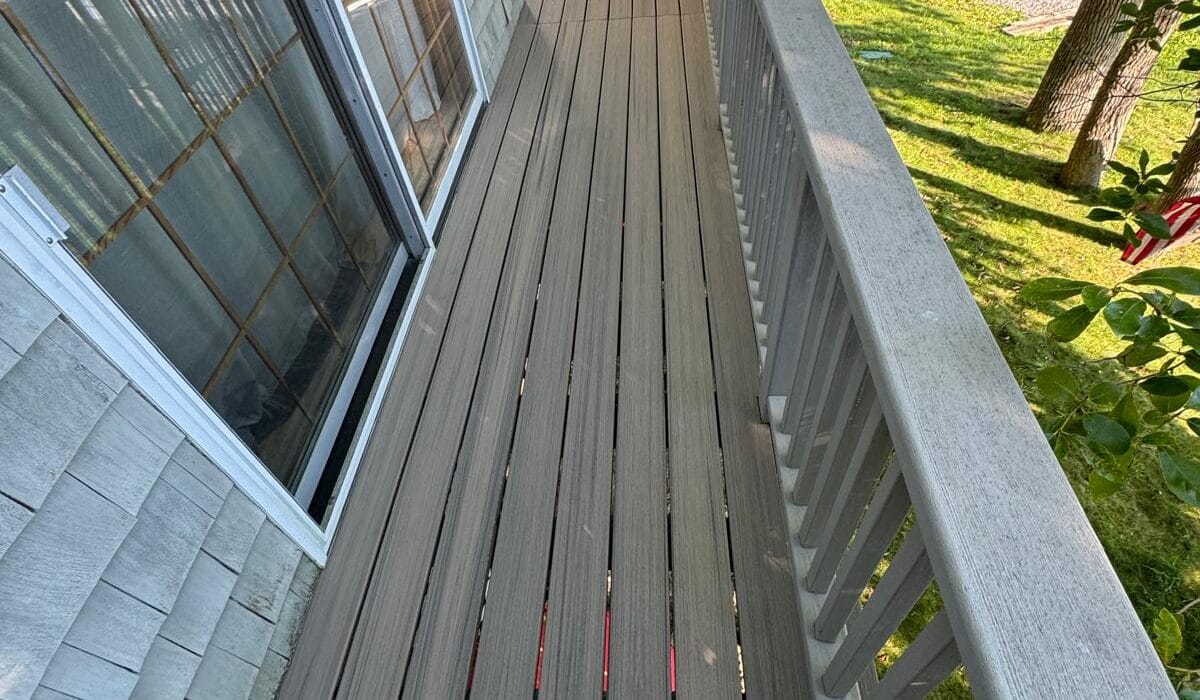
Deck replacement in Suffolk County begins with a close look at the structure beneath the boards. A worn surface may need only repairs or a new finish. A deck with failing supports, loose stairs, or an unstable connection to the house may need a full rebuild. An inspection helps you choose the right scope.
Replacement also gives you a chance to improve the space. You might want more room around a table, stairs in a better location, or boards with different care needs. Decide which changes matter before you choose materials or request quotes.
Does Your Deck Need Repair or Replacement?
A faded deck does not always need replacement. A contractor may be able to replace a few damaged boards or repair a railing. Ask them to assess the framing, supports, stairs, and connection to the house as well as the visible boards.
Tell the contractor about movement underfoot, soft wood, loose railings, or uneven stairs. Avoid using a deck that you believe is unstable until someone assesses it. Washing or staining cannot fix a structural problem.
Ask which parts remain sound and which parts need work. Compare the proposed deck repair with a full replacement. That comparison can help you make a decision based on the deck’s condition.
Make the New Layout Work for You
Think about how you use the deck now. Can people walk around the furniture? Do the stairs lead to the part of the yard you use? Does the door open onto a clear path?
Measure any table, grill, or seating you plan to keep. Sketch where each item would go. A simple drawing can reveal a narrow walkway before construction starts.
Tell the contractor about features you want, such as lighting or built-in seating. A larger deck or a new layout may require further review. Ask about site and approval requirements before you settle on a design.
Compare Specific Decking Materials
Wood offers a natural look, but its care needs depend on the wood and finish you choose. Composite and PVC products have different cleaning needs and appearances. None of these categories tells you everything about a particular product.
Ask to see samples in outdoor light. Compare their texture and color as well as their care instructions. If a proposal uses composite or PVC, ask for the manufacturer and product name.
Have the contractor name the proposed boards, railings, and fasteners in the estimate. Clear product details make quotes easier to compare. They also help you follow the right care instructions later.
Ask What Happens Beneath the Boards
Deck boards cover the structure that carries them. When you review a quote, ask whether the contractor plans to reuse any framing. Ask how they will assess it after they remove the old surface.
This detail can change the price. A quote for new boards on existing framing covers different work from a quote for a complete rebuild. Make sure you know which option each contractor proposes.
Discuss the stairs, supports, and connection to the house too. Ask the contractor to explain how the design addresses water near that connection. You should understand these parts of the project before work begins.
Check Permits for Your Property
Suffolk County has many towns and villages. The approval process depends on your property and the work you propose. A larger deck or a changed layout may raise different questions from a small repair.
New York State’s residential code addresses deck construction. The New York State Department of State provides information about the state code. Your local building department can explain the process for your address. dos.ny.gov
Ask who will check permit requirements, submit any plans, and arrange inspections. Put those responsibilities in the written agreement. Raise unusual site conditions early so they can inform the design.
Compare the Full Scope of Each Quote
A useful quote explains what the contractor will remove and build. It should identify materials, stairs, railings, debris removal, and any other work you discussed.
Ask how the contractor will handle damage that appears after demolition. Some framing may remain hidden until the old boards come off. Agree on how you will review and approve extra work before it begins.
Do not compare quotes by price alone. One contractor may include demolition and disposal; another may leave them out. One may include new stairs while another prices them separately. Compare the same scope before you choose.
Plan for Construction
Ask the contractor to outline the expected steps, from removal through the final review. Weather, material availability, site access, and approvals can affect the schedule. An estimated sequence will help you plan even when the exact dates may change.
Discuss access to the yard while the crew works. If a door opens onto the deck, ask how you should handle it during construction. Make plans for children and pets around the work area.
Choose one way to discuss project questions and approve changes. Clear communication can prevent a late surprise about materials, stair placement, or added work.
Review the New Deck Together
Walk through the completed deck with the contractor. Check the agreed layout, stairs, railings, and finishes. Ask questions while the work and the written scope are fresh in everyone’s mind.
Keep the product names and care instructions. Use the guidance for the materials installed on your deck. Check the deck periodically and clear leaves or debris that collect against the boards.
Request a Deck Replacement Estimate
Golden Hands Construction offers deck replacement in its decking services. Explain what concerns you about your current deck and what you want from the new one. Photos and approximate measurements can help start the conversation.
Visit the Golden Hands contact page or call (631) 877-8338. Ask for an assessment that compares repair and replacement. Then request a written scope that identifies the proposed materials and work.


