

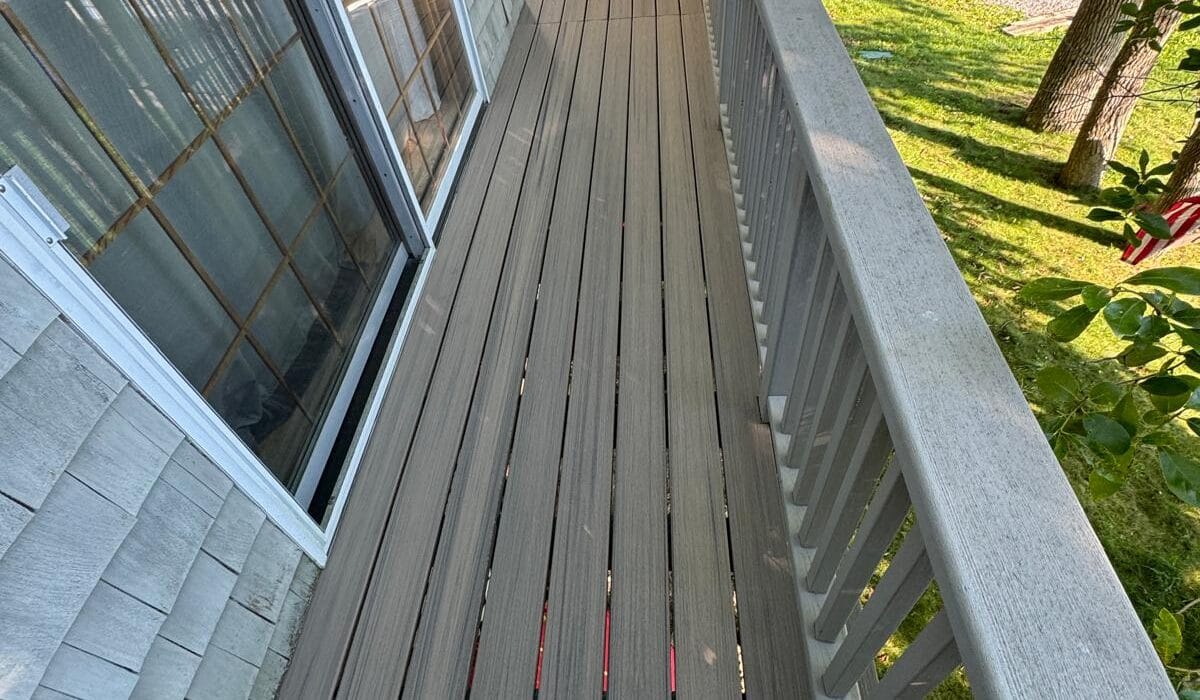
Deck replacement in East Hampton can give you a safer, more useful outdoor space when repairs no longer solve the problem. A worn deck may have more than a few loose boards. Soft framing, shifting stairs, or an unstable railing can point to damage below the surface. Replacing the deck gives you a chance to address those problems and choose a layout that suits the way you use your home today.
The first step is a careful inspection. Some decks need only targeted deck repairs. Others have widespread damage that makes repeated fixes impractical. Knowing the difference helps you spend money on the work your deck actually needs.
How to Tell When Your Deck Needs Replacement
A faded finish alone does not mean you need a new deck. Boards can lose color while the structure beneath them stays sound. You should pay closer attention to movement, moisture damage, and the condition of the parts that support the deck.
Walk across the surface and notice any areas that feel soft or unusually springy. Look for boards that split, sink, or pull away from their fasteners. Check the stairs for movement and test the railing gently. A railing should feel secure when someone leans on it. If it shifts, keep people away from that area until a qualified contractor checks it.
The parts you cannot see from above matter just as much. Framing, posts, connections, and the point where the deck meets the house all affect its stability. Damage in several of these areas may call for a full replacement. A contractor can inspect the structure and explain whether repairs would solve the problem or only delay it.
Repair or Replace Your East Hampton Deck?
A repair can make sense when damage affects a small area and the rest of the structure remains sound. For example, a contractor may be able to replace several damaged boards or correct a limited railing problem. The right choice depends on what the inspection reveals beneath the visible surface.
Replacement deserves a closer look when problems appear across the deck. If you have already paid for several rounds of repairs, ask what caused the damage to return. New surface boards will not fix weakened framing underneath them. Likewise, a fresh coat of stain will change the deck’s appearance but will not make an unstable stairway safe.
Your plans for the space also matter. Perhaps the current deck feels too small for a dining table. Maybe its stairs lead to the wrong part of the yard, or its layout makes everyday use awkward. A replacement gives you an opportunity to address those concerns while rebuilding the structure.
You do not need to make the decision before the inspection. Ask the contractor to show you the damaged areas, explain the available options, and describe what each option includes. That conversation should make the choice clearer.
Plan a Deck That Fits Your Home
Before choosing boards or colors, think about how you want to use the deck. A family that eats outside may need room to move around a table. Someone who wants a quiet place to sit may prefer a simpler layout with less furniture. Clear goals help shape the size, stairs, and access points.
Consider the path from the house to the yard. Think about where people will walk and where furniture will sit. If your existing stairs feel steep or land in an inconvenient spot, raise that concern early. Changes to the layout may affect the design, scope, and approvals needed for the project.
Sun and shade can also influence your choices. Notice when the deck receives direct sunlight and which areas stay shaded. Then consider how much maintenance you want to take on. A material that appeals to you in a sample should also fit your expectations for cleaning and upkeep.
In East Hampton, outdoor spaces may face periods of strong sun, rain, and seasonal weather. Some properties may also have greater exposure to salt air. Your contractor can discuss how the conditions at your particular home affect material and fastening choices. Site conditions matter more than a general claim that one product suits every property.
Choosing Decking Materials
The decking surface shapes the look and upkeep of your new space. Wood offers a familiar appearance and a range of finishes. It also needs regular care to help protect its surface. The amount of care depends on the product, exposure, and finish you choose.
Composite decking offers another option for homeowners who want a different maintenance routine. Products vary in appearance, feel, installation requirements, and price. Ask to see the specific product proposed for your project. Compare its published care instructions and warranty terms before deciding.
Do not choose a material based only on the boards. The framing, fasteners, railings, and installation details also affect the finished deck. Ask for a written proposal that names the main products and describes the work. If you compare bids, check whether they include the same demolition, structural work, stairs, and cleanup.
A sample can help you judge color and texture, but a full deck will look different across a larger area. View samples outside when possible. That gives you a better sense of how they look near your siding, trim, and yard.
What Happens During Deck Replacement?
A deck replacement usually starts with an inspection and a discussion of your goals. The contractor measures the existing space, checks accessible structural areas, and asks what you would change. This is the time to mention loose railings, drainage concerns, awkward stairs, or recurring damage.
Next comes the project scope. A useful proposal should explain what the crew will remove and what they will build. It should address framing, decking, railings, stairs, and disposal where those items apply. It should also state how the contractor will handle damage that becomes visible only after removing the old deck.
The crew then removes the existing structure as the agreed scope requires. This stage may expose conditions that nobody could confirm during the first visit. Ask how the contractor will document any new findings and price additional work before proceeding.
After that, the crew builds the new structure and installs the selected materials. The final review should include the stairs, railings, walking surface, and cleanup. Before you consider the job complete, ask how to care for the materials and whom to contact if you notice a problem.
What Affects the Cost of a New Deck?
Deck replacement costs depend on the work at your property. Size plays a role, but it is only one factor. A simple deck at ground level may involve different work from an elevated deck with stairs and extensive railing.
The condition of the existing structure can change the scope. So can material choices, access to the work area, and changes to the deck’s layout. If a project requires additional design work or approvals, those steps can affect the schedule and total cost.
Ask for an estimate that makes the scope easy to understand. Find out whether it includes removal of the old deck, disposal, framing, surface boards, railings, stairs, and finishing details. If two estimates differ sharply, compare what each contractor has included before comparing their totals.
Avoid relying on a price for an unseen deck. An on-site assessment gives the contractor a better chance to identify the work and give you a useful proposal.
Questions to Ask Before Work Begins
A short conversation before the project can prevent confusion later. Ask what the contractor found during the inspection and which parts of the existing deck they plan to replace. If any structure will remain, ask why it can stay and how they checked its condition.
You should also ask which materials appear in the estimate. Confirm the railing style, stair location, and any changes to the deck’s size. Discuss how the crew will access the yard and where materials will go during construction.
Finally, ask about the expected sequence of work. Weather, material availability, site conditions, and approvals can affect timing. A realistic outline helps you plan for the period when you cannot use the space.
Caring for Your New Deck
Once the new deck is ready, follow the care instructions for its specific materials. Sweep away leaves and debris so they do not collect in corners or against the house. Clean spills using methods the manufacturer recommends. Avoid assuming that every deck surface can handle the same cleaner or pressure setting.
Check the deck from time to time. Watch for a loose board, a changing gap, or movement in a railing. Pay attention to areas that stay wet longer than the rest of the surface. If something changes, contact a contractor while the issue is still small.
Routine care also gives you a chance to enjoy the deck as planned. Keep walking paths clear and arrange furniture so people can move safely between the house, stairs, and yard.
Discuss Deck Replacement in East Hampton
If your deck feels unsafe, needs frequent repairs, or no longer works for your home, start with an assessment. Golden Hands Construction can discuss your existing deck, the changes you want, and the scope of a possible replacement. You can also review its broader deck replacement service before getting in touch.
Contact Golden Hands Construction at (631) 877-8338 or in**@***********ny.com to discuss deck replacement in East Hampton and request an estimate.


