

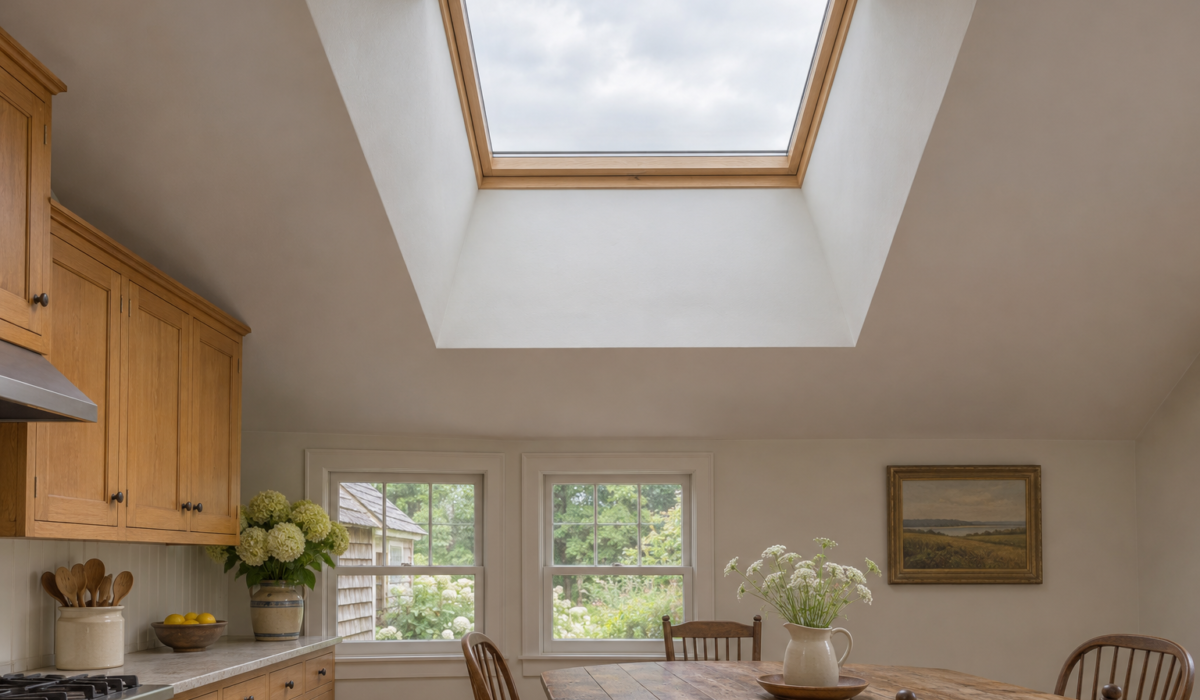
If you like the daylight over your kitchen table but the old skylight needs replacing, one question matters more than the color of the new frame: what happens to the ceiling? In many homes, a contractor can keep the existing light well when the replacement fits the roof opening, meets the finished sides neatly, and the surrounding materials are sound. A change in frame size or damage around the opening can add carpentry, drywall, and painting to an otherwise straightforward job.
When planning a skylight replacement in Cutchogue, ask to see where the new frame will meet the room before you approve the unit. That single detail can explain why two estimates for what looks like the same skylight cover different amounts of work.
Start with the view from your kitchen table
Sit where you usually have breakfast and look up. The glass may appear centered over the table even though the opening at the ceiling is wider on one side. That is the light well, sometimes called the shaft. Its finished sides connect the room to the skylight above. Some wells have straight sides. Others flare outward, so someone standing at the sink sees a different slice of sky than someone sitting at the table.
Take one photo from that seat and another from directly below the opening. In the first picture, mark anything you particularly want to keep: the sloping side that brings light toward the cabinets, a natural wood border, or the uninterrupted line across a paneled ceiling. The second picture helps an estimator see all four corners. Together they communicate more than a close-up of the glass, especially if the estimate begins by phone.
Which opening is the contractor measuring?
A skylight has several dimensions that are easy to confuse. There is the glass you can see, the frame around it, the opening in the roof, and the opening where the shaft meets the room. On a deep, flared well, that last rectangle can be much larger than the skylight itself. An inside measurement can help start a conversation, but it leaves out the part of the assembly hidden above the ceiling.
For example, suppose you have two skylights side by side. From the kitchen floor, the openings look identical. One was replaced when the prior owner remodeled, and the other still has its original frame. Ordering two matching units on the strength of the ceiling measurements would be a guess. Label your photos left and right, note which unit opens, and ask the installer to identify and measure each one before placing an order.
If you have a VELUX unit, an image of the product ID can save time. Depending on the model, the data plate or a compatible remote can help identify the skylight. An old invoice or installation booklet is also worth bringing out. Leave any identification that requires roof or high-ladder access to the installer. The manufacturer illustrates the different locations in its VELUX skylight identification guide.
When can the existing light well stay?
The easiest case to picture is a dry, neatly finished shaft whose upper edges line up with the proposed replacement. Ask the contractor to point out the line where the old frame ends and the drywall begins. Then ask where the new frame will sit. If both lines agree, the scope may involve little interior finishing. Get that expectation in writing, including who handles any small touch-ups after installation.
A modest mismatch raises a different choice. A narrow strip of trim might cover the joint, or the drywall might need adjusting to meet the new frame. Both approaches can look tidy. They leave different details in a room you see every day. In a kitchen with simple painted walls, a slim painted border might suit the space. In a wood-lined ceiling with continuous boards, you may prefer a carpenter to match the existing woodwork. Ask for the proposed trim width and finish before choosing.
Separate an old water mark from the work it may conceal
A brown mark at the bottom corner of the shaft often attracts all the attention during an estimate. Tell the installer when you first noticed it and whether it changes after rain. If you painted it once and it returned, share that history. A stain that appeared years ago and one that grew during last week’s storm deserve different questions, even if they look alike on inspection day.
Ask how the contractor will examine the roof covering, flashing, and material immediately around the opening. Flashing is the material that directs roof water around the skylight. Painting the light well can wait until the source of moisture has been evaluated. If removing the old unit exposes damaged wood, agree on who will photograph it, explain the repair, and get your approval before the opening is closed. For an overview of the work the company handles, see Golden Hands skylight services.
Decide what you want to change inside the room
A replacement gives you a chance to address the one thing you dislike about the old skylight. Be specific. If the afternoon sun lands on the chair where you read, ask about a compatible shade and how you would operate it from that chair. If you want a unit that opens, ask how you would reach the handle or use the control. Have the estimator show where a shade, screen, or visible frame would sit within the existing well.
For a Cutchogue home you use mainly on weekends, another question is who needs access to the kitchen and when. An exterior installation, an interior trim visit, and a return trip to paint may require separate appointments. If someone else opens the house for tradespeople, a written schedule will matter as much as the installation date. Ask whether the room can be used between visits and what will be left covered overnight.
Compare the written estimates line by line
Two contractors may quote the same skylight model and still have different jobs in mind. One might carry the job through the final coat of paint. The other might finish the roof and leave the joint at the top of the shaft for your decorator. Before comparing totals, look for these four items:
- The unit. Look for the manufacturer, model, mounting type, glass choice, and any shade or control you selected. If you have two units, make sure each is identified.
- The roof work. Ask what is included for flashing, surrounding roof material, and disposal of the old skylight. Check how the contractor will price concealed damage if it appears.
- The room finish. Ask whether the crew will reuse trim, supply new trim, patch drywall, prime, and paint. Write down where the painting will stop if the old color is difficult to match.
- The handover. Agree on who will demonstrate the controls, provide the model information, and handle any unfinished interior items after the roof crew leaves.
Arrange a skylight replacement estimate in Cutchogue
When you call, start with what you want to preserve. “We want to keep the flared kitchen ceiling and the wood trim” gives the estimator a clearer starting point than a request for a standard skylight. Have your room photos ready, along with the product ID if you have it. Those details help frame the decision that matters: which replacement fits the roof and leaves you with the room you want underneath it?
Call Golden Hands Construction at (631) 877-8338 or request a Cutchogue skylight estimate. Mention any recent leak, upcoming roof work, or dates when the house will be accessible so the visit can cover both the roof opening and the finished ceiling.


